


Edwardian Brass Mantle Clock
These pieces are edwardian brass mantle clock examples, combining functional timekeeping with period craftsmanship to anchor a room.
Edwardian Brass Mantle Clock
When you search for an edwardian brass mantle clock, you encounter a variety of forms including carriage clocks, bracket clocks, and desk clocks spanning the Victorian, Edwardian, and Regency periods.
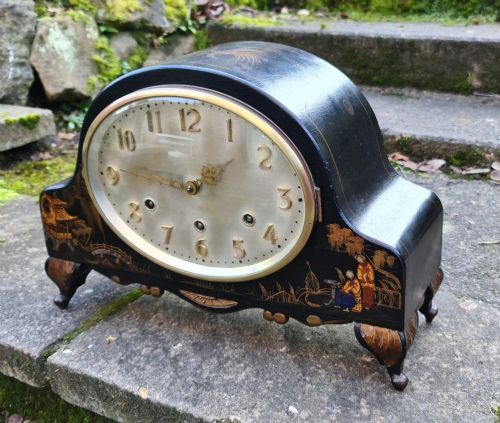
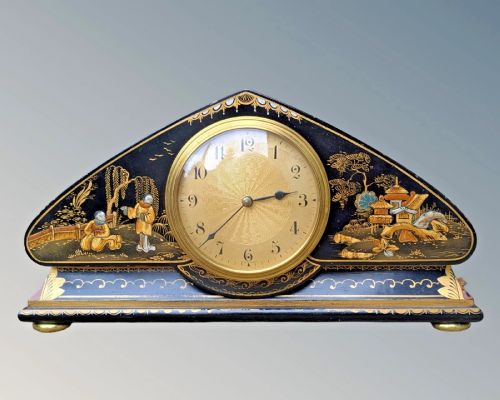
The Edwardian examples often feature polished brass cases alongside mahogany, oak, walnut, and ebonised wood bodies, sometimes displaying Chinoiserie styles or inlaid satinwood details.
Many of these timepieces originate from English, French, and Swiss workshops, incorporating enamel dials, glass panels, and specialised movements such as Swiss mechanisms or torsion year clocks.
Construction and materials
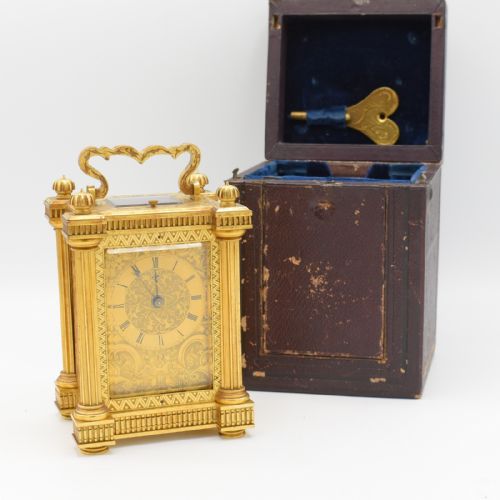
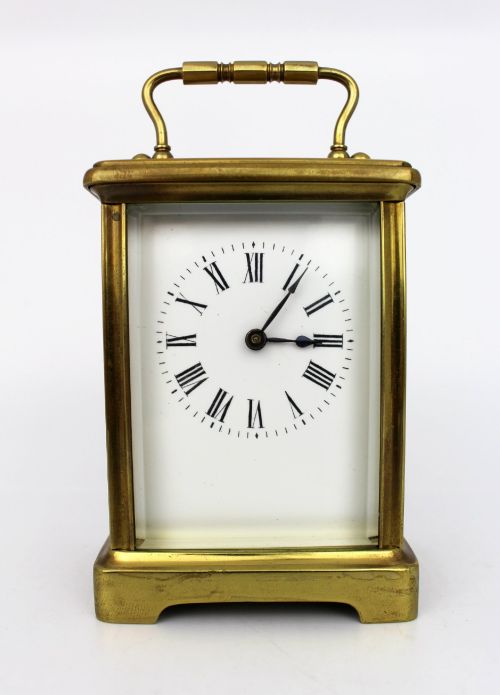
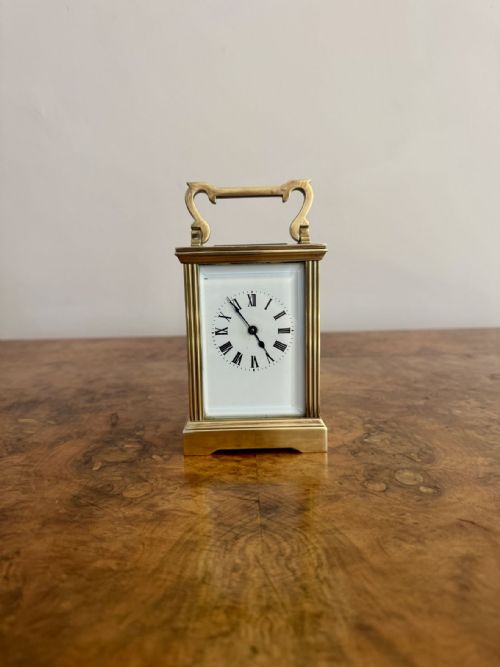
The construction relies heavily on cast and polished brass for cases, handles, and bezels, frequently paired with bevelled glass viewing windows and detailed enamel dials.
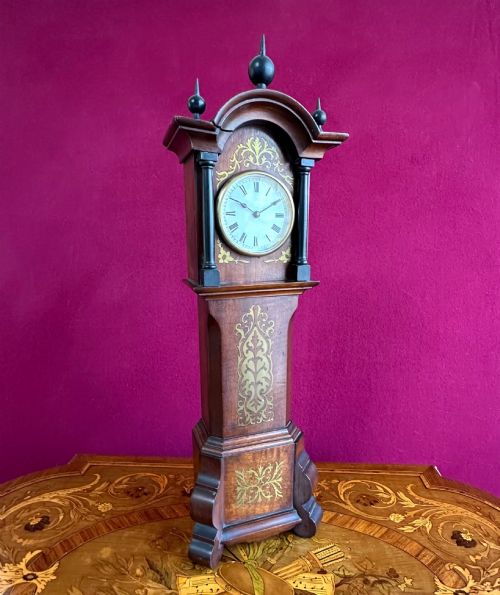
Wooden elements utilise solid and veneered timbers such as mahogany, oak, walnut, and ebonised wood, often enhanced with marquetry inlay or faux tortoiseshell finishes.
Internal mechanical assemblies incorporate metal gear trains, escapements, and pendulum or balance wheel regulation driven by springs or weights.
Object types recorded across the inventory include carriage clocks, bracket clocks, desk clocks, and standard mantel clocks.
Quality variations
The calibre of the movement dictates much of the standard, ranging from standard timepieces to complex repeating mechanisms, alarm functions, and multi-train chiming systems.
Case execution separates ordinary examples from finer items, seen in the crispness of brass casting, the precision of engine-turned dial masks, and the delicacy of wood inlay.
The legibility and artistry of the dial, whether painted enamel, Delft enamel, or brass with Roman and Arabic numerals, influences the overall character of the clock.
Howell & James London·Jas Whitelaw of Edinburgh·Alfred Drocourt·Seikosha Seiko
The Edwardian Brass Mantle Clock Glossary
- Carriage clock
- A portable timekeeper with a glass-panelled brass case and a folding handle, designed originally for travel by officers and travellers. These incorporate lever escapements rather than pendulums.
- Torsion clock
- A timepiece regulated by a suspended spring that rotates back and forth rather than swinging. Also known as an anniversary clock, it often runs for extended periods between winds.
- Chinoiserie
- A decorative style reflecting European interpretations of Chinese and East Asian artistic traditions. It appears on painted or lacquered clock cases.
- Crystal regulator
- A mantel clock housed in a brass frame with bevelled glass panels on all sides. This design exposes the movement and pendulum to view.
- Repeater
- A mechanism that strikes the hours and quarters upon demand via a push button or cord. This complication was especially popular in carriage clocks.
Edwardian Brass Mantle Clock: Frequently Asked Questions
How do I wind an edwardian brass mantle clock?
Most mechanical clocks use a dedicated winding key inserted into the dial squares to tension the mainspring.
Care should be taken not to overwind the mechanism, stopping as soon as resistance is felt.
What is the difference between a mantel clock and a carriage clock?
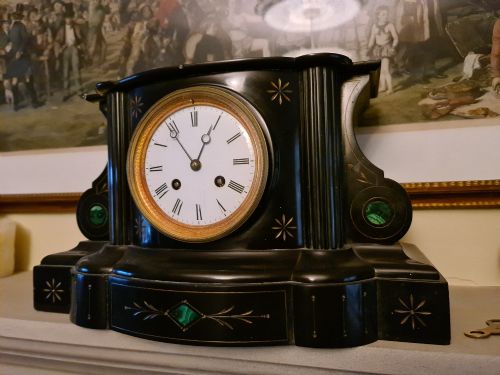
Mantel clocks are generally larger wooden or marble pieces designed to sit permanently on a fireplace shelf or bracket.
Carriage clocks are smaller, portable brass and glass timepieces featuring a top carrying handle.
Why does my clock keep stopping?
Mechanical clocks require a level surface to operate correctly, as uneven placement affects the escapement beat.
If the beat is uneven, slight adjustment of the pendulum crutch or repositioning of the case often restores regular ticking.