



Brass Dome Clock
A brass dome clock unites meticulous mechanical motion with protective glass, preserving delicate skeleton and mantel movements for daily viewing.
Brass Dome Clock
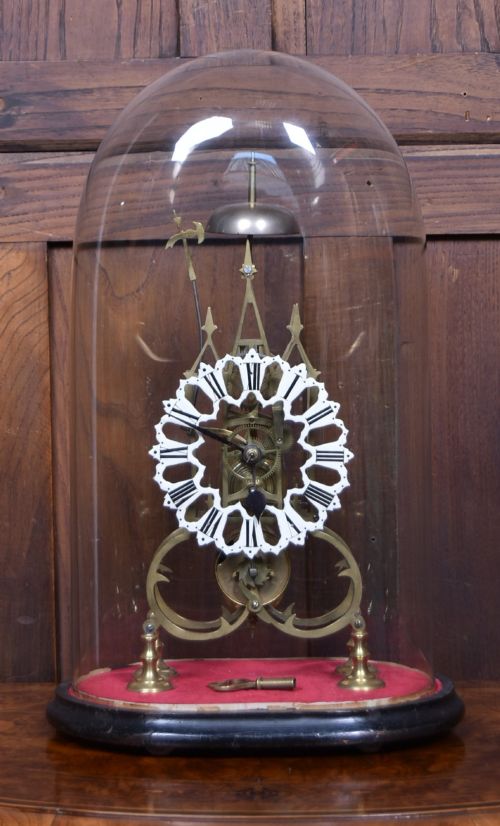
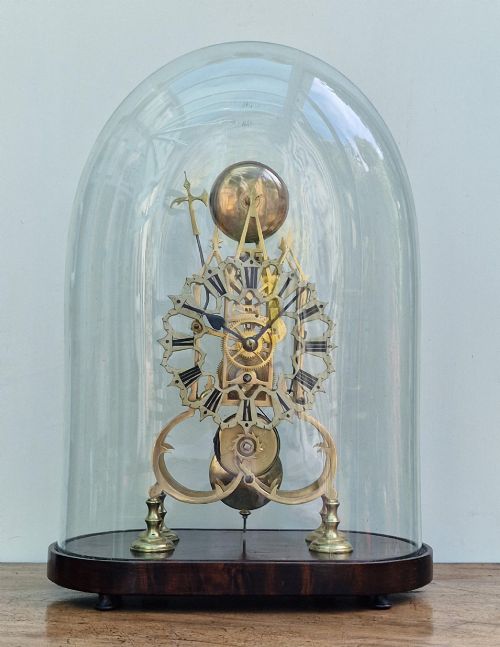
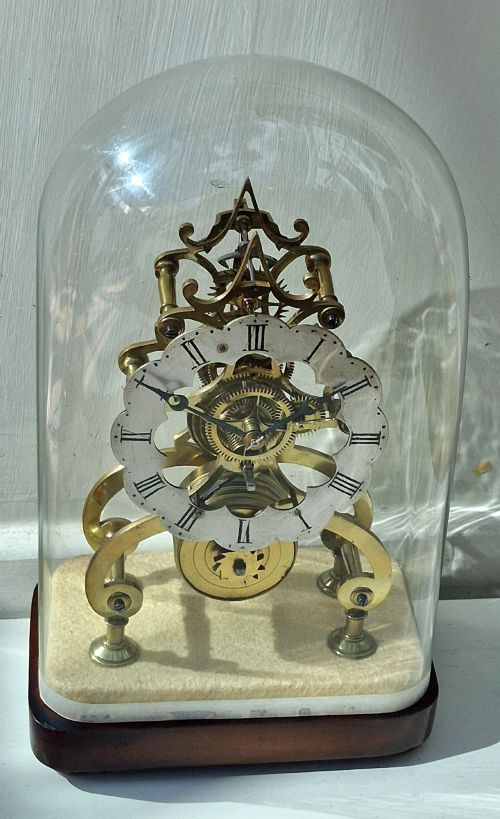
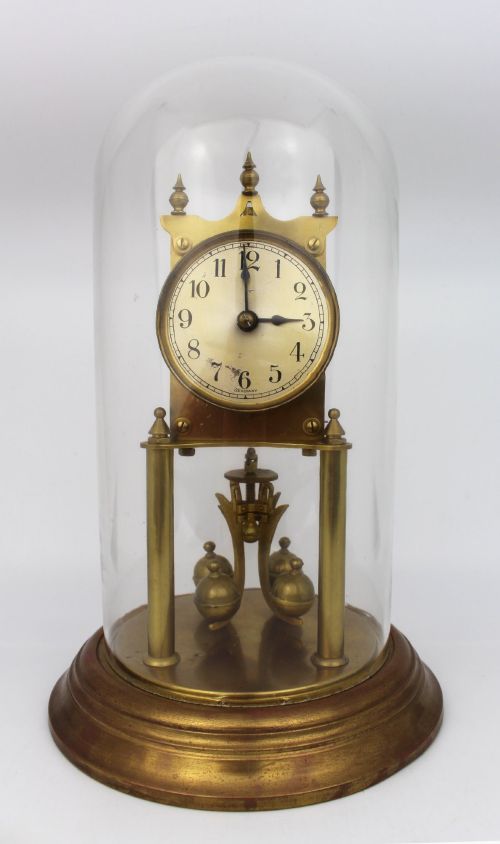
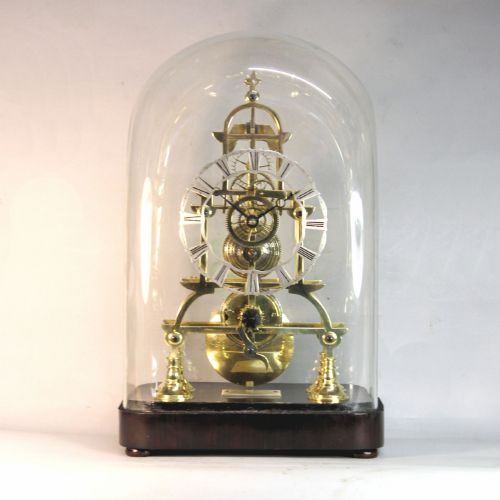
A brass dome clock encompasses various timepieces housed beneath a clear glass cover, protecting intricate internal workings from dust. You encounter skeleton movements, torsion anniversary clocks, and portico designs spanning the Victorian era through the early twentieth century.
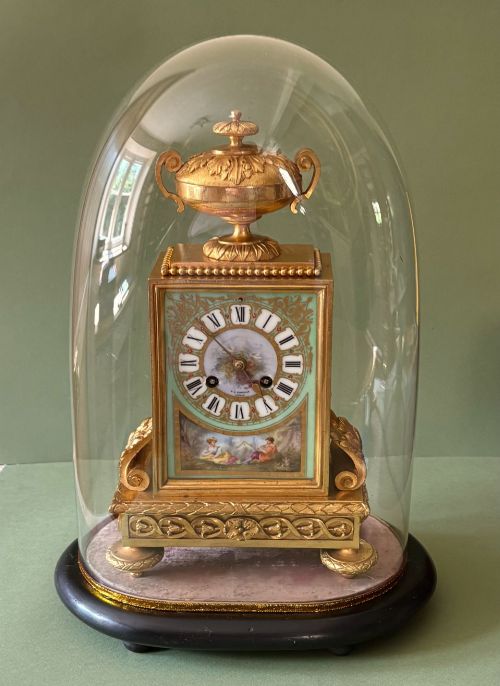
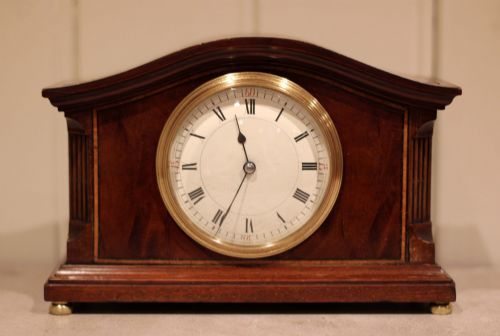
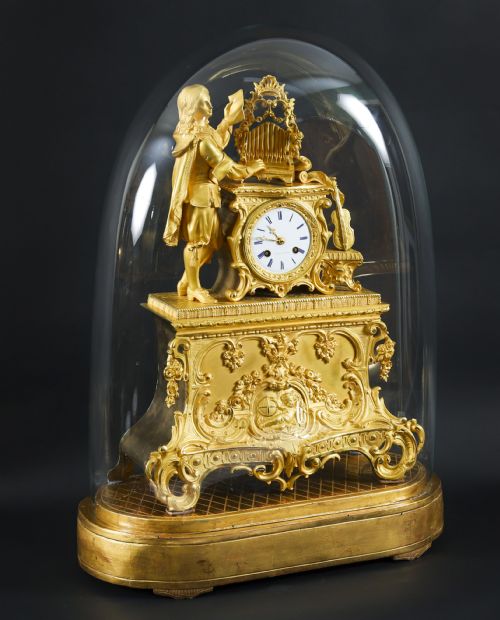
Many examples feature exposed gear trains mounted on brass frames, allowing observers to watch the escapement and wheel work in motion. Others combine heavy brass cases with porcelain panels, marble, or carved alabaster, seated securely on wooden or ormolu bases.
English and French workshops dominate the selection, ranging from simple fusee timepieces to elaborate models with passing strikes. The protective glass dome is frequently the original hand-blown cover supplied with the mechanism.
How they were made
Construction relies heavily on cast and polished brass for the movement plates, gear wheels, and ornamental mounts. Ormolu gilding, porcelain plaques, and enamel dials add colour and contrast to the metallic framework.
Movements utilise fusee or spring-driven mechanisms, alongside later torsion and electric systems. Skilled horologists assembled these gear trains by hand, often incorporating elaborate skeleton frames with multiple spoke wheels.
Materials span brass, glass, mahogany, marble, porcelain, and ormolu across Victorian, Edwardian, and earlier nineteenth-century periods.
What varies in quality
The precision and finish of the internal gear cutting dictate the overall standard of a mechanism. Finer movements display clean chamfering on the brass plates and highly polished pivots that reduce friction.
The presence of an original hand-blown glass dome significantly elevates a piece, as replacements often lack the subtle imperfections of period glass. Furthermore, the artistry of the dial, whether painted enamel or detailed porcelain, reflects the maker's skill.
Richard Winter of Chieveley·Maurice and Marcel Moulin Favre-Bulle·Leroy Paris·Thwaites of London·Jean Baptiste Delettrez·Allen Colyer
The Brass Dome Clock Glossary
- Fusee
- A conical pulley used in a clock to maintain an even pull as the mainspring unwinds. This mechanism ensures consistent timekeeping throughout the duration of the power reserve.
- Skeleton clock
- A timepiece designed with open metal plates that expose the gear train and escapement to view. These models are typically displayed beneath a glass dome to protect the delicate exposed works.
- Torsion clock
- A clock regulated by a pendulum that twists and untwists on a suspension spring, commonly known as an anniversary clock. This design allows the movement to run for long periods between windings.
- Ormolu
- Gilded bronze or brass ornamentation applied to clock cases and decorative mounts. The technique creates a rich golden finish that enhances the visual weight of the piece.
- Portico clock
- A architectural clock style supported by pillars or columns, often housing the pendulum swing within the central opening. These French designs frequently incorporate rosewood or marquetry details.
Brass Dome Clock: Frequently Asked Questions
How do I wind a skeleton clock?
Use the appropriate key on the winding squares located on the dial or movement plates, turning gently until you feel resistance. Avoid over-winding to protect the mainspring.
Ensure you handle the glass dome with extreme care when removing it to access the movement, lifting it straight up with both hands.
Are these glass domes original?
Many listings retain their original hand-blown glass covers, which often exhibit small bubbles and minor thickness variations typical of nineteenth-century production. Replacement domes are thicker and more uniform.
Examining the rim of the glass and the matching groove in the wooden base helps determine authenticity.
How do torsion clocks work?
Torsion movements utilise a weighted pendulum suspended by a thin metal ribbon that rotates back and forth rather than swinging. This slow rotational cycle stores enough energy to run for months.
These mechanisms require a stable, level surface to maintain accurate rotation of the pendulum.
What is a passing strike?
A passing strike mechanism causes the clock to sound a single bell or gong on the hour without counting the exact time. It provides an audible chime without the complexity of a full rack strike train.
This feature is frequently found on smaller skeleton and mantel clocks designed for domestic spaces.