
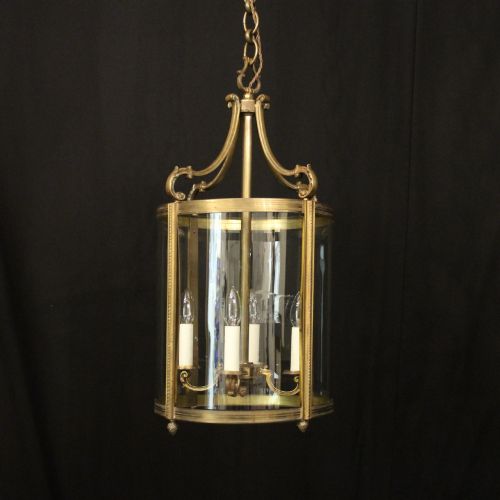

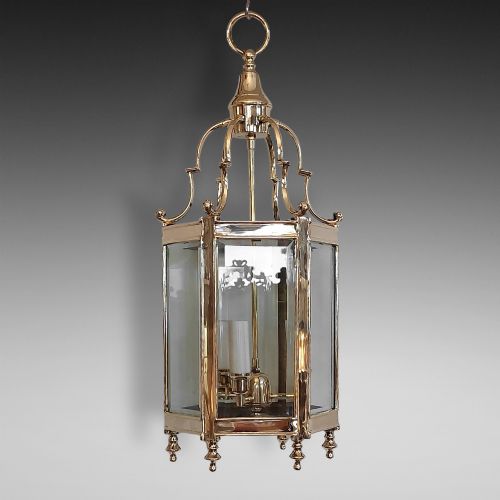
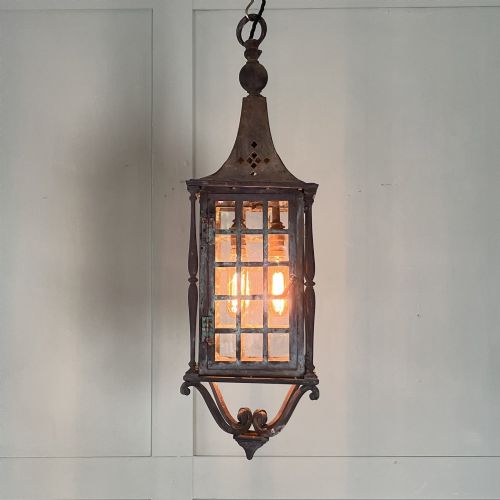
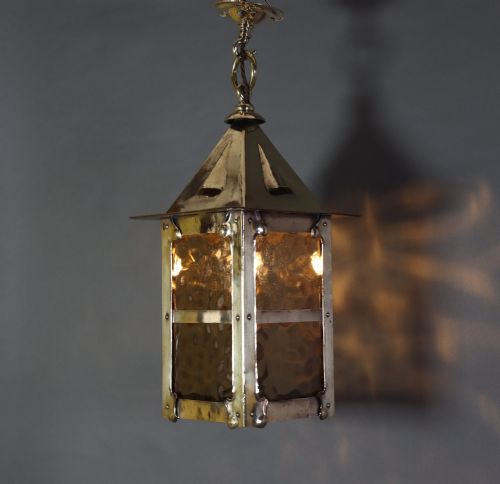

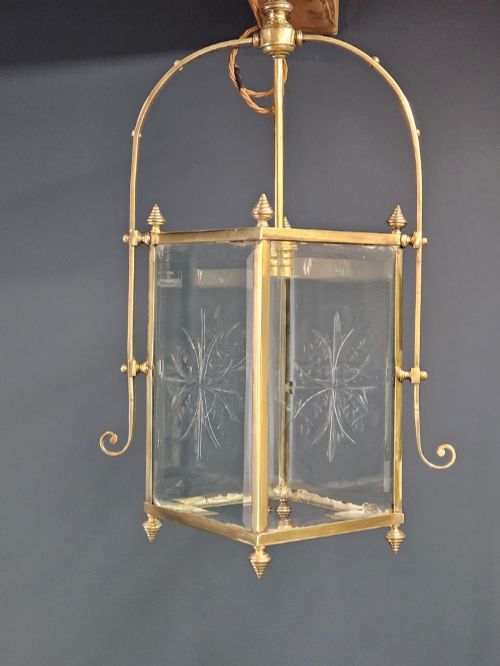
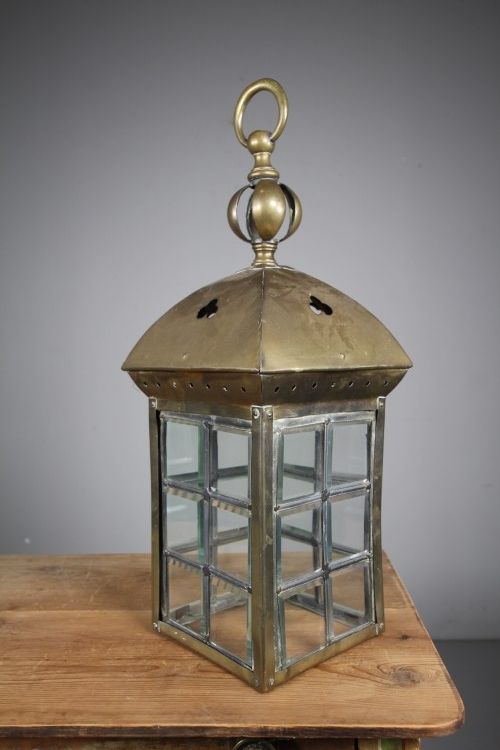
Edwardian Brass Hall Lantern
An Edwardian brass hall lantern brings a warm, welcoming illumination to an entrance hall with period character and craftsmanship.
Edwardian Brass Hall Lantern
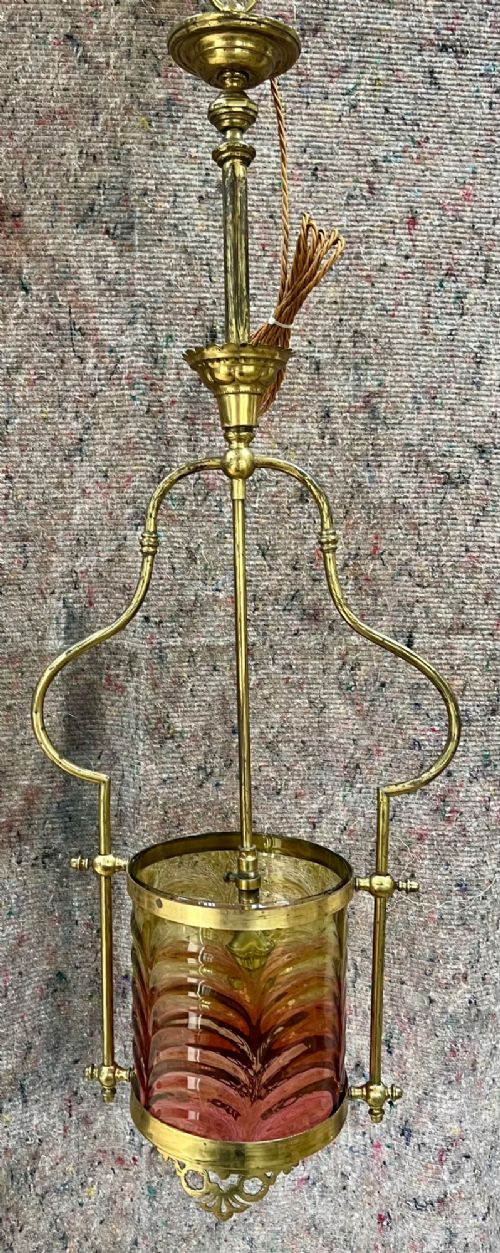
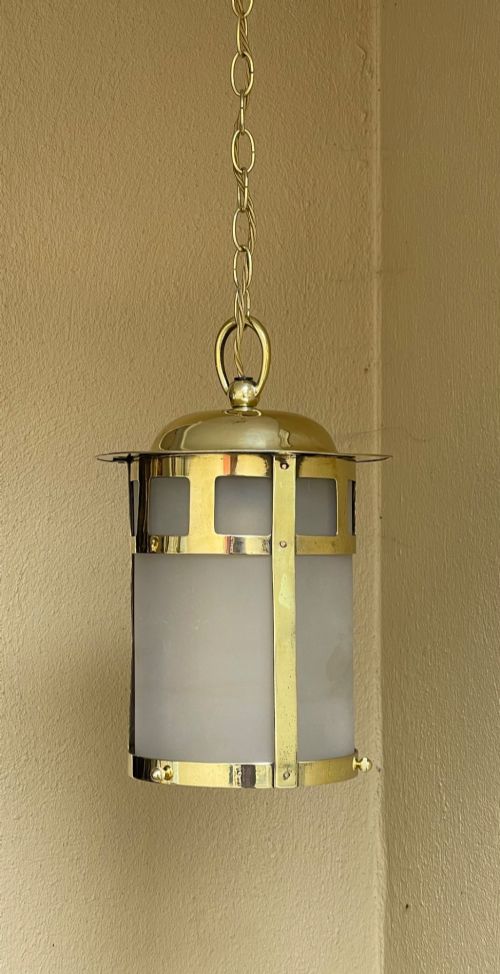
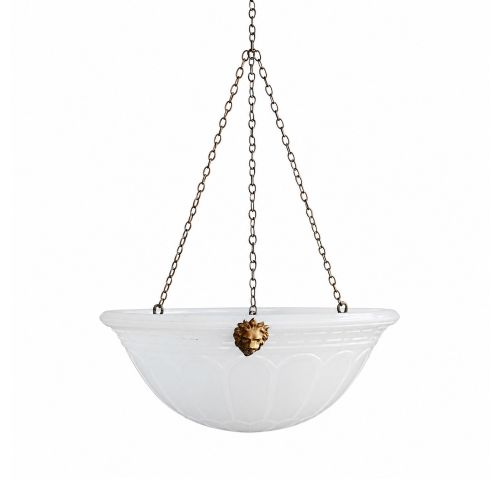
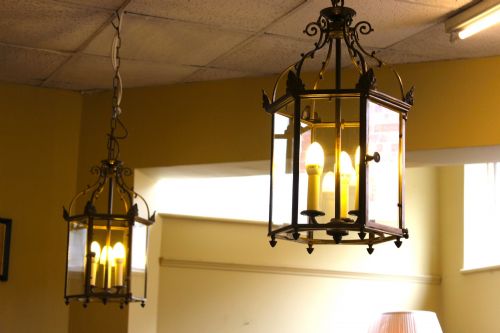
An edwardian brass hall lantern is a ceiling-hung lighting fixture designed to illuminate entrance spaces, vestibules and corridors. These pieces primarily date from the Edwardian era, alongside related examples from the Victorian period and the early twentieth century.
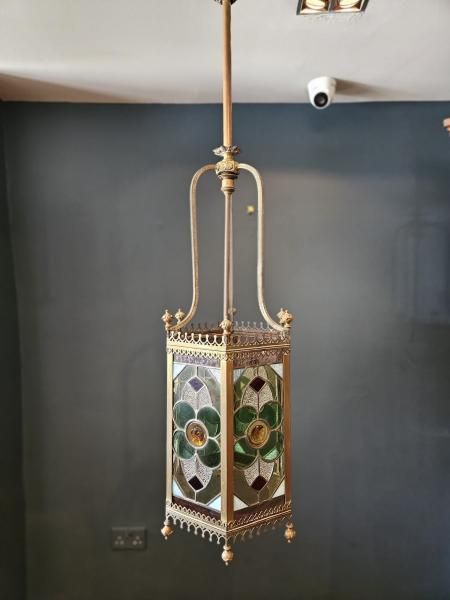
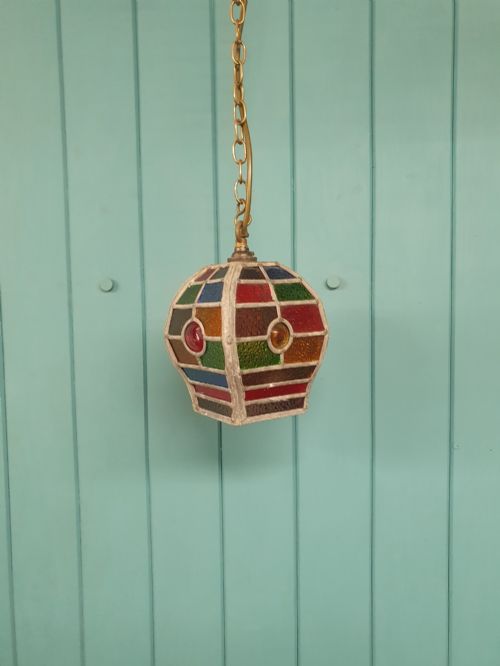
Makers and designers of the period produced both utilitarian hall lighting and decorative showpieces incorporating leaded, frosted, bevelled or stained glass panes. Buyers frequently encounter geometric brass framework paired with clear or coloured glass panels.
How They Were Made
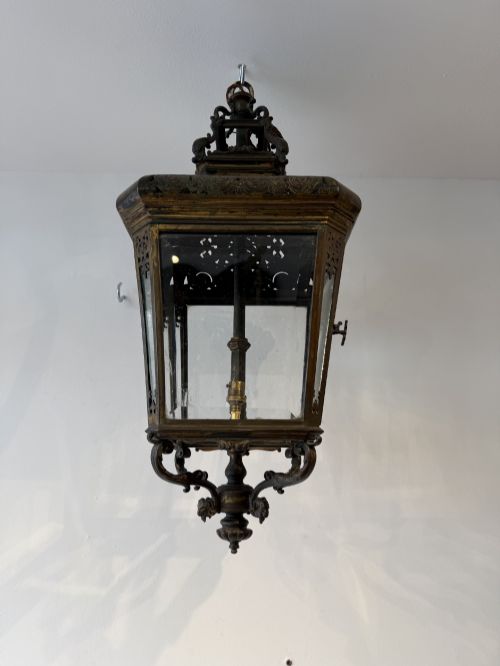
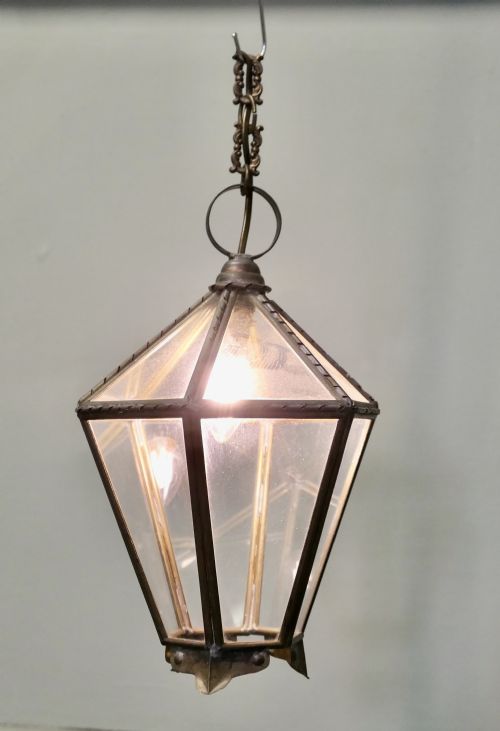
Makers constructed these lanterns using cast or sheet brass and bronze frames joined to hold panes of glass securely. Metalwork often featured linear framing, hexagonal geometry or ornate revival detailing.
Glass components varied widely, utilising cut glass, leaded stained glass, opalescent panels, moonstone glass and etched glass shades. Artisans secured these panels within metal channels, sometimes incorporating steel structural elements for hanging stability.
Some lanterns feature twenty-six inches of brass presence, ensuring nobody misses the lighting.
What Varies in Quality
The weight and thickness of the brass or bronze casting set the foundational quality of the frame. Heavier gauge metalwork provides superior structural rigidity and retains crisp decorative detailing.
Glass selection and execution distinguish finer examples from standard production. Bevelled edges, intricate leaded stained glass panels and high clarity in cut or moonstone glass indicate superior manufacture.
Voysey
The Edwardian Brass Hall Lantern Glossary
- Hexagonal form
- A six-sided geometric construction frequently utilised in hall lanterns to distribute light evenly across an entryway.
- Gilded bronze
- Bronze metalwork treated with a fine layer of gold or gold-coloured alloy to impart a lustrous metallic finish.
- Leaded glass
- Individual pieces of glass joined together by lead cames to form decorative patterns or stained glass windows.
- Moonstone glass
- A type of opalescent white glass that diffuses light softly without harsh glare.
- Bevelled glass
- Glass panes featuring an angled edge cut around the perimeter, catching and refracting light.
Edwardian Brass Hall Lantern: Frequently Asked Questions
Are these lanterns wired for modern electricity?
Many surviving lanterns have undergone rewiring to meet current electrical standards while retaining their original brass frames and glass shades. Professional installation ensures safe operation within domestic circuits.
Check individual listings to confirm whether internal wiring has been updated or restored by the dealer.
How do I identify an Edwardian lantern?
Edwardian pieces typically date from the early twentieth century, exhibiting lighter brass frameworks than heavily ornate Victorian predecessors. They often embrace Arts and Crafts simplicity or restrained period revival motifs.
Design characteristics frequently include hexagonal geometry, clean lines and specialised glass panels such as frosted or moonstone variants.
What glass types appear in these lanterns?
Listings feature a variety of glass treatments including leaded stained glass, bevelled panes, opalescent panels and etched shades. Each type alters the quality of illumination cast into the hallway.
Clear and bevelled glass maximises light output, whereas frosted and moonstone options create a softer ambient glow.