




Etched Glass Pendant Light
An etched glass pendant light brings diffused illumination and intricate pattern to a hallway or high-ceilinged room, drawing the eye upwards.
Etched Glass Pendant Light
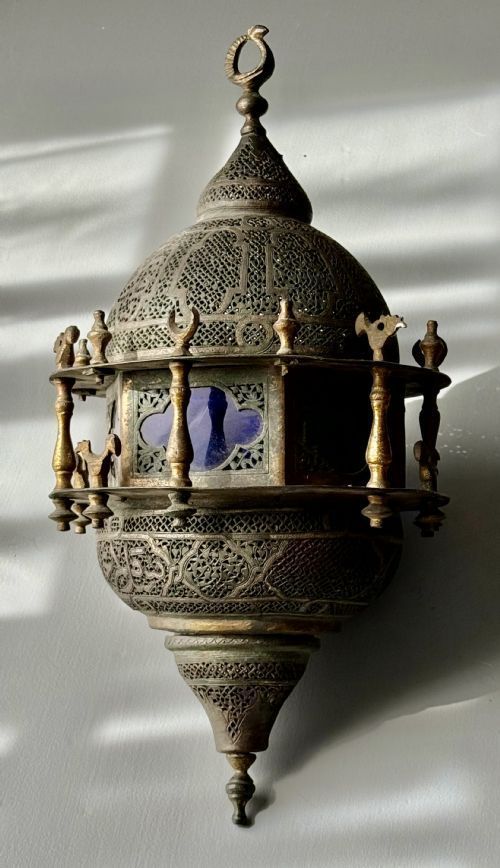
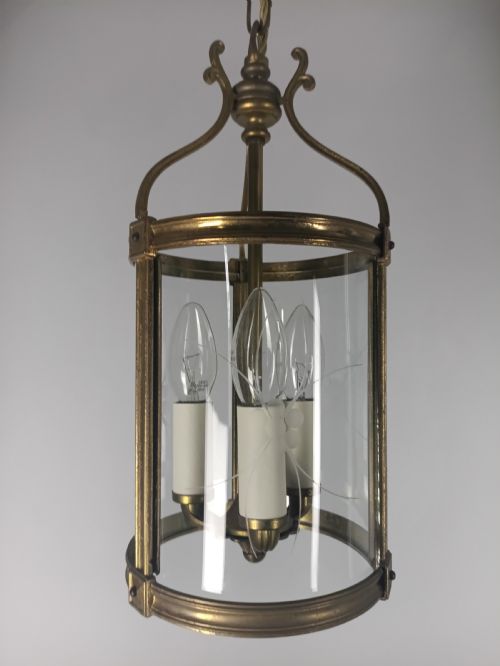
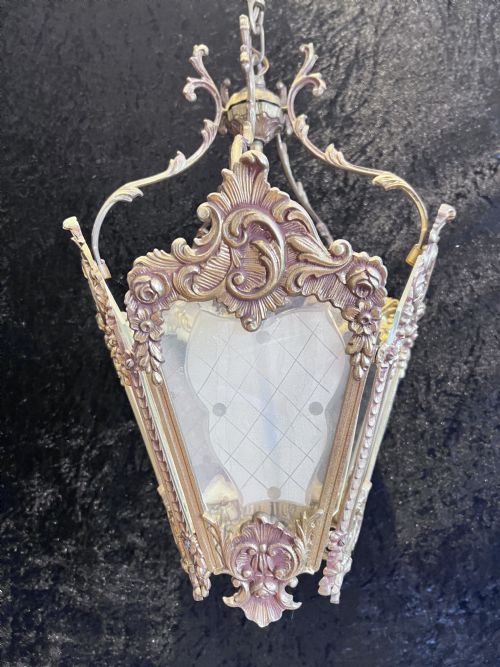
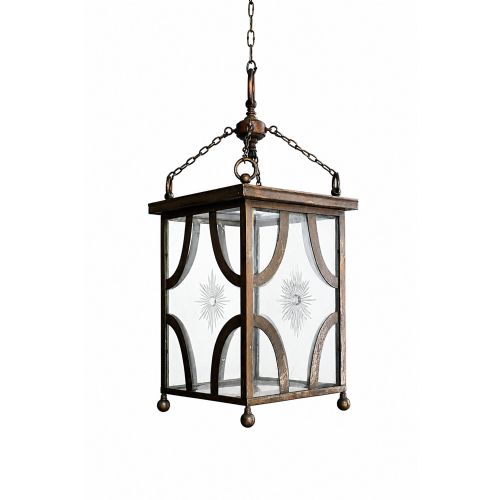
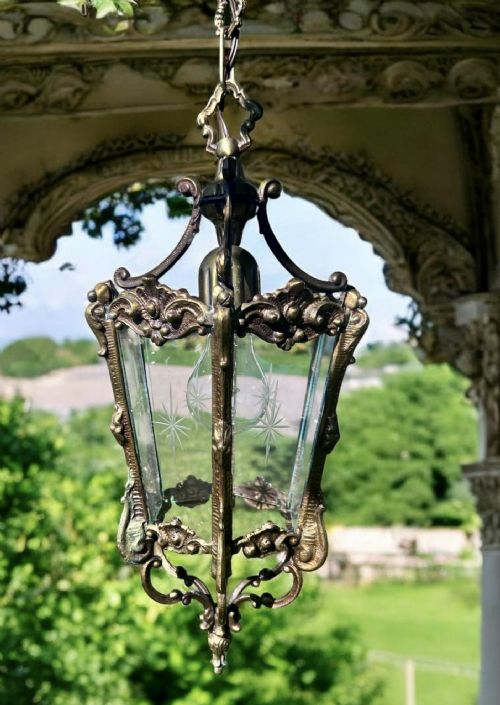
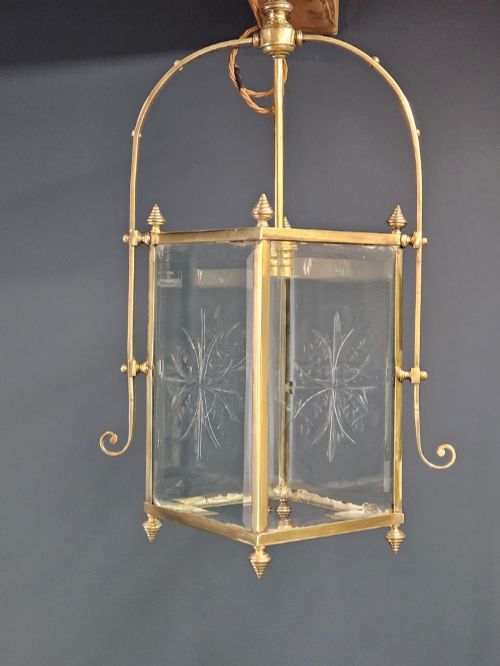
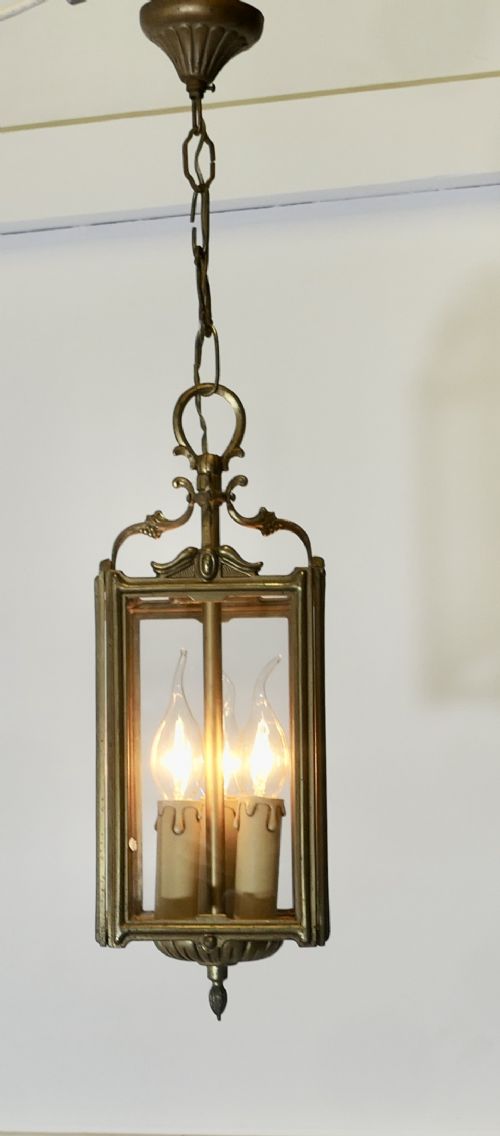
An etched glass pendant light combines a suspended metal frame with patterned or frosted glass panels, operating as both a functional source of ceiling illumination and a decorative architectural fixture. When you search for an etched glass pendant light, you encounter diverse forms ranging from French hall lanterns to Edwardian bowl chandeliers and single-bulb drops.
The pieces appearing on this page span from the Victorian and Edwardian eras through the Art Deco period and the 1930s. Brass, gilt brass, and bronze provide the structural framework for glass that has been acid-etched, frosted, cut, or pressed.
Origin and style vary considerably across the selection, with French chateau, Arts and Crafts, and Rococo influences appearing alongside classic British period pieces. Buyers most frequently meet brass-framed hall lanterns and simple glass shades suspended on chains or rods.
Materials and construction methods
The construction of these fixtures relies on metalworking and glass production techniques characteristic of the nineteenth and early twentieth centuries. Brass and gilt brass form the load-bearing frames, often cast with ornate detailing or assembled in panels to house the glass.
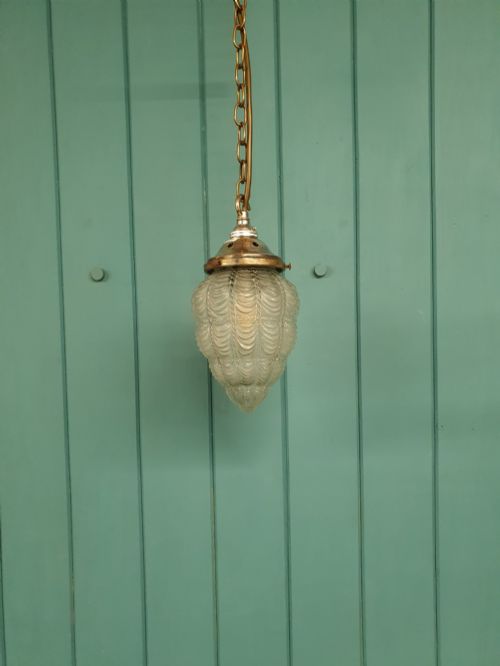
Glass elements receive their decorative surfaces through acid-etching, cutting, or moulding into pressed patterns. Frosted and crystal surfaces diffuse the internal bulb light, softening the glare while highlighting the etched motifs on the shades and panels.
Object forms span from single-bulb glass pendant drops to elaborate multi-light hall lanterns and bowl chandeliers.
Distinctions in manufacture and finish
Quality in these hanging lights rests on the weight and crispness of the metal casting and the depth of the glass decoration. Heavy brass or gilt bronze frames with sharply defined decorative motifs represent superior craftsmanship compared to thin, pressed sheet metal.
The glass panels themselves show variation in thickness, clarity, and the precision of the etched pattern. Deeper, more intricate acid-etching and high-purity crystal indicate higher grade production than simple surface frosting on thin glass.
The Etched Glass Pendant Light Glossary
- Acid-etching
- A decorative technique using acid to eat into the surface of glass, creating opaque patterns and designs. This method allows for fine, detailed lines that resist fading over time.
- Hall lantern
- A ceiling-hung light fixture enclosed in glass panels, historically designed to illuminate entrance hallways and vestibules. These fixtures often feature hinged access doors for maintenance.
- Ormolu
- Gilt bronze mounted on decorative objects and light fittings, providing a rich golden finish. The technique was widely utilised in French decorative arts.
- Pressed glass
- Glass shaped by being pressed into a mould using a plunger, enabling repetitive production of patterned items. This technique became common during the nineteenth century.
- Chandelier
- A branched, suspended lighting fixture holding multiple bulbs or candles. They distribute light across larger spaces from a central ceiling point.
Etched Glass Pendant Light: Frequently Asked Questions
How do I hang a heavy brass lantern safely?
Suspension of heavy metal and glass fixtures requires anchoring directly into ceiling joists or using appropriate structural fixings that can bear the total weight. Ceiling roses and hanging chains must be inspected to ensure they support the vertical load securely.
Professional electrical installation is recommended to connect the internal wiring safely to your household mains supply. Ensure the weight is borne entirely by the structural hardware rather than the electrical cable.
What is the best way to clean etched glass?
Maintenance involves removing the glass panels if possible, or wiping them carefully in place using a soft, lint-free cloth and mild soapy water. Avoid abrasive scourers or harsh chemical cleaners that can scratch the frosted or etched surface.
Dry the glass thoroughly with a microfiber cloth to prevent water spots. Brass frames should be dusted gently without using aggressive metal polishes that might strip patination or damage adjacent glass.
Can I use modern LED bulbs in these vintage lights?
Most vintage fittings accommodate modern LED bulbs, provided the physical dimensions fit within the shade or lantern enclosure. LEDs generate less heat than traditional incandescent bulbs, which helps preserve old wiring and fragile glass.
Check the lamp holder type, such as bayonet or screw fitting, and ensure the bulb wattage aligns with safe operating limits. Warm white LED bulbs best replicate the soft glow of historical lighting.
How do I date an antique glass pendant light?
Dating relies on observing structural fasteners, metal patination, wiring style, and decorative motifs characteristic of periods like the Edwardian era or Art Deco. Heavy cast brass frames and hand-etched glass typically point towards earlier nineteenth or early twentieth-century manufacture.
Subtle details such as screw types, chain links, and glass thickness provide further clues. Comparing the piece with documented examples from the same stylistic era helps confirm its age.