
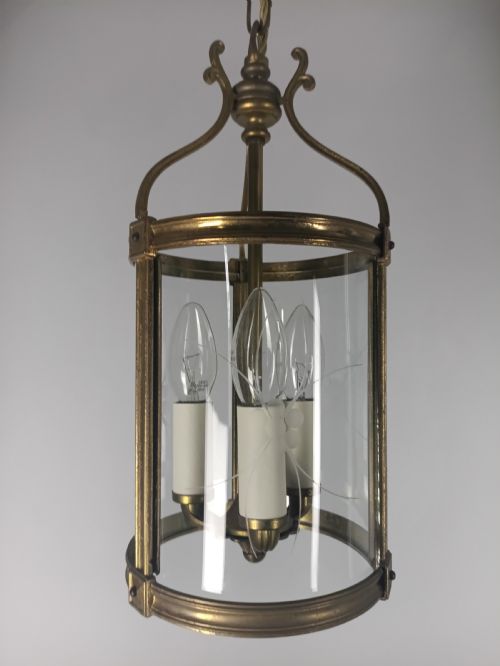
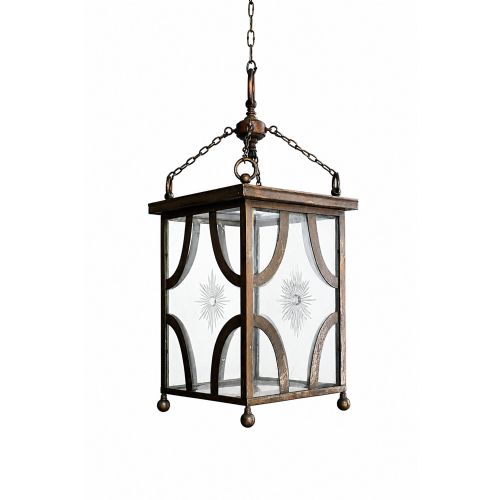
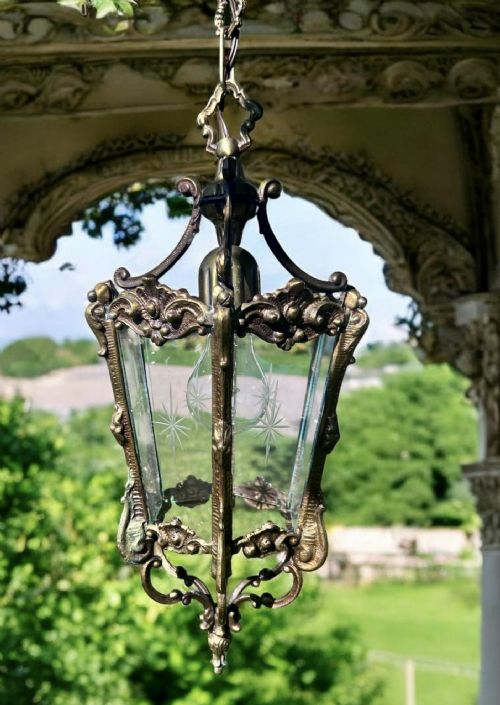
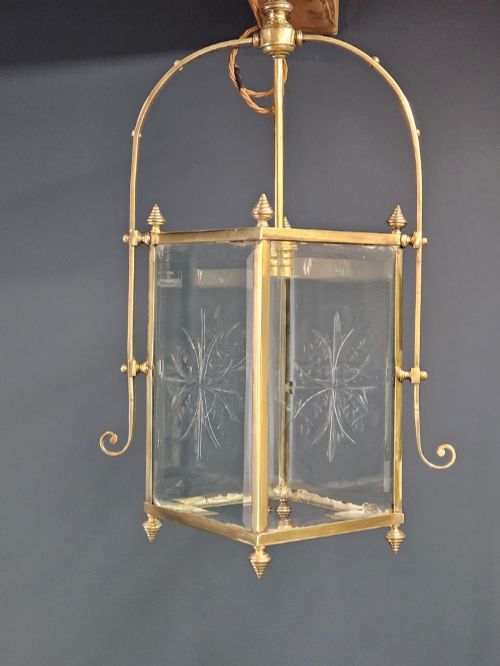
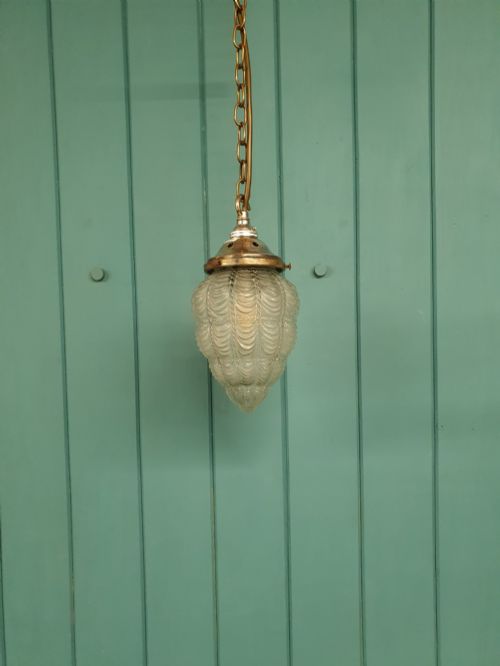


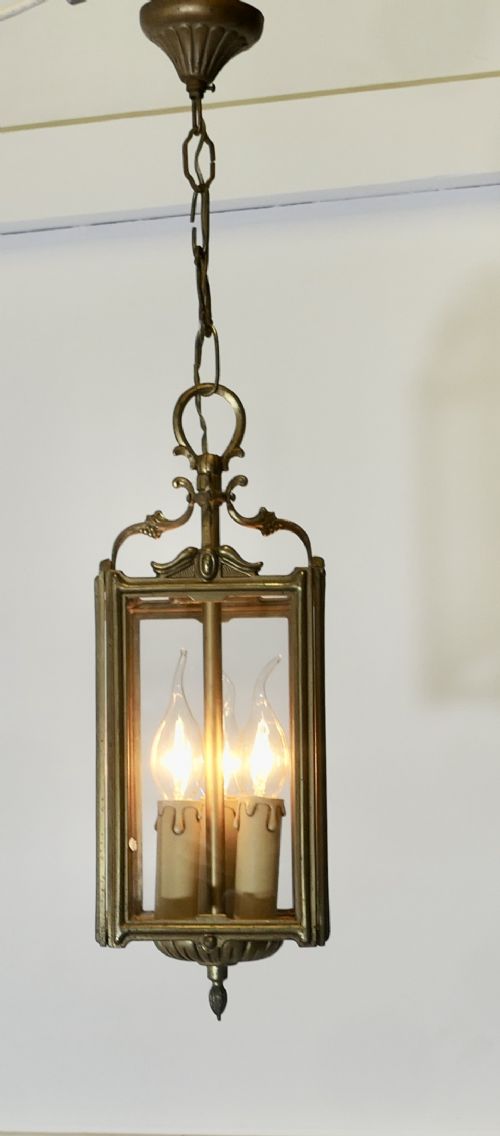


Etched Glass Hall Pendant
An etched glass hall pendant brings period light and shadow into an entryway, offering an immediate decorative focal point for your interior.
Etched Glass Hall Pendant
When you search for an etched glass hall pendant, you are exploring overhead lighting designed specifically for corridors, vestibules, and entrance spaces. These fixtures suspend from ceilings to distribute illumination downward through patterned or frosted glass panels, often housed in metal frameworks.
The versions you meet most frequently on this page span the Victorian, Edwardian, and Art Deco periods, alongside French and Italian examples from the nineteenth and early twentieth centuries. They appear primarily as pendant lights, ceiling lights, and hall lanterns, frequently constructed with single or multiple interior lights.
How they were made
These pendants rely on a combination of cast or fabricated metalwork and treated glass panels. Frameworks take shape in brass, gilt brass, gilt bronze, wrought iron, and silver-gilded metal.
The glass elements utilise etching, frosting, and pressing techniques to diffuse light and create decorative motifs. Early iterations developed for candles transition into wired electrical fittings while retaining their original glass shades and metal chassis.
Listings feature pieces spanning the nineteenth century through the 1930s, incorporating brass, gilt bronze, wrought iron, and pressed glass.
What varies in quality
Quality rests in the substantial weight of the metal framing and the crispness of the surface decoration on both the brass and the glass. Heavier castings, intricate openwork metal frames, and deeply cut or evenly frosted glass panels distinguish the superior examples.
Proportion and architectural presence also define the range, with larger lanterns or those bearing distinct stylistic influences like French Chateau or Gothic Revival showing greater decorative ambition.
The Etched Glass Hall Pendant Glossary
- Etched glass
- Glass treated with acid or abrasive substances to cut decorative patterns into the surface. This technique diffuses light gently while creating opaque ornamentation.
- Hall lantern
- A ceiling-hung lighting fixture enclosed in glass and metal, designed originally to illuminate narrow corridors and entrance halls.
- Gilt brass
- Brass coated with a thin layer of gold leaf or gilt finish to enhance its lustre and appearance.
- Frosted glass
- Glass rendered opaque through sandblasting or acid etching, producing a soft, glare-free distribution of light.
- Pendant light
- A single light fixture suspended from the ceiling by a chain, cord, or metal rod.
Etched Glass Hall Pendant: Frequently Asked Questions
How do I hang a hall pendant?
These fixtures suspend from ceilings using chains, rods, or wiring suited to the weight of the metal and glass body. You must ensure the ceiling junction box supports the specific load of the lantern.
Professional installation is recommended, particularly for older or rewired fixtures that require careful integration with modern electrical systems.
Where should I place a hall pendant?
They belong in entryways, vestibules, corridors, and high-ceilinged hallways where vertical space allows the fixture to hang freely. Their downward illumination and decorative glass patterns create a welcoming atmosphere at the threshold of a home.
Ensure the pendant hangs high enough to permit comfortable clearance beneath it while remaining visually centred in the space.
How do I date an antique pendant?
Dating relies on observing the stylistic markers of the metalwork, such as Edwardian restraint, Art Deco geometric lines, or Victorian Gothic detailing. The construction methods and materials, including early brass alloys and hand-etched glass, also point toward specific eras.
Reviewing the listed period indicators helps align the physical characteristics of the lantern with its approximate decade of manufacture.
Can these pendants be rewired safely?
Many period fixtures arrive with updated electrical components while retaining their original glass and metal shades. Modern wiring can be integrated by a qualified electrician to meet contemporary safety standards without altering the exterior appearance.
Preserving the original canopy, chain, and shade ensures the historical integrity of the piece remains intact during the rewiring process.