
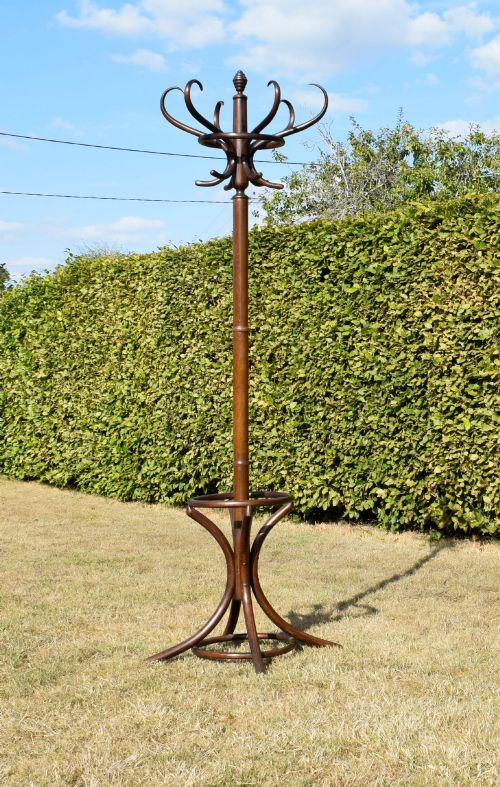
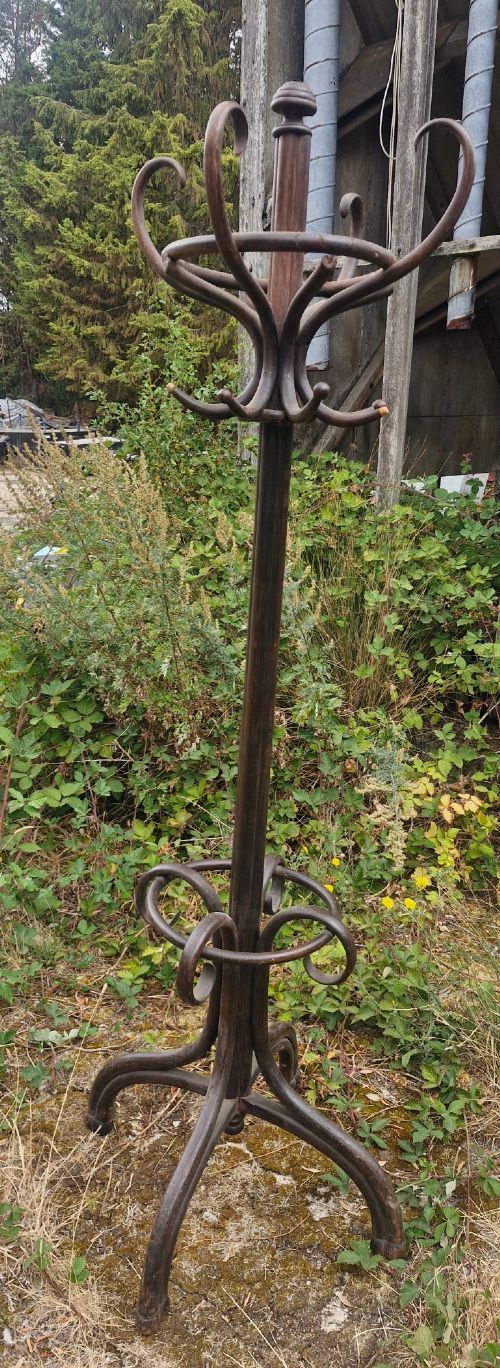
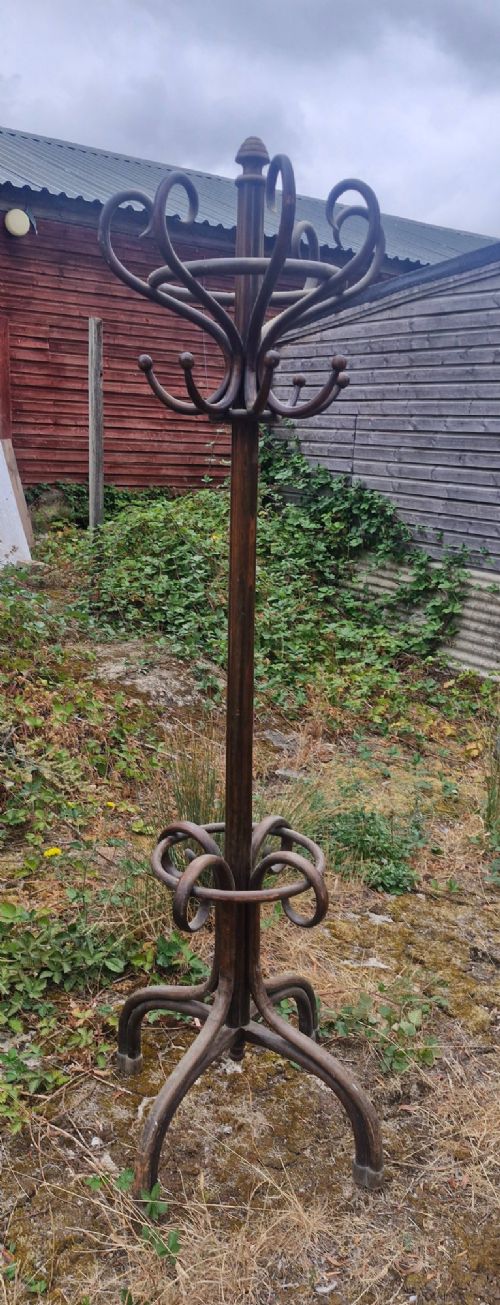
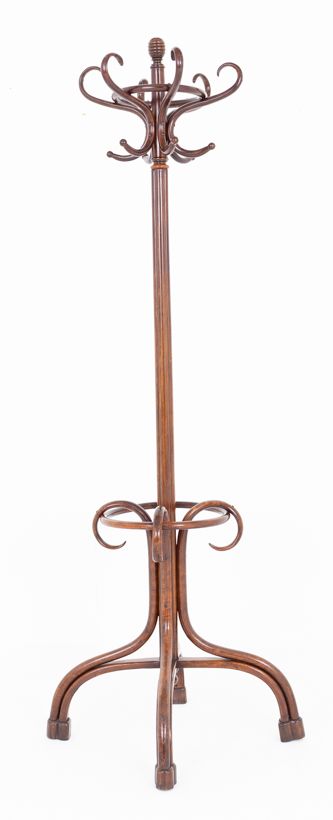
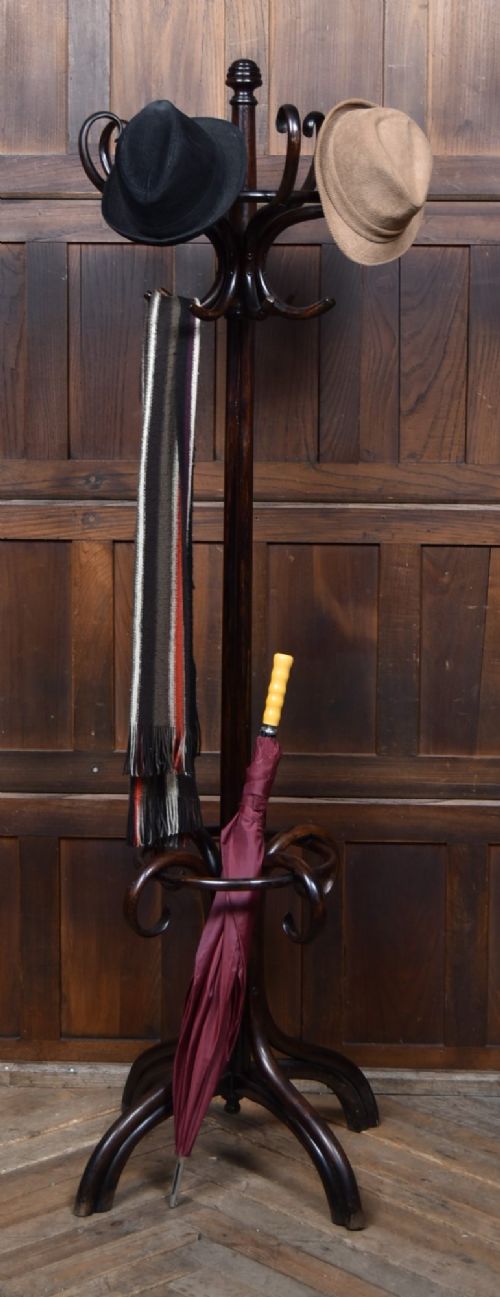
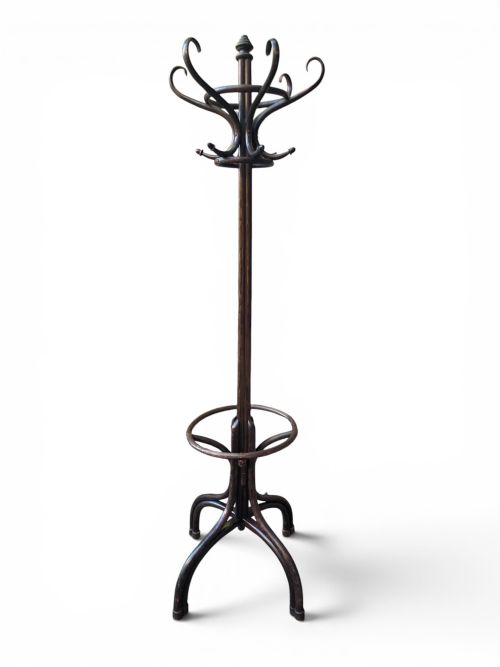
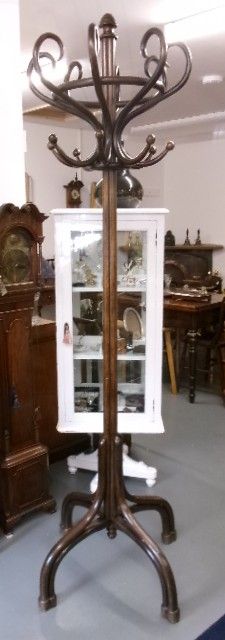
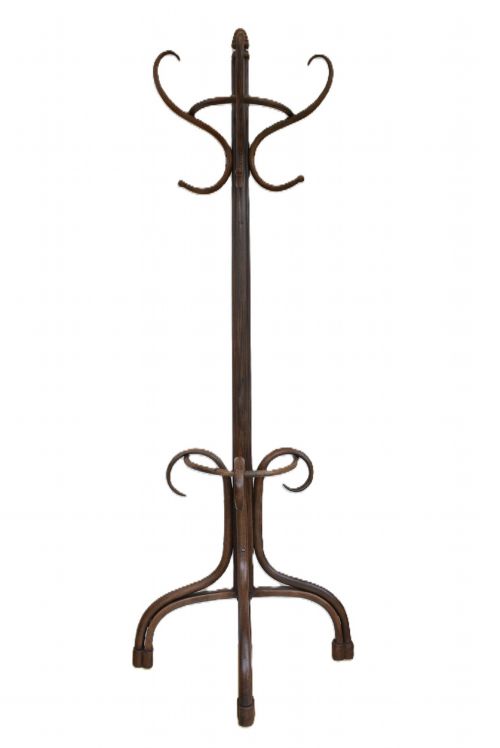
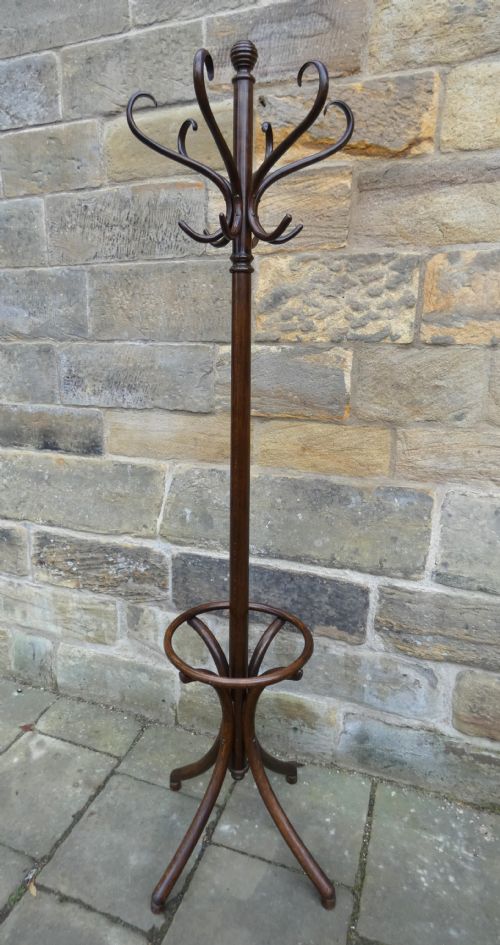
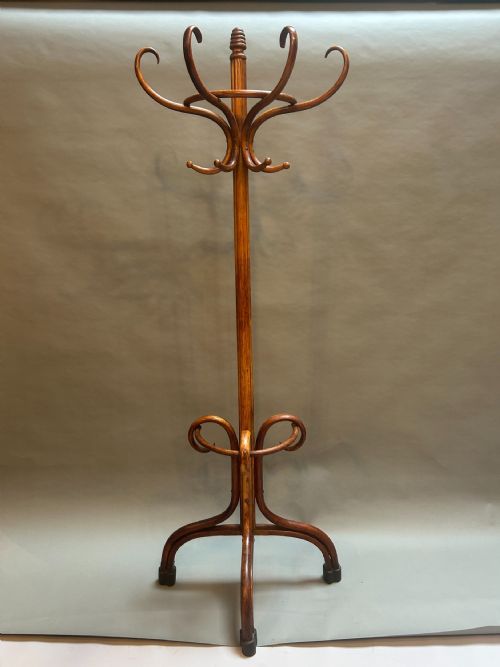
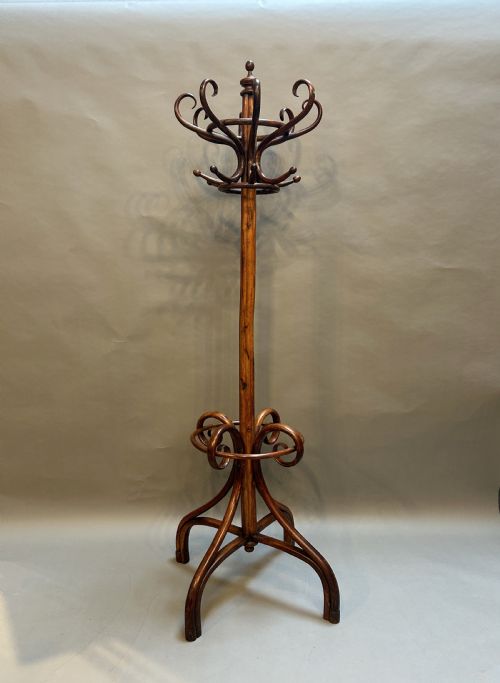
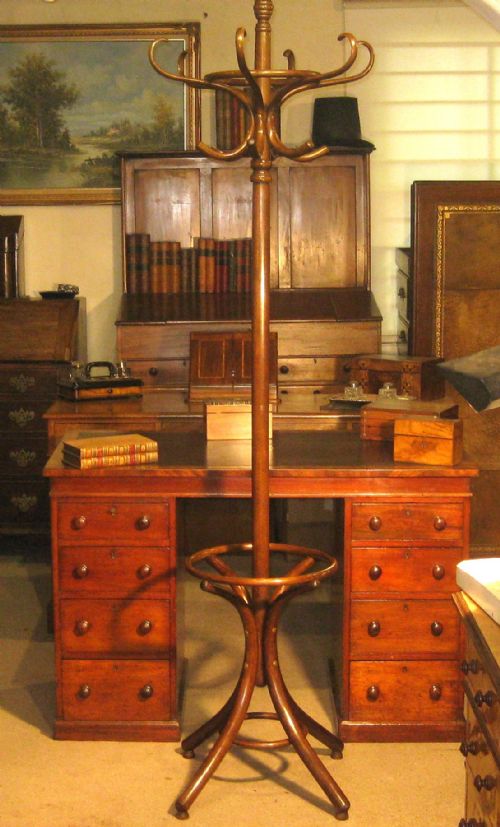
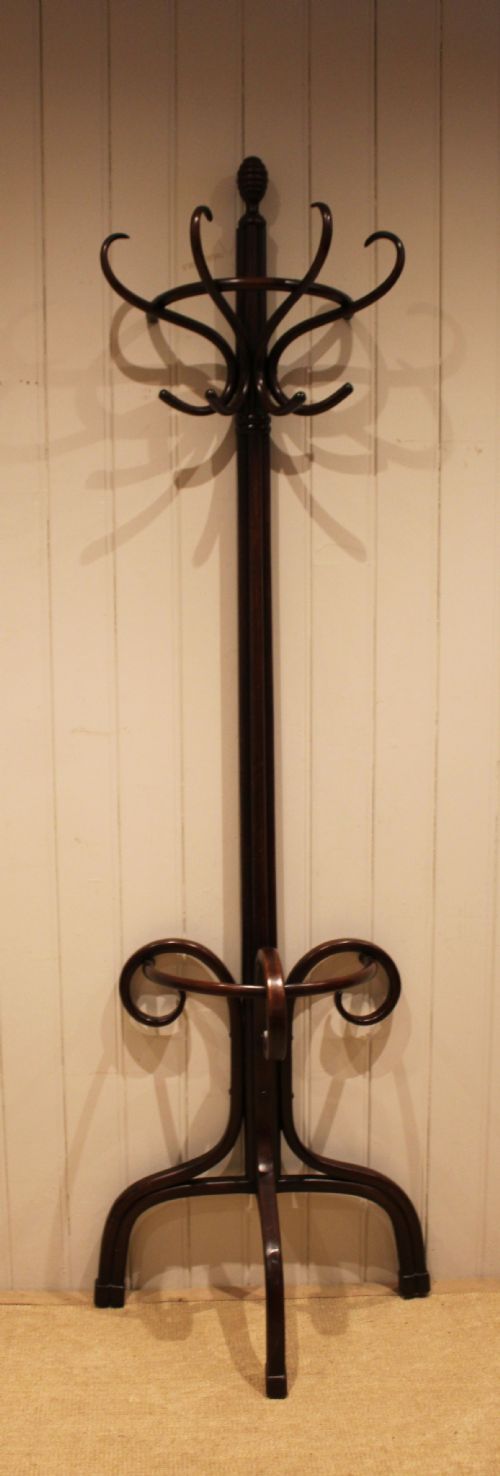


Edwardian Bentwood Coat Stand
An Edwardian bentwood coat stand is a light, curved timber hall fixture designed to hold garments cleanly in domestic spaces.
Edwardian Bentwood Coat Stand
The edwardian bentwood coat stand is a tall hall fixture built to hold hats, coats, sticks and umbrellas in domestic entrances. When searching this phrase, a buyer encounters upright circular frames, half-round formats, demi-lune hall stands, and flat-back wall-standing designs.
Most examples originate from the early twentieth century, spanning decades from nineteen hundred to nineteen thirty, with strong representation from the edwardian period. Pieces often combine coat hooks with lower umbrella rings and stick holders, functioning as comprehensive hallway furniture.
Makers such as thonet and fischel produced these items in austrian bentwood styles, alongside English interpretations that adopt similar curved forms. Buyers frequently meet circular or revolving hatstands fitted with multiple upward-curving wooden arms.
Construction and materials
Manufacturing relies on beech, beechwood, and steam-bent wood shaped through moisture and heat to create smooth, sweeping curves without weak joints. Steam-bent techniques allow the timber to form continuous scrolls for coat hooks and circular umbrella rings.
Finishes include plain wood stain and ebonised coatings applied over the timber surface to protect the grain while defining the colour. Glass elements occasionally appear in allied hall furniture, though the primary structure remains entirely wooden.
Several stands feature integrated umbrella rings designed to catch drips from Edwardian walking sticks.
Judging build quality and structure
Quality rests in the rigidity of the upright poles and the secure fitting of the steam-bent timber branches under daily weight. Superior items maintain solid connections at the crown and base without looseness in the revolving sections or stick rings.
Heavier gauges of beechwood and finer surface finishing separate robust examples from simpler utility stands. Maker stamps, particularly from established workshops like thonet, distinguish specific benchmark productions from standard period pieces.
Thonet·Fischel
The Edwardian Bentwood Coat Stand Glossary
- Bentwood
- Wood that has been shaped by exposure to steam and pressure into permanent curves. This technique creates lightweight yet strong frames for furniture.
- Demi-Lune
- A half-moon or semi-circular shape utilised in hall stands designed to sit flat against a hallway wall. It saves floor space while offering coat and umbrella storage.
- Hall Tree
- An alternative term for a hall stand combining hooks for hats and coats with compartments for walking sticks and umbrellas. These vertical pieces anchor entrance spaces.
- Ebonised
- Wood finished with a dark stain or polish to imitate ebony. This treatment provides a formal appearance popular in early twentieth century domestic interiors.
- Revolving
- A rotating top section allowing easy access to multiple hats and coats from a stationary base. This mechanism appears on select hatstands in the evidence.
Edwardian Bentwood Coat Stand: Frequently Asked Questions
How do I assemble a bentwood coat stand?
Most stands utilise threaded wooden screws or central metal rods that bind the upper crown, upright poles, and lower base together.
Careful alignment ensures the curved arms point evenly outward without straining the steam-bent grain.
Will a demi-lune stand fit a small hallway?
The half-round shape sits flush against a wall, projecting outward far less than a full circular stand.
This makes demi-lune versions practical for narrow entryways where floor depth is restricted.
How do I clean steamed beechwood?
Dust the curved surfaces regularly with a dry cloth to prevent grime accumulation in the steam-bent joints.
Avoid excessive moisture, using only a slightly damp cloth followed by immediate drying to preserve the wood stain.
Are revolving top sections delicate?
The rotating mechanism on a revolving hatstand relies on central pivots that should turn smoothly without lateral wobble.
Balanced weight distribution across the upper hooks prevents undue strain on the internal turning parts.
What is the difference between a hall stand and a coat stand?
A standard coat stand focuses primarily on hanging garments and hats from vertical curved branches.
A hall stand typically incorporates lower ring attachments for walking sticks and umbrellas alongside the upper coat hooks.