

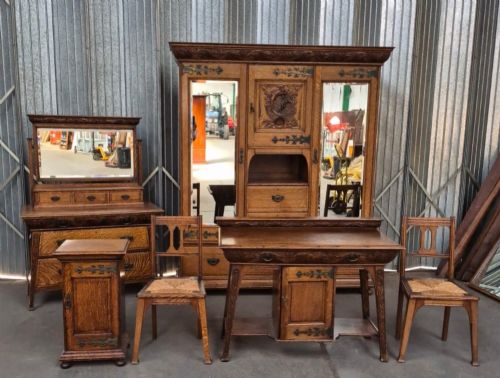


Edwardian Bedroom Suite
These edwardian bedroom suite groupings offer matched domestic furniture in durable timbers, bringing complete period coordination to sleeping quarters.

Edwardian Bedroom Suite
An edwardian bedroom suite comprises coordinated furniture pieces designed for sleeping spaces, most frequently encountered in combinations of wardrobes, dressing tables, and washstands dating from around nineteen hundred. These groupings span multiple timber choices and styles, reflecting the domestic requirements of large and modest homes alike during the period.
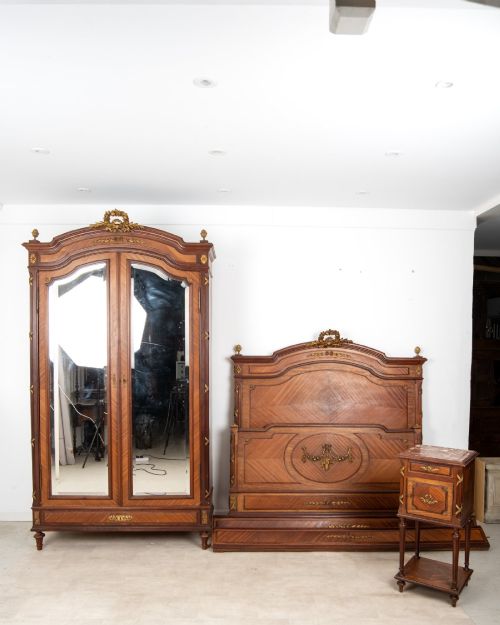
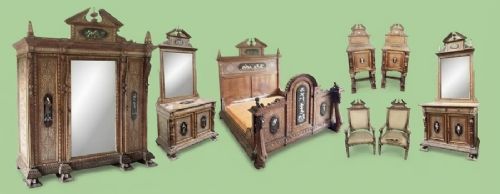
The configurations range from compact two-piece sets to extensive eight or nine-piece collections incorporating chests of drawers, beds, and bedside cabinets. Alongside standard bedroom suites, related seating and salon furniture occasionally appear, maintaining the stylistic vocabulary of the primary chamber pieces.
Materials and Construction Methods
Cabinetmakers constructed these suites using solid and veneered timbers including mahogany, oak, walnut, ash, satinwood, and rosewood, frequently enhanced with string inlay and decorative joinery. Structural stability in large wardrobes and washstands relied upon substantial timber frames combined with glass mirrors, brass hardware, and marble tops.
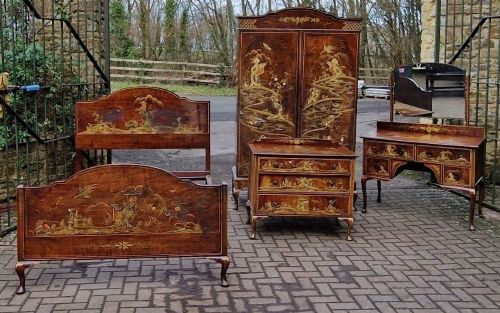
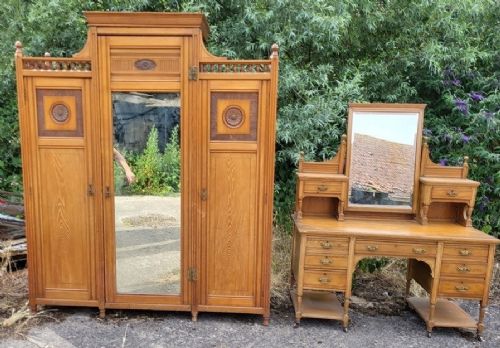
Stylistic variation was achieved through specific decorative treatments, ranging from the linear geometric elements of Arts and Crafts workshops to painted Chinoiserie motifs and revivalist mahogany carving. Individual pieces within a suite were matched through consistent timber selection and recurring inlay patterns across the doors, drawers, and cresting rails.
Edwardian Bedroom Suite Retail Price Guide 2026
Typical asking prices for edwardian bedroom suite among the pieces listed under this phrase on Sellingantiques today, from the lower quarter to the upper quarter. They describe what is for sale here now, not the wider market.
The evidence records suites spanning multiple decades from eighteen eighty to nineteen ten, incorporating Victorian, Edwardian, and Arts and Crafts design idioms.
Evaluating Design and Execution
The distinction between standard commercial sets and exceptional workshop production lies in the ambition of the timber selection and the precision of the cabinetwork. Suites produced by notable makers display superior grain matching, intricate marquetry, and heavier gauge brass fittings that elevate them above simpler domestic furniture.
Cohesion across multi-piece suites indicates higher manufacturing standards, where secondary timbers and interior drawer construction receive the same attention as primary display surfaces. The integration of specialised forms, such as serpentine fronts or compactum wardrobes, demonstrates greater technical accomplishment by the maker.
Waring & Gillows·Shapland & Petter·Lamb of Manchester·Arnott & Co·Maples·Shoolbred & co
The Edwardian Bedroom Suite Glossary
- Compactum wardrobe
- A multi-compartment wardrobe combining hanging space with internal drawers, shelves, and trouser presses.
- Washstand
- A dedicated chamber table featuring a marble or tile top designed to hold a basin, jug, and washing accessories.
- Tallboy
- A high storage chest composed of a chest of drawers positioned beneath or upon another chest.
- String inlay
- A delicate decorative technique utilising thin lines of contrasting timber inlaid flush into the primary surface.
- Chinoiserie
- A decorative style employing European interpretations of Chinese artistic motifs, often executed in painted lacquer or low relief.
Edwardian Bedroom Suite: Frequently Asked Questions
What pieces comprise a complete suite?
A complete edwardian bedroom suite typically includes a wardrobe, a dressing table, and a washstand, while larger groupings incorporate chests of drawers, bedside cabinets, and bedsteads.
The exact combination varies according to the original commission, ranging from two-piece sets to extensive nine-piece collections designed for larger residences.
How do Arts and Crafts suites differ?
Arts and Crafts suites emphasise plain timber grain, particularly oak or ash, utilising exposed joinery and hand-hammered metal fittings rather than applied surface decoration.
These pieces reflect a distinct shift away from revivalist carving toward structural honesty and simpler domestic utility.
Where were these suites made?
Production occurred across British and Irish workshops, ranging from large retail furnishers in London and Manchester to regional cabinetmakers and Dublin stores.
Makers utilised imported tropical hardwoods alongside native timbers to satisfy domestic demand for coordinated chamber furnishings.
How should mixed timber suites be placed?
Coordinated suites rely on consistent finish and style rather than uniform timber species across every single item, allowing flexible arrangement within a chamber.
Matching elements such as brass handles and inlay work unify the grouping even when individual pieces serve distinct functional roles.