






Ecclesiastical Carved Wood Figures
Ecclesiastical carved wood figures bring the solemnity and devotional focus of historic churches directly into domestic spaces through centuries of sacred artistry.
Ecclesiastical Carved Wood Figures
When you search for ecclesiastical carved wood figures, you encounter devotional statues, saints, and religious panels originating from continental Europe and Britain. These pieces span multiple centuries, ranging from late medieval and Renaissance workshops through to Baroque interpretations and later revival periods.
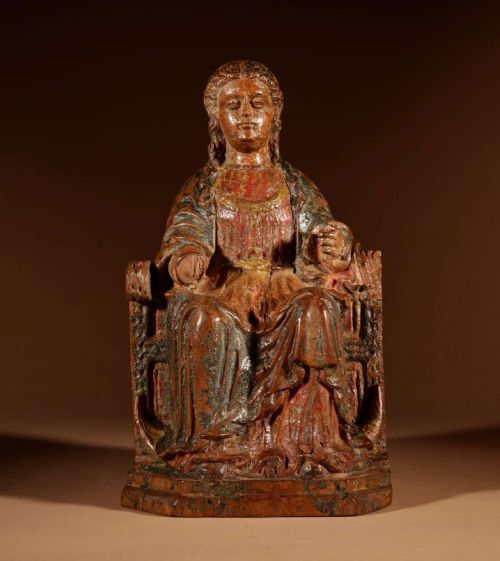
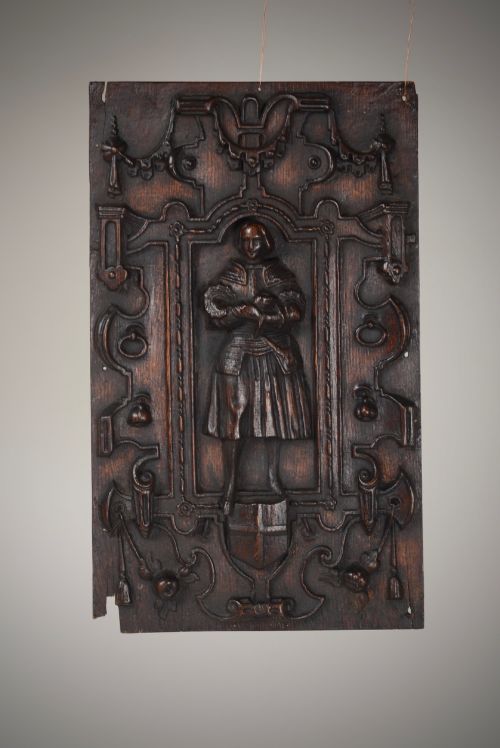
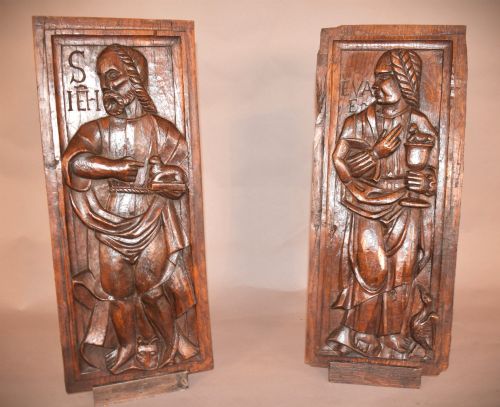
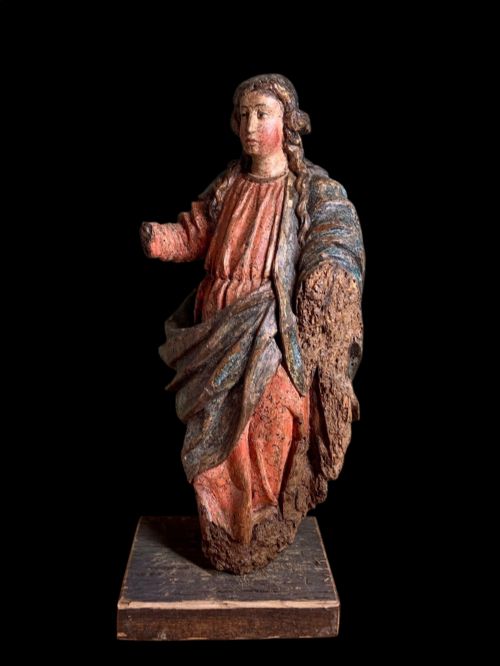
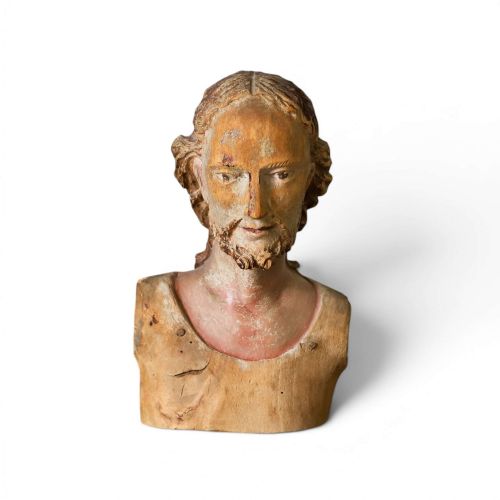
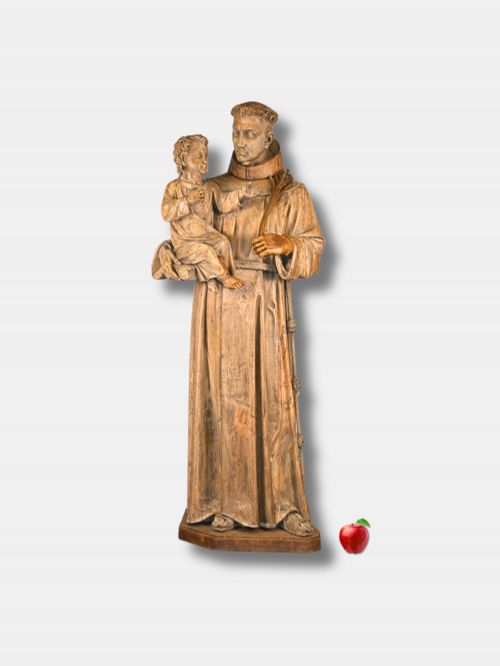
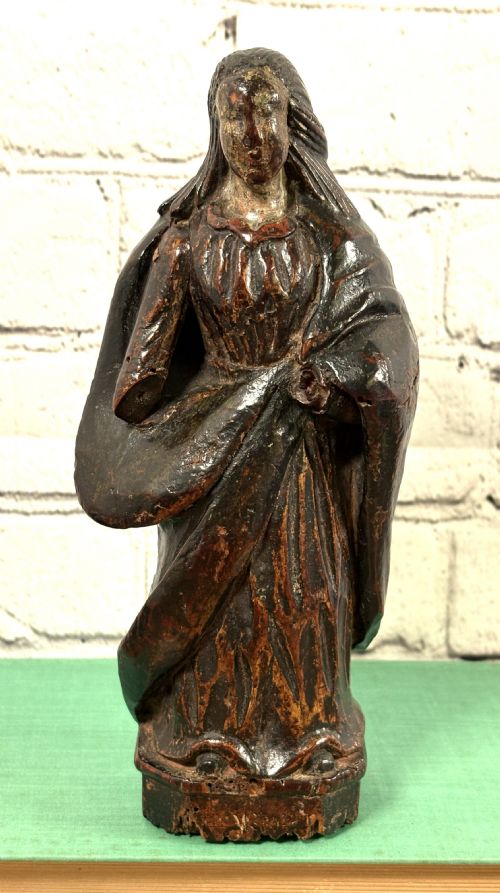
On this page, the most frequent pieces you meet are figures of the Virgin Mary, various saints, angels, and corporate representations carved from timber. They take the form of freestanding statues, bust studies, wall panels, and architectural fragments.
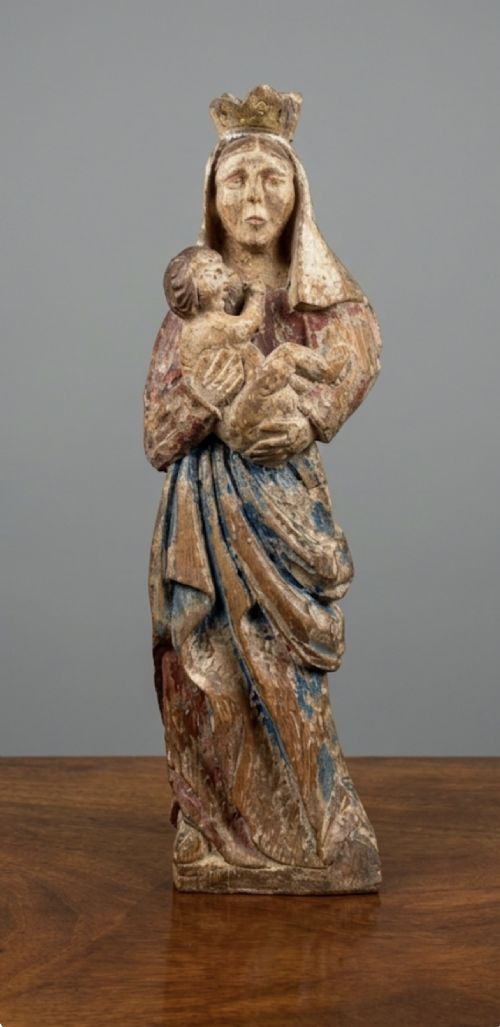
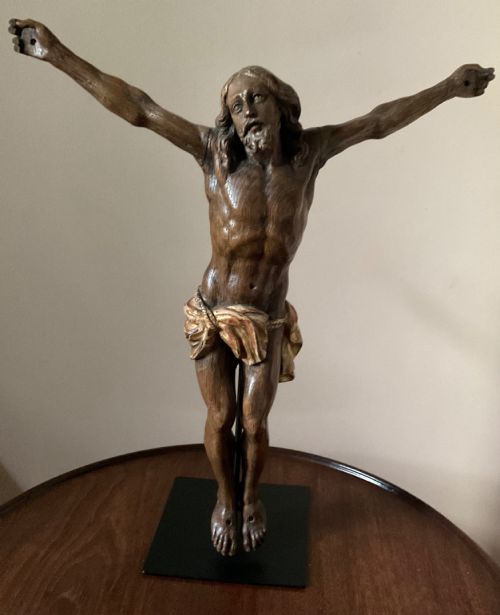
The objects serve as tangible links to historical religious spaces, preserving the hand of the carver in subjects such as Madonna and child groupings, crucifixion corpuses, and individual apostles.
Materials and Techniques
Carvers utilised local timber varieties including oak, walnut, limewood, and olive wood, selecting dense hardwoods that allowed for deep, stable undercuts and intricate drapery folds.
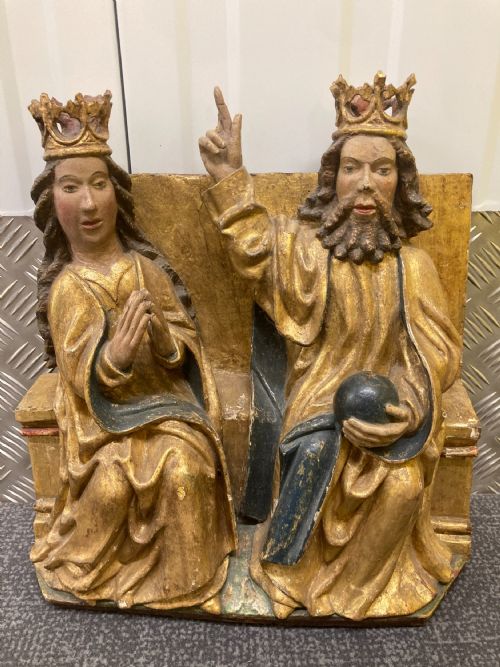
Many surfaces received layers of gesso preparation before being painted in polychrome pigments or covered in gold leaf, adding rich colour and luminosity to the sacred forms.
The listings on this page span several centuries, reaching from the pre-16th century era through the 16th, 17th, 18th, and 19th centuries.
Evaluating Quality and Execution
The preservation of original surface treatments, including traces of early polychrome paint and gilding beneath later layers, dictates the historical integrity of the piece. Surfaces stripped down to bare timber lose the intended visual hierarchy established by the original workshop.
The Ecclesiastical Carved Wood Figures Glossary
- Polychrome
- Painted in several colours. This term describes wooden sculptures finished with decorative pigments over a gesso ground.
- Corpus Christi
- The body of Christ on the cross. These wooden figures focus specifically on the anatomy of the crucifixion.
- Gesso
- A plaster mixture used as a surface preparation for wood. It provides a smooth base for subsequent gilding and painting.
- Giltwood
- Wood that has been decorated with thin sheets of gold leaf. This technique imparted a heavenly radiance to church statues.
- Santos
- A carved figure of a saint. These devotional statues often stood on plinths within religious settings.
Ecclesiastical Carved Wood Figures: Frequently Asked Questions
How do I date an old wooden figure?
Dating relies on stylistic clues found in the carving of hair, drapery folds, and the tool marks left behind by the maker. Early pieces often exhibit Gothic stiffness, while later Baroque examples show dynamic movement.
Material choice also assists with attribution, as specific regional workshops favoured local hardwoods like oak, walnut, or limewood during distinct centuries.
Where were these religious figures originally displayed?
Most of these carvings originated inside churches, abbeys, and private domestic chapels across Europe. They stood on altars, adorned architectural screens, or served as focal points for personal prayer.
Larger statues often stood on dedicated plinths or within wall niches, while panels were integrated directly into church furniture.
What is polychrome paint on wood?
Polychrome refers to the application of multiple coloured pigments directly onto the wooden surface or over a prepared gesso layer. This technique brought realism and ceremonial splendour to sacred sculptures.
Over the centuries, many pieces lost parts of their original paint layers or received later overpainting during maintenance work.
How should I care for antique wood carvings?
Maintain stable relative humidity and temperature in your room to prevent the timber from splitting or warping. Keep the carvings away from direct sunlight and strong heat sources.
Dust the surface gently with a dry, soft brush and avoid applying modern polishes or cleaning agents that could damage historic finishes.