


Pair of Putti
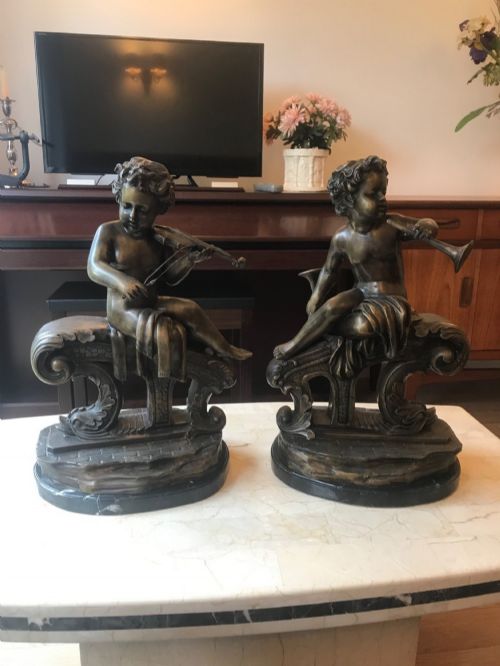
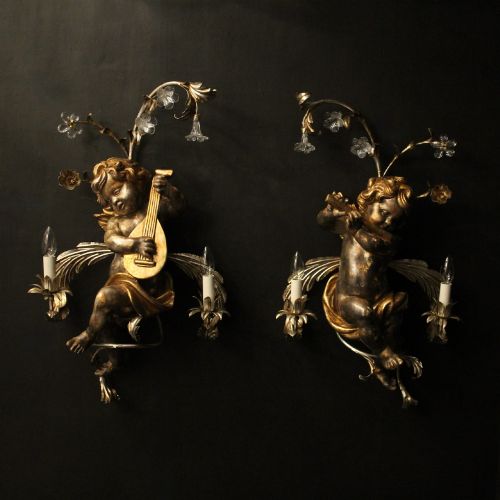
A pair of putti brings classical sculptural movement to interior lighting, mantelpieces and wall brackets through cast metal, carved wood and glazed porcelain figures.
Pair of Putti
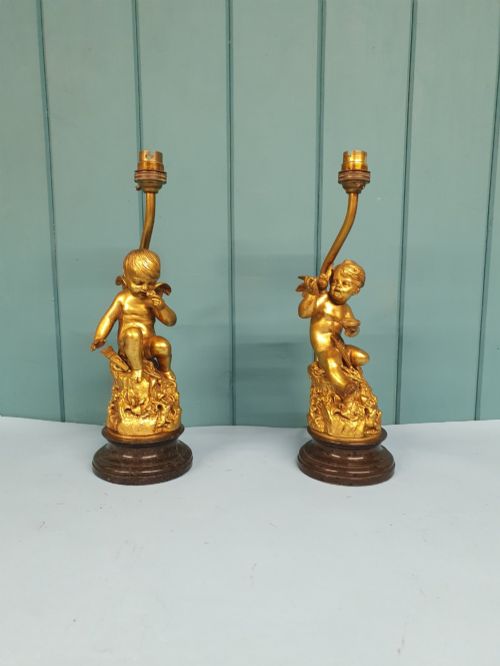
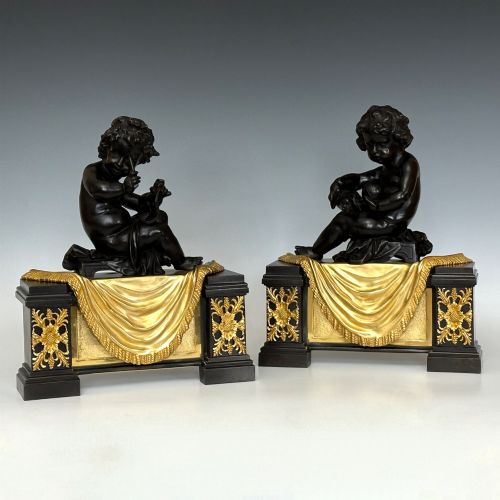
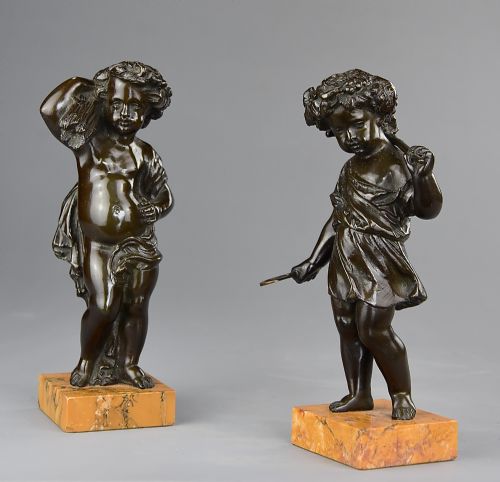
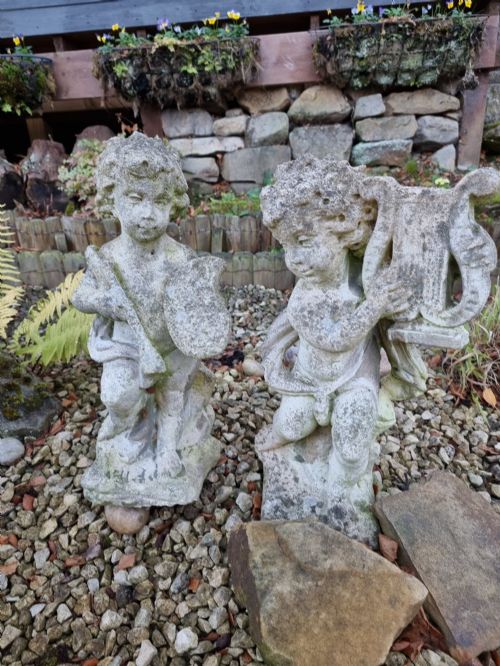
When searching for a pair of putti, collectors encounter winged infant figures rendered as freestanding sculptures, lamp bases, wall lights and fireplace chenets spanning the eighteenth, nineteenth and early twentieth centuries.
The most common examples on this page date from the nineteenth century, reflecting nineteenth-century revival styles such as French Empire, Rococo and Baroque.
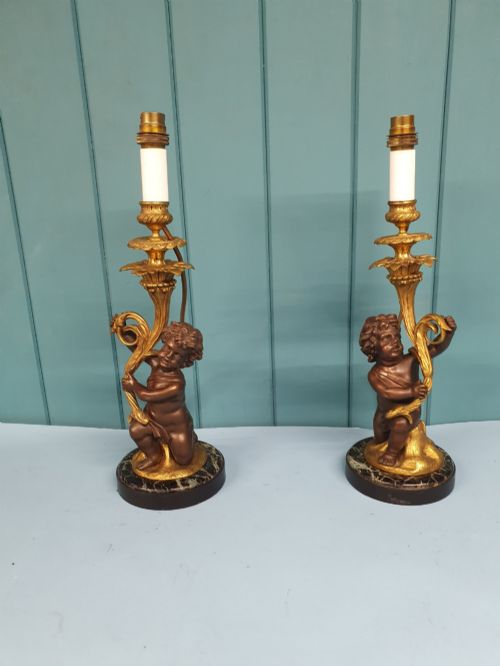
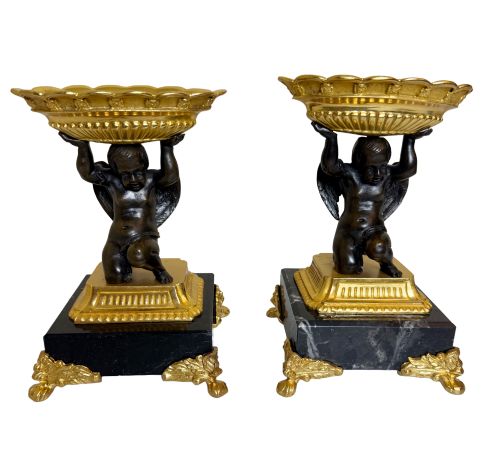
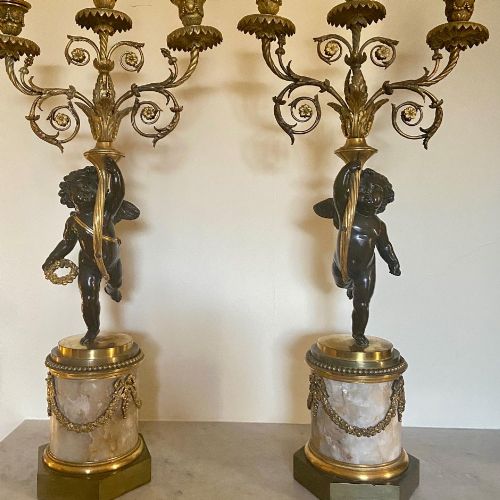
These decorative objects frequently incorporate functional elements, appearing as candelabra branches, wall sconces and tazzas supported by bronze or porcelain cherubs.
Materials and construction methods
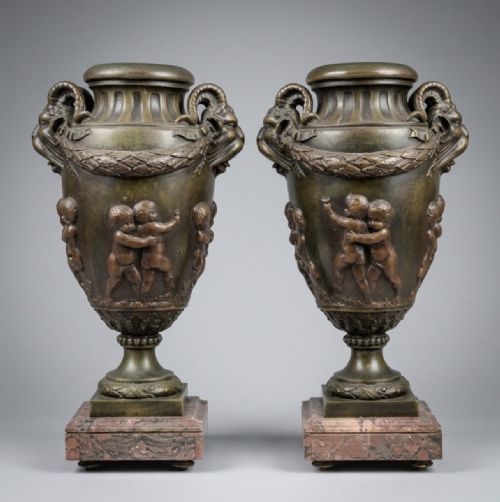
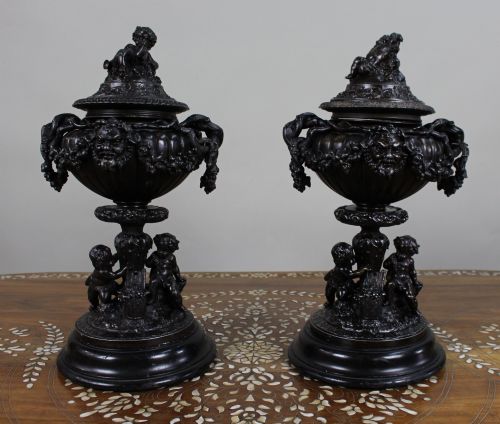
Foundry-cast bronze, patinated bronze and ormolu dominate the metal pieces, often mounted upon polished marble or slate bases.
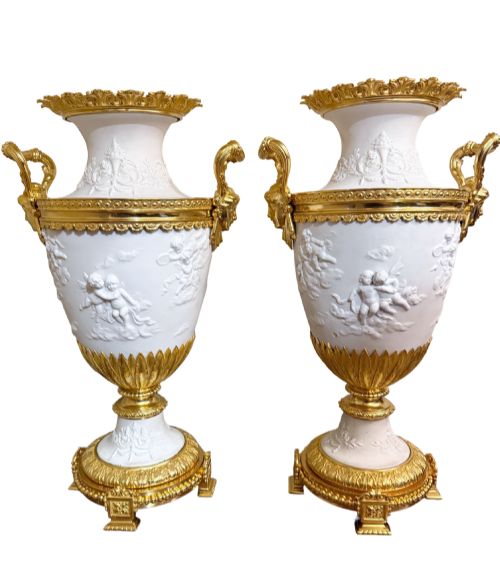
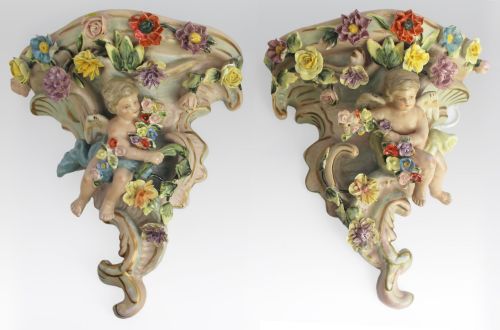
Ceramic examples utilise fine porcelain bodies, sometimes paired with gilt metal mounts and hand-painted floral embellishments.
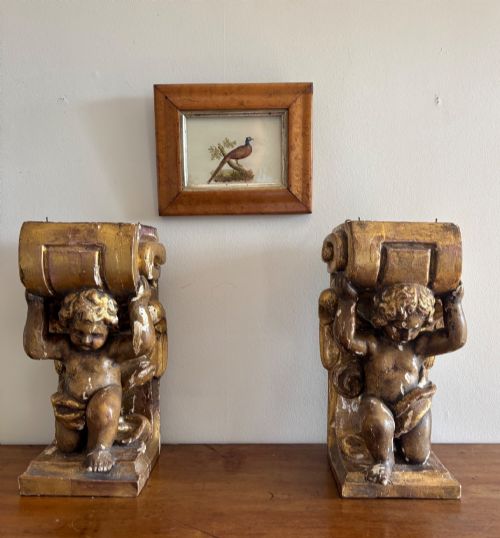
Earlier and alternative pieces employ carved wood, giltwood and spelter, reflecting the specific medium chosen by the maker.
Functional forms include table lamps, wall sconces, candelabra, fire dogs and paperweights alongside standalone sculptures.
Distinctions in craftsmanship
The crispness of the chasing on bronze and ormolu figures separates standard production pieces from finer studio work, where facial expressions and wing feathering remain sharp.
Porcelain quality rests upon the delicacy of the modelling, the application of glaze and the finesse of any accompanying floral details.
The integration between the figurative elements and their bases, whether marble plinths or candelabra arms, dictates the overall coherence of the design.
Claude Michael Clodion·Francois Redmond·Sylvain Kinsburger·H Schubert·Edme Samson
The Pair of Putti Glossary
- Putto
- A representation of a plump, naked infant, often winged, derived from classical art and frequently seen in Renaissance and later revival decorative objects.
- Ormolu
- Gilding technique utilising finely ground high-carat gold applied to a bronze base, providing a rich yellow lustre common in French decorative arts.
- Spelter
- An alloy of zinc and lead used as a cost-effective alternative to bronze in nineteenth-century sculptural casting, typically given a bronze-toned finish.
- Chenet
- An ornamental metal fire dog placed on the hearth, often featuring figurative casts such as putti or mythological masks.
- Caryatid
- A sculpted human figure acting as an architectural support column, occasionally appearing in the form of winged cherubs on wall brackets.
Pair of Putti: Frequently Asked Questions
How were putti used historically?
These figures served primarily as decorative motifs in domestic interiors, integrated into lighting fixtures, fireplace furniture and architectural brackets.
Craftsmen combined the sculptural form of the child with practical functions such as holding candle nozzles or supporting lighting arms.
Are these pieces French or Italian?
The listings show a strong representation of nineteenth-century French manufacture, particularly influenced by Louis XIV, Louis XV and Empire styles.
At the same time, Italian grand tour pieces, Venetian wall lights and German porcelain factories like Meissen and Sitzendorf contribute significantly to the variety.
How do I date a bronze pair?
Dating relies on the casting technique, the character of the patination, and the style of any associated marble bases or mounts.
Nineteenth-century examples frequently adopt revival aesthetics like Rococo or Neoclassical, while eighteenth-century pieces display earlier hand-finished surface characteristics.
How should I care for gilt bronze?
Gilt bronze and ormolu require gentle dusting with a soft, dry cloth to protect the delicate gold leaf surface.
Harsh chemical cleaning agents and abrasive cloths must be avoided entirely to preserve the original metal finish.