

Carved Wood Cherubs
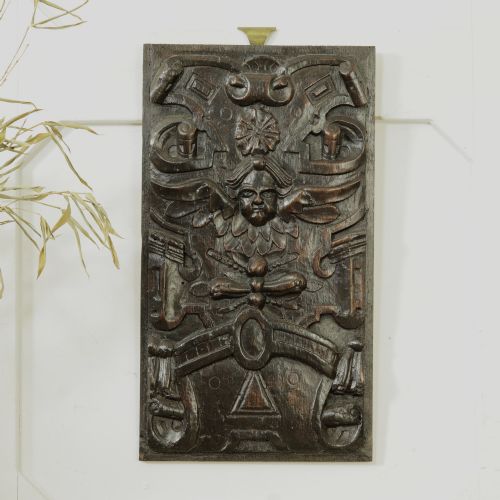
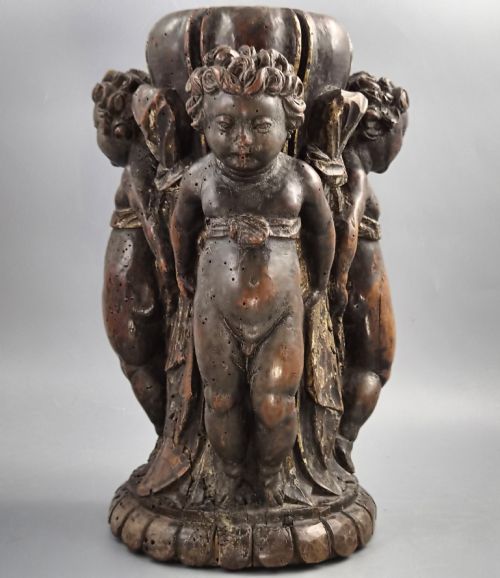
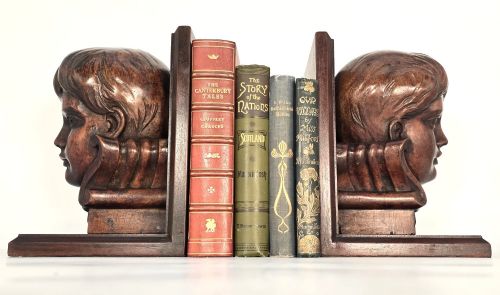
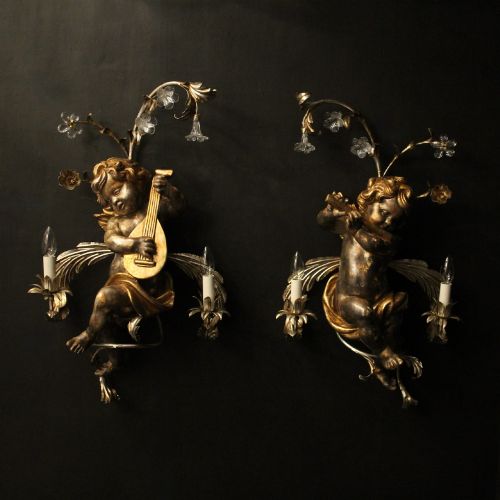
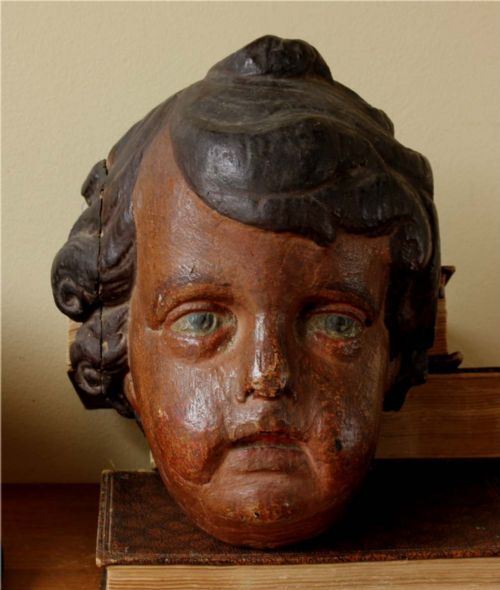
Carved wood cherubs bring classical form and traditional craftsmanship into interiors through figures shaped in oak, walnut, lime wood, and giltwood.
Carved Wood Cherubs
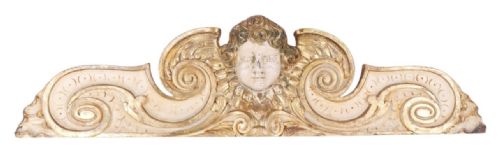
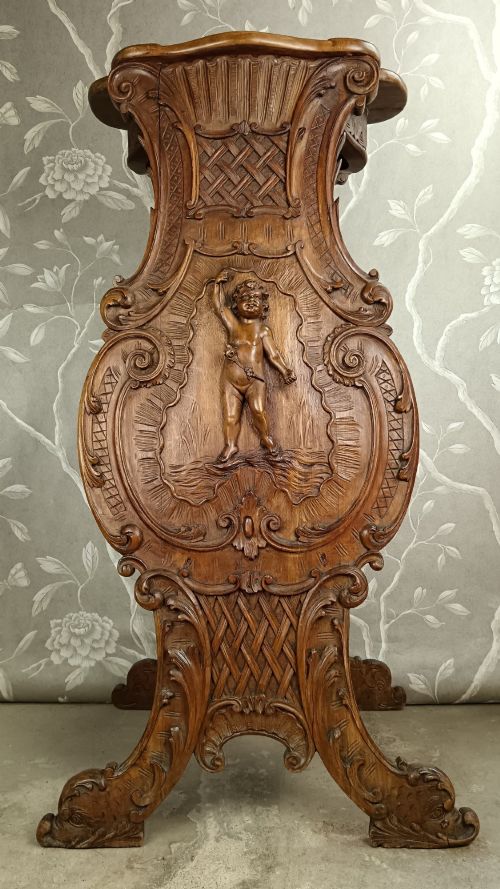
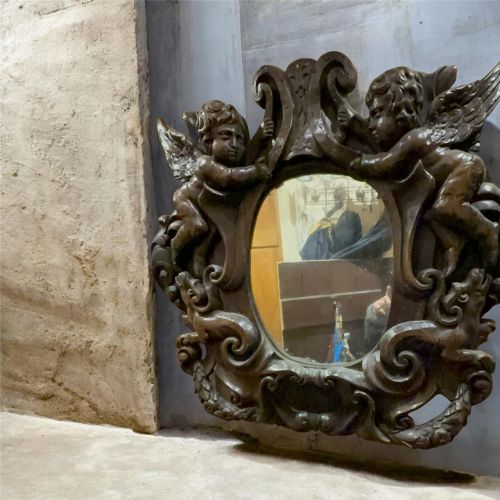
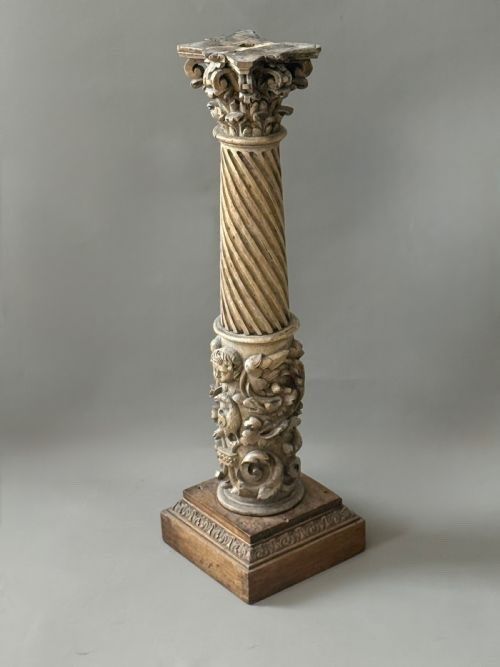
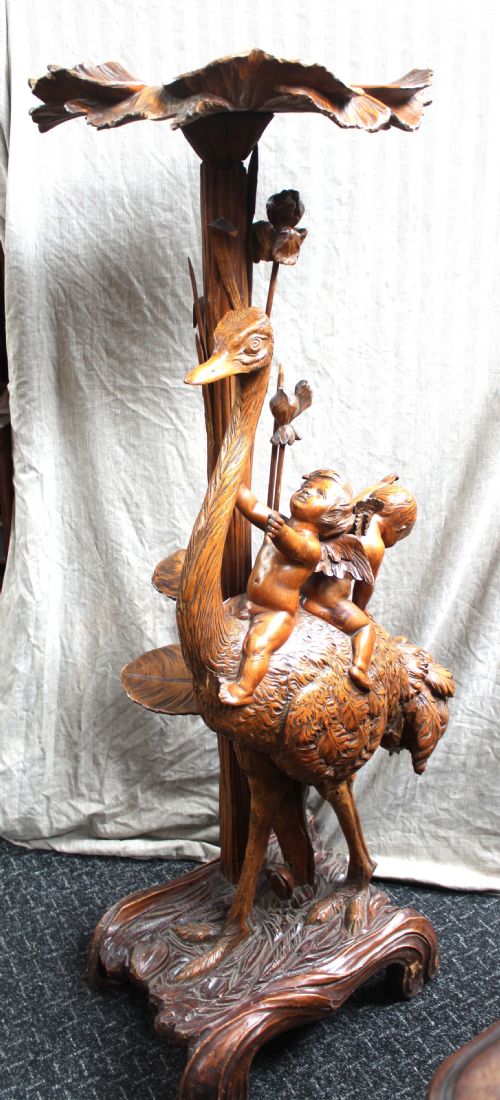
When searching for carved wood cherubs, buyers encounter sculptural figures, architectural elements, and decorative fittings derived from Baroque, Renaissance Revival, and Rococo traditions. These pieces appear as wall brackets, mirror frames, torchieres, architectural panels, and standalone figures originating from continental European workshops.
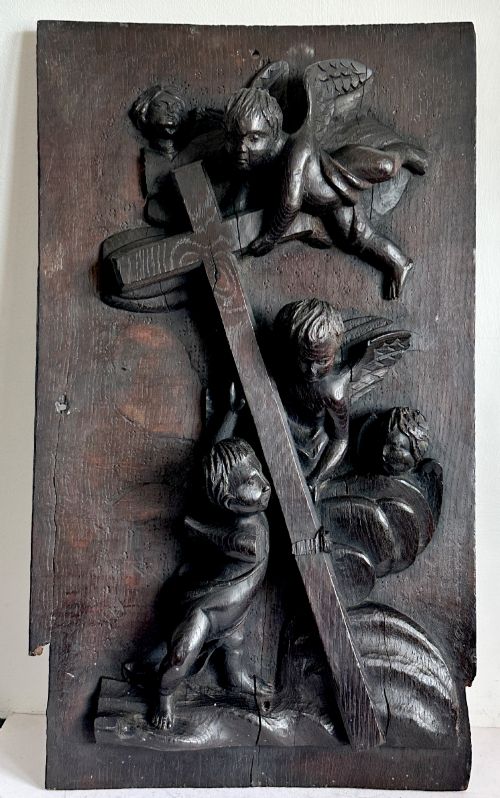
The selections available range from 17th-century oak panels and walnut torchiere bases to 19th-century giltwood wall brackets and 20th-century giltwood wall lights. Italian and French pieces dominate the record, often utilising traditional religious or secular decorative motifs alongside the winged putti.
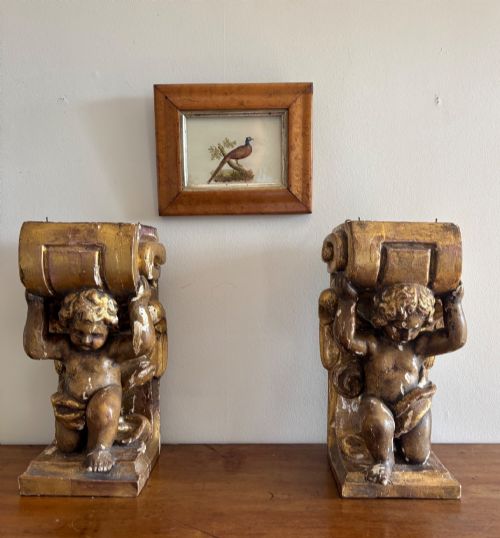
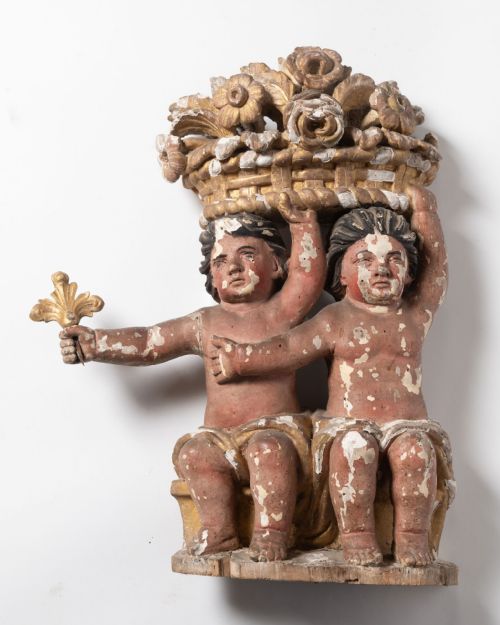
Buyers are most likely to meet 19th-century revival pieces alongside genuine 17th and 18th-century architectural fragments. Forms vary from high-relief panels and wall mirrors to sculptural pairs of winged figures intended to support shelves, lights, or structural overdoors.
How they were made
Carved wood cherubs rely on foundational timbers such as oak, walnut, lime wood, and fruitwood, shaped with hand gouges and chisels to achieve the rounded contours of putti. Artisans worked directly from solid blocks or built up architectural elements in sections before applying surface finishes.
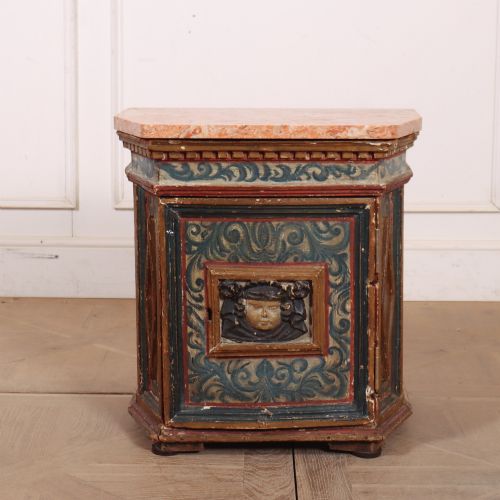
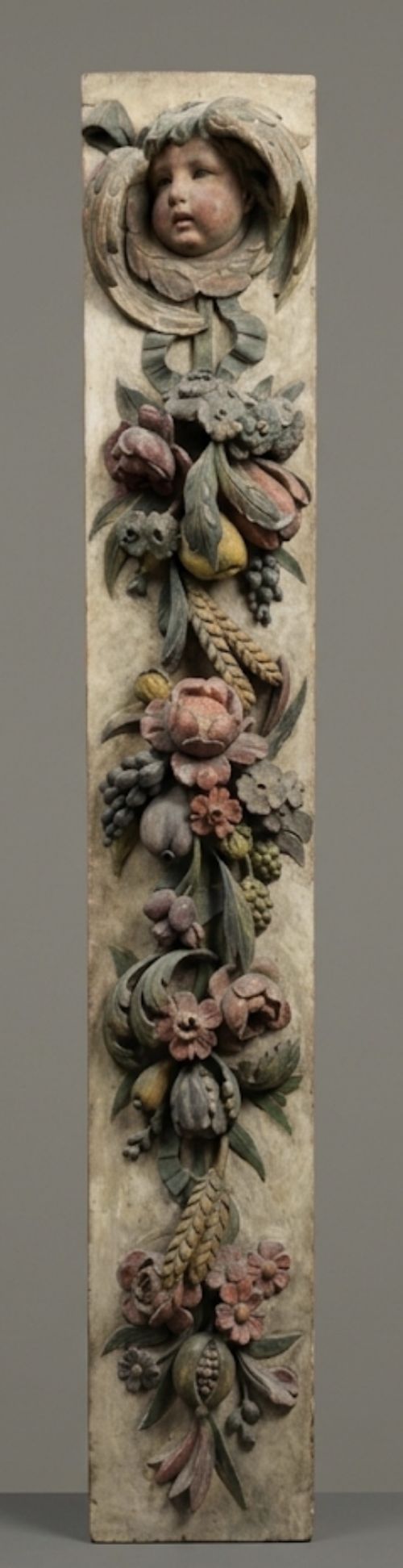
Giltwood and polychrome examples combine carved wood bases with layers of gesso, gold leaf, or hand-applied paint. Parcel gilding and silver gilt finishes highlight specific anatomical details and drapery carved into the wood beneath.
Among the cherubs hiding in the woodwork, an eighteenth-century architectural pediment was carved in the manner of Grinling Gibbons.
What varies in quality
Quality in carved wood cherubs is determined by the depth of relief and the anatomical fluency of the carving. Superior pieces display naturalistic movement in the wings, limbs, and facial expressions, whereas simpler work remains stiff or formulaic.
The preservation of original surface treatments, whether aged polychrome paint, gesso, or gold leaf, dictates the integrity of the piece. Crisp lines in carved acanthus leaves and drapery distinguish workshop pieces of high ambition from standard decorative output.
Edward Pearce
The Carved Wood Cherubs Glossary
- Putti
- Winged infant figures frequently depicted in classical and religious art. They form the primary subject matter for the carved wood cherubs category.
- Giltwood
- Timber coated with gold leaf over a prepared gesso ground. This finish appears frequently on mirrors, wall brackets, and decorative mounts from the Baroque and revival periods.
- Torchiere
- A tall ornamental stand or candlestick base. Several listings employ these as sculptural supports featuring carved figures.
- Polychrome
- Painted in several colours. This surface decoration appears on wooden panels, statues, and architectural fragments.
- Acanthus
- A classical leaf ornamentation heavily utilised in Baroque and Renaissance revival carving. It frames many of the panels and mirrors listed.
Carved Wood Cherubs: Frequently Asked Questions
What periods do carved wood cherubs come from?
The available evidence records pieces spanning from the seventeenth century through to the early twentieth century. Seventeenth and eighteenth-century examples typically present as architectural panels, overdoors, and heavy oak or walnut carvings, while nineteenth-century items often reflect Baroque and Renaissance revival styles.
Later nineteenth and early twentieth-century examples frequently take the form of giltwood wall mirrors, brackets, and electrified wall lights. Dating relies on timber choice, tool marks, and the specific decorative vocabulary of the revival periods.
How were carved wood cherubs used originally?
Historically, these carved figures served both ecclesiastical and secular architectural functions. They appeared on church altars, library bookcases, overdoors, staircase panels, and architectural pediments.
Many operated as structural supports for wall brackets, torchieres, and mirrors. Others functioned as standalone decorative wall sculptures or architectural salvage integrated into grand interiors.
How do I hang a heavy carved wood mirror?
Heavy giltwood and oak mirrors require secure wall fixings suited to the weight of the timber and gesso frame. Professional mirror plates and direct wall studs provide the necessary support for monumental continental pieces.
Given the age and fragility of carved wooden extremities, mounting should distribute the load evenly across the frame rather than relying on a single central cord.
How do I clean antique carved wood?
Dusting with a soft, dry brush removes particulate matter from the recesses of intricate carvings without disturbing fragile surfaces. Moisture and modern chemical polishes should be avoided to protect aged gesso, gold leaf, and polychrome paint.
Preserving the dry, stable patina of historic wood surfaces ensures the long-term conservation of the piece.