


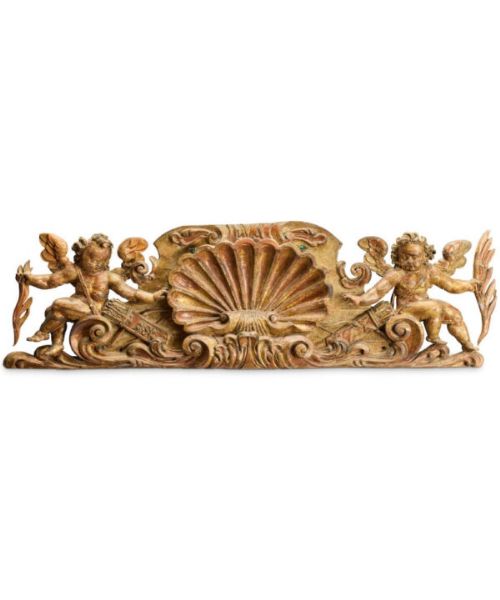


Baroque Style Putti
Baroque style putti bring theatrical movement and sculpted charm to interior spaces through cherubic figures carved in wood or cast in metal.
Baroque Style Putti
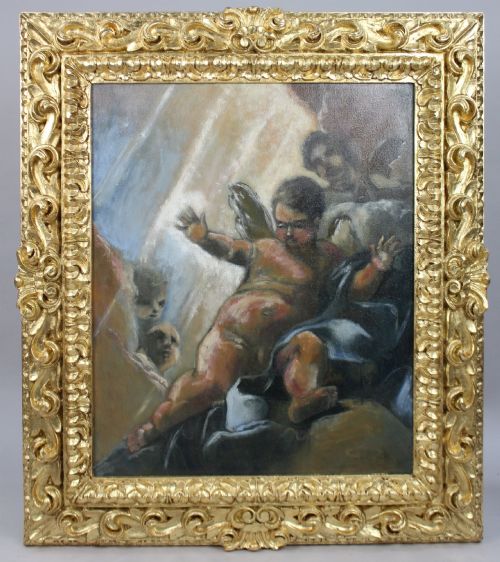
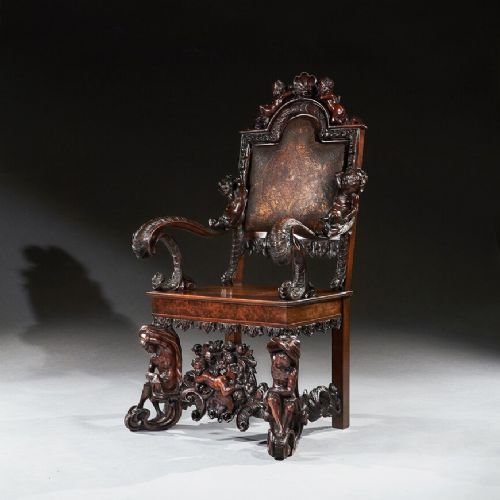
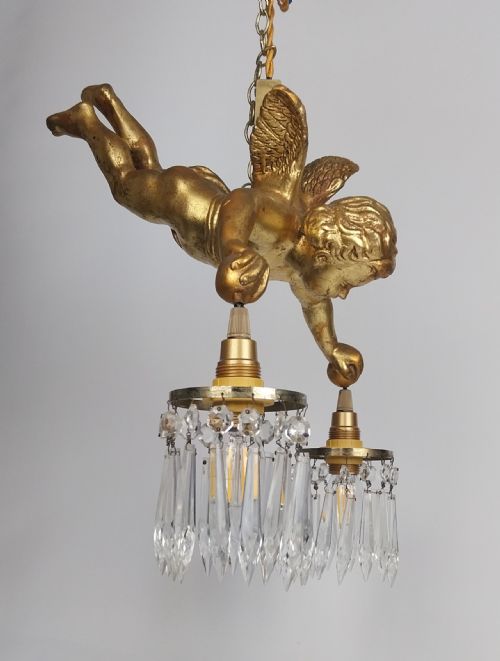
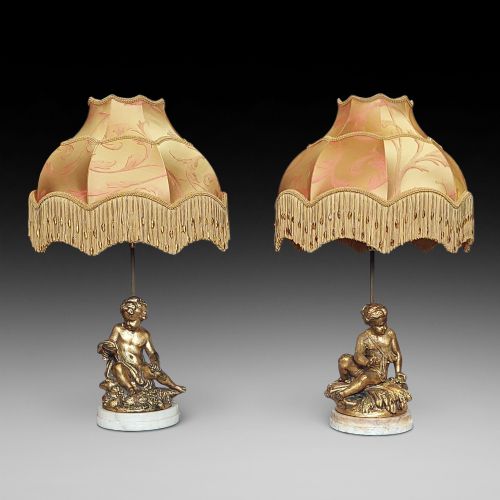
When you search for baroque style putti, you encounter decorative objects and furnishings populated by winged cherubs, infants and winged figures. These pieces range from carved wood wall brackets and giltwood mirrors to oil paintings and table lamps.
The selection on this page spans several centuries, drawing heavily on nineteenth century revivals of seventeenth and eighteenth century aesthetics. Italian workshops feature prominently alongside French and English interpretations, expressing exuberant classical themes.
How they were made
Carvers shaped solid timber such as walnut, oak and various softwoods into dynamic figural forms, frequently applying gesso beneath layers of gold leaf or giltwood to achieve a luminous surface. Metalwork versions utilise cast bronze, brass or ormolu, often paired with glass elements like Murano components.
Painters worked in oil on canvas to render elaborate portraiture and allegorical scenes framing these cherubic figures. Artisans combined structural carpentry with delicate surface gilding and mounting to produce functional items like sconces, chandeliers and console tables.
Materials span carved wood, gold leaf, gesso, walnut, glass and gilt metal across multiple centuries.
What varies in quality
The integrity of the original surface finish, whether aged gold leaf, parcel gilt or patinated bronze, heavily influences the character of the piece. Masterful joinery and substantial materials like dense walnut or heavy cast metal distinguish finer decorative items from lighter commercial productions.
Andrea Brustolon·Domenico Zampieri
The Baroque Style Putti Glossary
- Putto
- A figure of a small winged infant, frequently depicted in classical and religious art. They appear widely in Renaissance and Baroque sculpture and painting.
- Giltwood
- Timber that has been coated with gold leaf or gold paint. This technique creates a brilliant reflective surface popular in ornate mirror frames and wall brackets.
- Ormolu
- Finely ground high-carat gold-mercury amalgam applied to a bronze object. It provides a rich golden finish characteristic of decorative mounts and chenets.
- Gesso
- A plaster mix applied as a base for paint or gold leaf on wood. It allows artisans to carve intricate details before gilding.
- Chenet
- A metal fire dog placed on the hearth to support logs. Elaborate pairs often feature sculptural figures like putti.
- Cartouche
- An oval or oblong sculptural frame resembling a scroll or rolled-up piece of paper. It often bears an inscription or central crest within baroque ornamentation.
Baroque Style Putti: Frequently Asked Questions
What are baroque style putti?
These pieces comprise sculptural and functional objects featuring winged cherubs or infants, originating primarily from nineteenth century revivals of earlier European styles. They manifest as wall brackets, mirrors, lighting fixtures and paintings.
Artisans utilised techniques like wood carving, oil painting and metal casting to integrate these classical cherubic motifs into domestic furnishings.
How were putti used historically?
In historical interiors, putti served as ornamental motifs within grand architectural schemes, embellishing church altars, civic buildings and aristocratic residences. They symbolized divine presence, love or classical abundance.
Over time, cabinet makers and lighting designers adapted these figures into portable mirrors, torchieres, chandeliers and console tables for domestic spaces.
How do I style these pieces at home?
These decorative items suit spaces that embrace dramatic lighting, rich textures and classical proportions. Wall brackets and sconces create focal points when mounted against painted or panelled walls.
Larger items like gilded mirrors and oil paintings anchor a room, pairing effectively with both traditional antique furniture and contemporary minimalist backdrops.
How do I date these items?
Dating relies on examining construction methods, tool marks on the timber, the composition of the gesso and the wear patterns on the gilding. Nineteenth century revival pieces often imitate seventeenth or eighteenth century forms closely.
Analysing the stretcher frames of paintings, the casting seams on metal components and stylistic cues helps distinguish original period work from later interpretations.