


Polychrome Cherub Sculpture
A polychrome cherub sculpture brings celestial movement and colour to a room through carved wood or porcelain.
Polychrome Cherub Sculpture
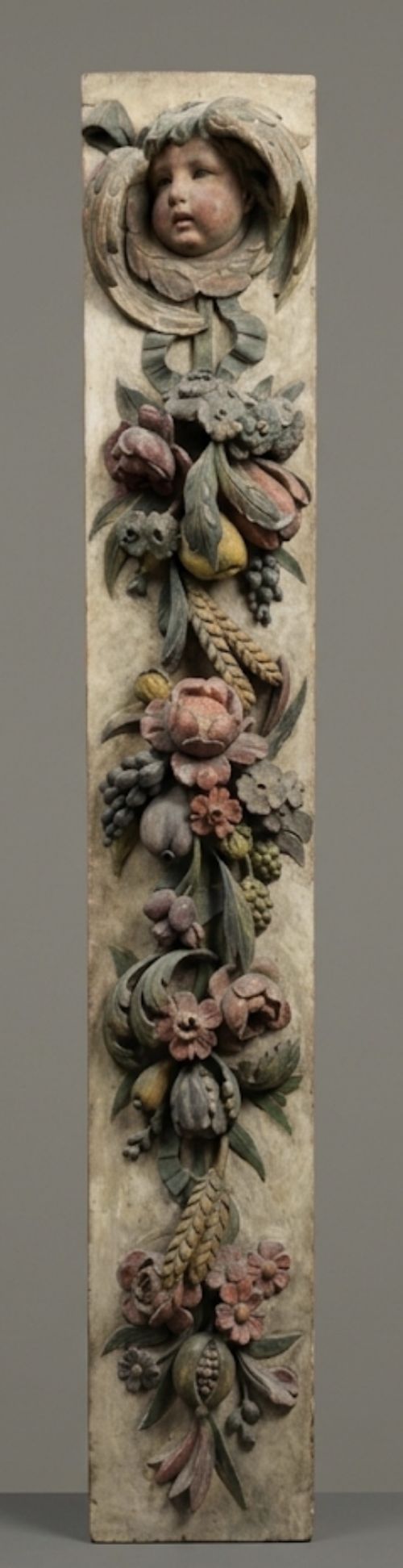
When you search for polychrome cherub sculpture, you encounter carved wooden panels, wall relief carvings, and porcelain figures originating from the eighteenth and nineteenth centuries. These pieces represent putti, angels, and musical figures rendered in styles ranging from Italian and French Baroque to Rococo Revival and Art Nouveau.
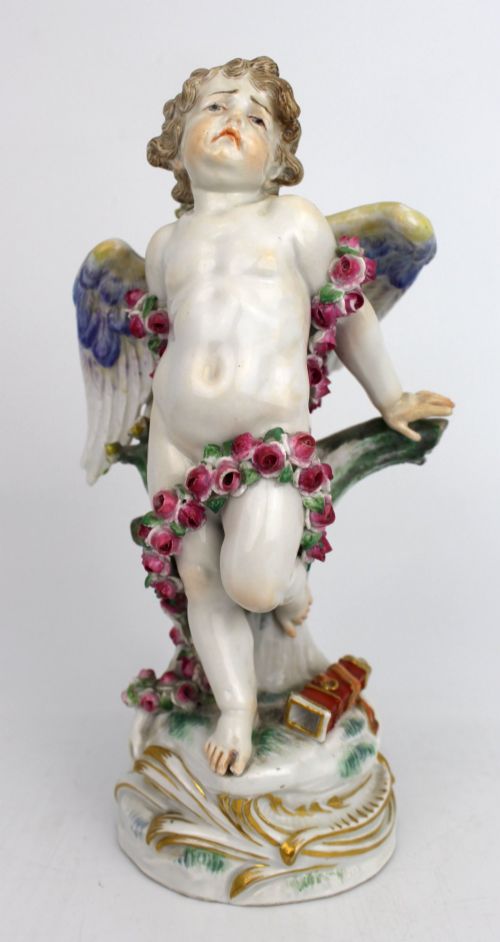
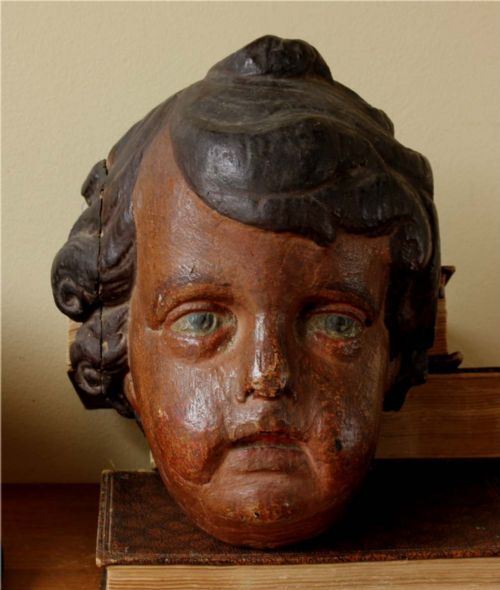
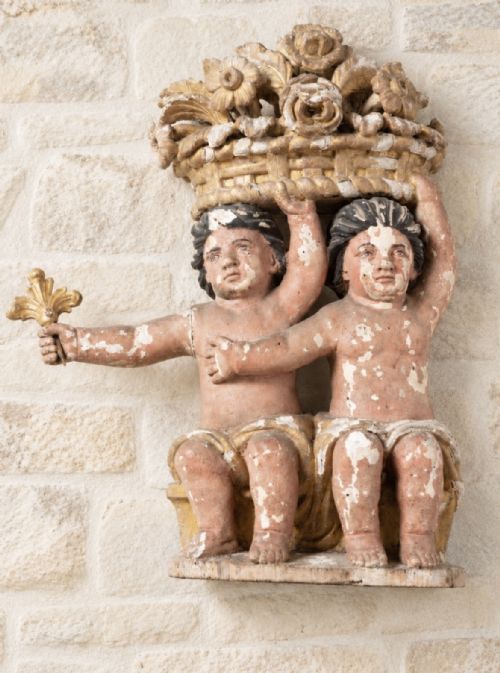
The versions you are most likely to meet on this page include carved wooden putti heads, pairs of altars love angels, and porcelain centrepiece bowls. They manifest as standalone statues, wall sculptures, and religious sculptures featuring painted surfaces and gilding.
How they were made
These works rely on carved wood and porcelain as primary structural bodies, shaped into figures of cherubs, putti, and madonnas. Artisans applied gesso to wooden forms to prepare surfaces for subsequent decoration.
Makers finished the pieces using polychrome paint, enamel, and gold leaf. This combination of carved wood, pigment, and metallic leaf created the rich visual texture seen on eighteenth-century panels and nineteenth-century figures.
Styles represented across the selection include Italian and French Baroque, Rococo Revival, and Art Nouveau.
What varies in quality
The distinction between tiers of these sculptures rests upon the dexterity of the carving and the preservation of the original painted surface. Finer examples display confident modelling in the wood or porcelain, capturing anatomical detail and drapery with precision rather than stiffness.
The integrity and application of the polychrome paint and gold leaf also dictate standing. Pieces retaining harmonious, undisturbed layers of early pigment and gesso carry greater visual coherence than those with heavy later overpainting.
George Kemper·Meissen
The Polychrome Cherub Sculpture Glossary
- Polychrome
- Decorated in multiple colours. This term describes surfaces painted with various pigments, often combined with gilding.
- Putto
- A figure of a small chubby male child, often winged. In these works, putti appear as decorative motifs or musical companions.
- Gesso
- A plaster mixture used as a base for painting on wood. Artisans applied it to smooth wooden carvings before adding polychrome paint and gold leaf.
- Baroque
- An artistic style characterised by dramatic movement and rich detail. It heavily influences the dynamic poses found in these eighteenth and nineteenth-century sculptures.
Polychrome Cherub Sculpture: Frequently Asked Questions
What is a polychrome cherub sculpture?
A polychrome cherub sculpture is a carved wooden or porcelain depiction of a winged child or angel, finished with painted pigments and often gold leaf. These works draw upon Baroque and Rococo traditions.
Originating primarily in the eighteenth and nineteenth centuries, they take the form of wall reliefs, altar figures, and porcelain centrepieces.
How were these sculptures used originally?
Many of these pieces served as religious sculpture within domestic or church settings, particularly in Italy and France. They decorated altars, architectural panels, and sacred displays.
Others functioned as decorative carvings and porcelain centrepieces designed to adorn wealthy interiors and dining tables.
How do I style a cherub sculpture at home?
Place carved wooden putti on walls as sculptural reliefs or mount pairs above mantelpieces to introduce vertical interest and historical character. Their painted surfaces complement neutral walls and timber furniture.
Porcelain figures and centrepieces suit tabletops and sideboards where their detailed enamel work can be appreciated up close.
How do I tell eighteenth and nineteenth century pieces apart?
Eighteenth-century examples frequently employ carved wood with gesso and polychrome paint, reflecting Baroque and Rococo aesthetics. They often show deep tool marks and aged patination.
Nineteenth-century works encompass both revival carved wooden figures and factory-produced porcelain from makers like Meissen, alongside specific dated pieces.