


Gilded Wood Putti
Gilded wood putti bring celestial movement and carved warmth to a room, catching the light in a way few other ornaments do.
Gilded Wood Putti
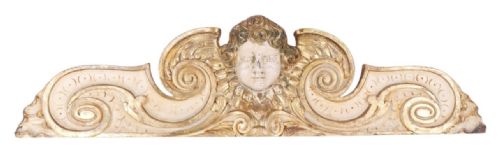
When you search for gilded wood putti, you enter a visual world of carved angels, cherubs and wall ornaments spanning several centuries. The pieces available range from seventeenth-century Italian Baroque panels depicting the head of a cherub putto to nineteenth-century Italian pairs, overmantel mirrors and architectural salvage.
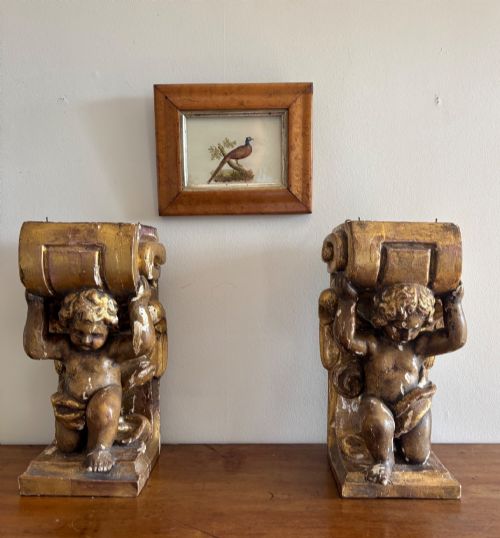
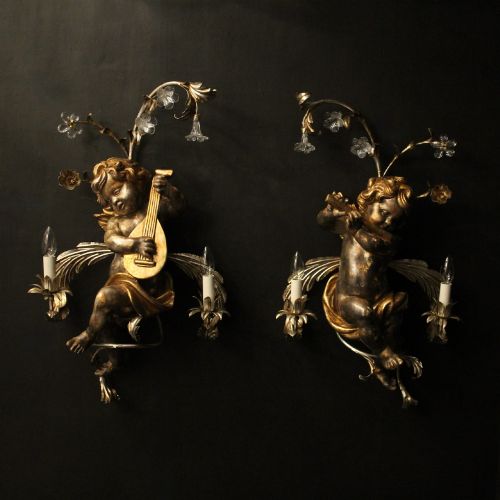
You are most likely to meet nineteenth-century examples on this page, often formed as pairs of wall brackets, candelabra or carved wooden figures. Italian workshops dominate the selection, producing everything from twin-arm wall lights to alters love angels and Florentine mirrors.
The forms extend beyond single figures into functional and decorative objects like hanging lanterns, over-door carvings and oval mirrors framed by winged cherub heads. Each piece reflects the enduring popularity of religious and decorative carving traditions across Europe.
Materials and methods
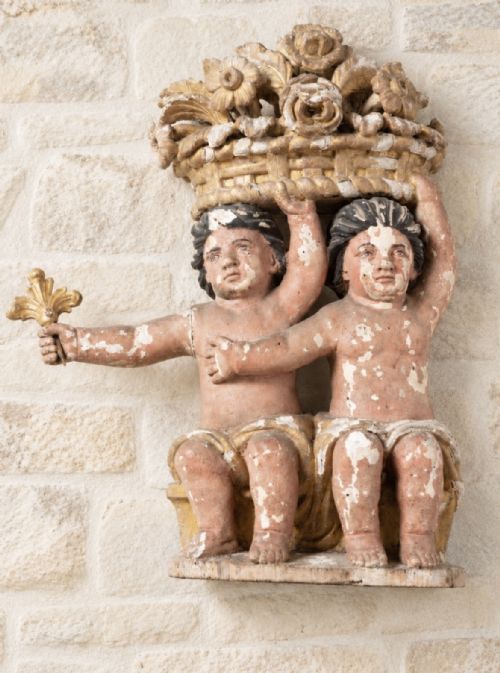
Makers shaped these pieces primarily from carved wood, applying layers of gesso to smooth the surface before laying down gold leaf or silver giltwood. This traditional preparation created a durable base that allowed fine details on wings, hair and drapery to hold the metallic finish.
Some items combine carved wood with polychrome paint, glass elements such as Murano arms, and metal fittings to support their function as wall lights or candelabra. The interplay between exposed wood, paint and gold leaf defines the tactile quality of the surfaces.
Some nineteenth-century Italian alterations clearly doubled as heavenly insurance policies, arriving on the market simply catalogued as alters love angels.
Judging quality in carved giltwood
The distinction between ordinary and exceptional carving lies in the crispness of the chisel work and the depth of the anatomical detail in the faces and wings. Superior examples display a naturalism and fluidity in the limbs and drapery that lesser, more mechanical productions lack.
The application and survival of the gold leaf or gesso also dictate the visual strength of a piece. Original gilding that has aged with a soft, warm patina carries greater aesthetic weight than heavy or unsympathetic modern re-gilding.
The Gilded Wood Putti Glossary
- Putto
- A figure of a small chubby male child, often winged, common in Renaissance and Baroque art. These figures appear frequently as standalone carvings or supporting architectural elements.
- Giltwood
- Wood that has been covered with a thin layer of gold leaf or gold paint. This technique protected the carved material while adding brilliance to interior spaces.
- Gesso
- A plaster mix applied to wood as a smooth base for gilding or painting. It allowed carvers to refine minute details before applying the final metallic leaf.
- Polychrome
- Painted in several colours. This finish appears on older wood carvings alongside gilding to create lifelike flesh tones and garments.
- Overmantel
- A decorative panel, mirror or carving placed directly above a fireplace mantel. These large items often incorporate cherubs or architectural scrolls.
Gilded Wood Putti: Frequently Asked Questions
Are these putti figures Italian or French?
The selection includes both Italian and French origins, with many pieces reflecting regional Baroque and Rococo styles from the seventeenth to the nineteenth centuries.
Italian pieces frequently originate from workshops in Florence or involve religious altarpiece fragments, while French items often lean towards Chateau mirrors and candelabra.
What is the difference between a putto and a cherub?
Art historians generally use putto to describe a non-religious classical spirit or winged infant, while cherub refers to a celestial being found in biblical contexts.
In antique trade and decorative arts, the terms are frequently used interchangeably to describe these carved wooden figures.
Can these mirrors be used in a bathroom?
High humidity and fluctuating moisture levels in bathrooms will damage antique gesso, exposed wood and delicate gold leaf over time.
Keep these pieces in dry living areas, hallways or bedrooms where the environment protects the historical materials from warping.