
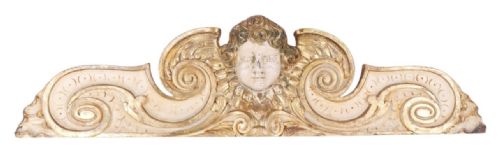
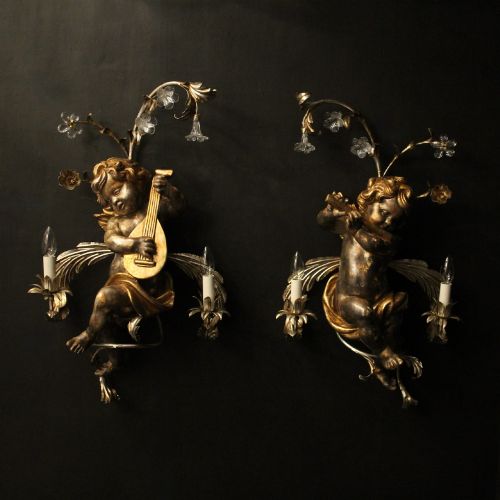
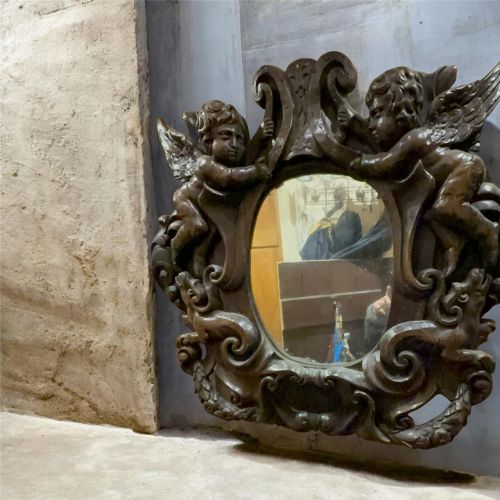
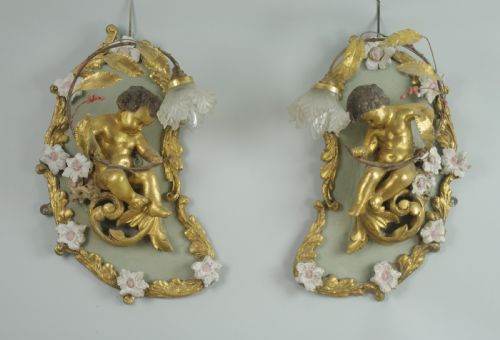
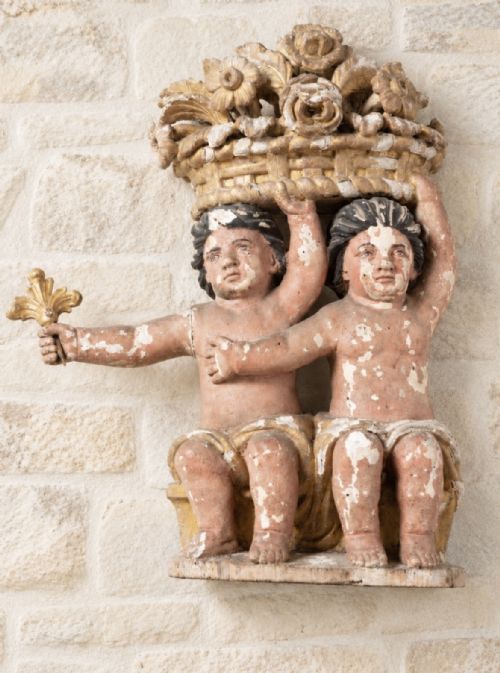


Rococo Carved Putti
These rococo carved putti bring lively, winged figures into a room through carved wood, giltwood, porcelain, and mirrors.
Rococo Carved Putti
When you search for rococo carved putti, you encounter sculptural depictions of winged cherubs shaped in styles ranging from French rococo revival and italianate rococo to baroque. These pieces appear across wall mirrors, wall lights, candelabra, console tables, centrepieces, over door panels, and standalone carved figures.
The selections span the eighteenth century, nineteenth century, and early twentieth century up to nineteen thirty. Wall mirrors and lighting fixtures dominate the forms, frequently incorporating giltwood, gesso, and glass alongside the carved wooden figures.
How they were made
Carvers shaped these figures from wood, applying gesso and gold leaf or silver giltwood to achieve reflective surfaces on mirrors and wall lights. Other examples utilise porcelain or polychrome paint over carved wood to render the figures and their cloud bases.
Makers integrated the putti directly into functional and decorative objects such as console tables, bracket mirrors, and candelabra arms. Glass and marble components were combined with the carved and gilded frames.
Object types range from wall mirrors and wall lights to sculptures, architectural salvage, centrepieces, and console tables.
What varies in quality
The depth and expression of the carving determine the visual impact of each putto, distinguishing fluid, naturalistic anatomy from simpler execution. The application of gesso and gold leaf also varies, affecting how the surfaces catch the light across mirrors and frames.
Integration between the sculptural figures and the host object, whether a wall light, mirror, or console table, dictates the cohesion of the design. Period materials and original surface treatments separate eighteenth-century examples from later revival pieces.
The Rococo Carved Putti Glossary
- Putto
- A plump, winged child figure derived from classical art and frequently seen in rococo and baroque design. They appear singly or in pairs across mirrors and wall lights.
- Giltwood
- Wood that has been coated with gold leaf or metal leaf over a prepared base. It provides the bright, reflective finish seen on many frames and furniture pieces.
- Gesso
- A plaster-like mixture applied to wood surfaces to create a smooth base for gilding and fine carving detail. It allows for sharp relief work on mirrors and brackets.
- Candelabra
- A branched candlestick holder designed to hold multiple lights. In rococo pieces, these often incorporate carved figures supporting the arms.
- Console table
- A wall-mounted table supported by brackets or legs, often topped with marble. In this selection, they feature carved putto supports.
Rococo Carved Putti: Frequently Asked Questions
What is a putto?
A putto is a representation of a small winged child, often resembling a cherub, used extensively in decorative arts from the baroque and rococo periods.
These figures appear carved in wood, modelled in porcelain, or gilded on the frames of mirrors and wall lights.
How are rococo mirrors cleaned?
Giltwood and gesso surfaces require delicate dusting with a soft brush to protect the gold leaf finish.
Moisture and harsh cleaning agents must be avoided on gilded wood to prevent damage to the historic surface layers.
Where were wall lights placed?
Twin-arm and triple-light candelabra were positioned on walls to reflect candlelight around a room.
The inclusion of mirrors behind or beside the lights helped to amplify illumination in eighteenth and nineteenth century interiors.
How do I date a carved mirror?
Dating relies on examining the construction of the wooden frame, the composition of the gesso, and the style of the carving.
Eighteenth-century pieces display different tool marks and material ageing compared to nineteenth-century revival interpretations.