



Ecclesiastical Brass Candlesticks
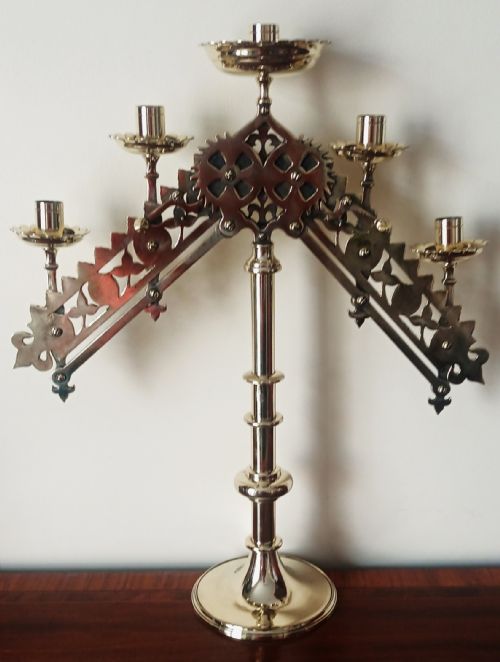
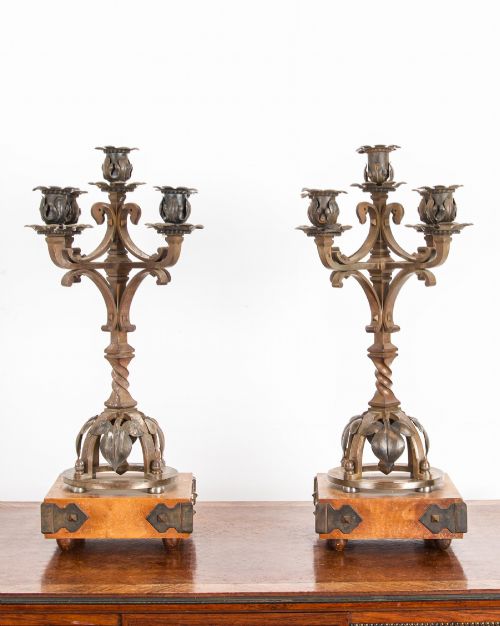
These ecclesiastical brass candlesticks bring monumental proportions and rich Gothic styling from nineteenth-century altars straight into domestic rooms.
Ecclesiastical Brass Candlesticks
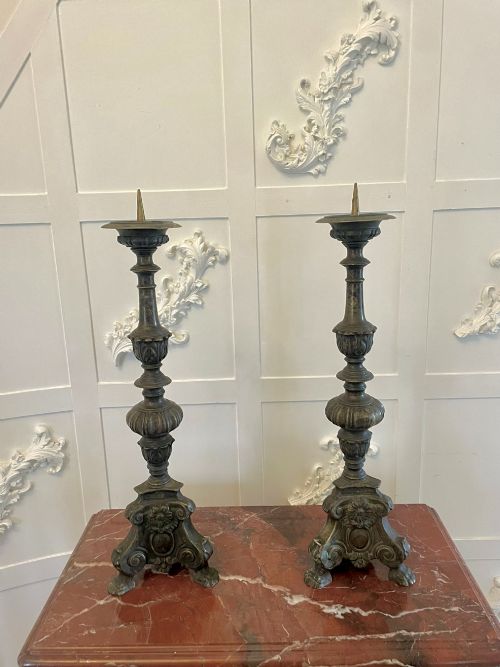
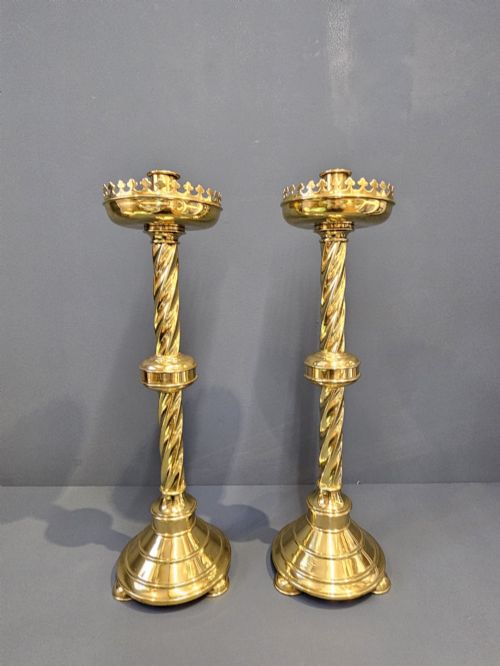
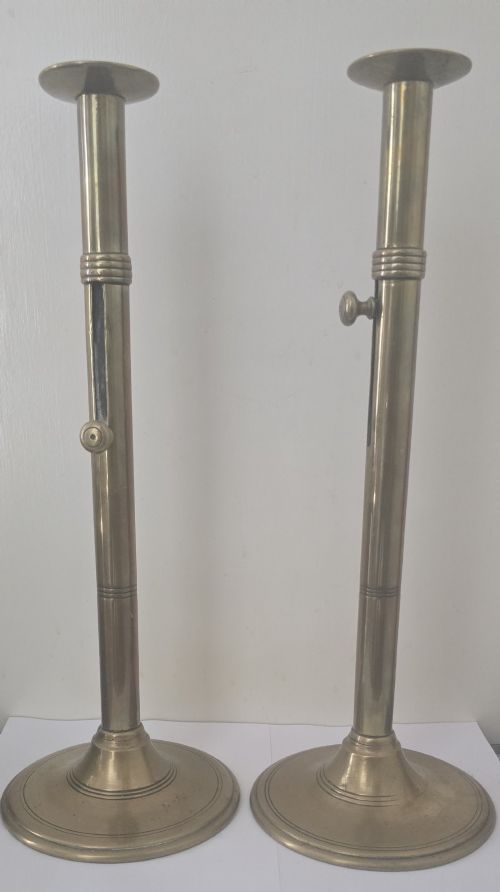
Ecclesiastical brass candlesticks originate from churches and chapels, designed to hold candles upon altars or sanctuary floors during services. Buyers searching for ecclesiastical brass candlesticks encounter substantial altar sticks, prickets, and multi-branched candelabra dating predominantly from the nineteenth century. Most examples found here arrive in pairs or matched sets, reflecting their original placement flanking a church altar.
The dominant aesthetic draws heavily from Gothic Revival and Victorian design movements, featuring architectural mouldings, knopped stems, and tripod bases. Alongside standard candlesticks, the selection includes taller floor-standing holders and pieces later adapted into table lamps. French and English origins predominate, spanning Georgian beginnings through to the early decades of the twentieth century.
Materials and Construction
Foundry work relies heavily on cast brass, bronze, and gilt-brass, providing the substantial weight required for tall altar pieces. Metal components are often assembled from distinct turned and cast sections, secured with internal threaded rods or heavy fixings. Surface finishes range from polished brass and parcel-gilding to ormolu and patinated bronze, occasionally complemented by secondary elements in wood, wrought iron, or glass.
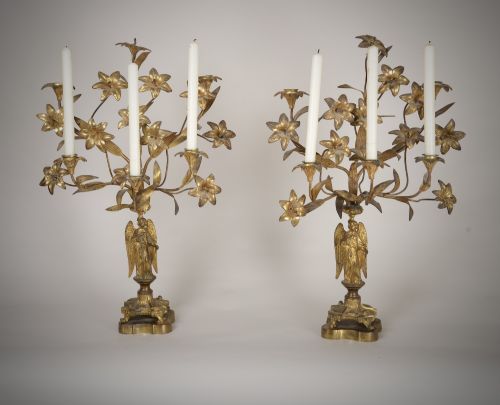
Candelabra and complex designs incorporate articulated joints or multi-branch arms screwed into central columns. Pricket candlesticks utilise a sharp central spike designed to impale wax candles, while standard socket variants hold tapered candles securely within deep drip pans.
Ecclesiastical Brass Candlesticks Retail Price Guide 2026
Typical asking prices for ecclesiastical brass candlesticks among the pieces listed under this phrase on Sellingantiques today, from the lower quarter to the upper quarter. They describe what is for sale here now, not the wider market.
Church candles occasionally left behind centuries of hidden dripped wax tucked deep inside the decorative drip pans of these tall prickets.
Judging Quality and Execution
Quality rests upon the crispness of the casting and the architectural integrity of the design. Finer examples display deeply chased enrichment, well-defined tracery, and securely balanced bases that support monumental heights without listing. Heavy gauge metal and proportional harmony separate workshop pieces designed for major liturgical spaces from lighter domestic interpretations.
The integrity of the surface finish and the retention of original components, such as pricket spikes or side ejectors, dictate the standard of survival. Pieces retaining their original gilding or rich patination demonstrate superior preservation compared to those stripped or aggressively polished.
T Thomason & Co
The Ecclesiastical Brass Candlesticks Glossary
- Pricket
- A candlestick featuring a sharp metal spike at the top designed to support a candle with a hollow base. This form originates from traditional church altar fittings.
- Altar candlestick
- A tall, sturdy candlestick intended specifically for placement upon or beside a church altar. These pieces are typically heavier and more decorated than domestic lighting.
- Gothic Revival
- An architectural and decorative style popular during the nineteenth century, drawing inspiration from medieval ecclesiastical design. It employs pointed arches, trefoils, and heavy vertical lines.
- Ormolu
- Finely chased and gilt bronze popular in decorative metalwork. The technique creates a rich golden surface finish on cast metal objects.
- Candelabra
- A branched candlestick holding multiple candles on separate arms. These fixtures often feature elaborate scrolling or architectural branch configurations.
Ecclesiastical Brass Candlesticks: Frequently Asked Questions
What is a pricket candlestick?
A pricket candlestick uses an upright metal spike instead of a socket to hold the candle in place. This design is typical of historic church and altar lighting.
Prickets require candles with a pre-drilled base or rely on the weight of the wax to sit firmly upon the spike.
How do I distinguish altar candlesticks from domestic ones?
Altar candlesticks are noticeably taller, heavier, and built with wider bases to support large church candles safely. They frequently incorporate ecclesiastical motifs like Gothic arches and knopped stems.
Domestic candlesticks of the same era are generally smaller and proportioned for tabletops or mantelpieces rather than sanctuary floors.
Were these candlesticks converted to electricity?
Some ecclesiastical candlesticks and altar lamps have been converted into table lamps to suit modern domestic lighting needs. These conversions often integrate wiring through the central column while preserving the historic base and stem.
Unconverted pieces retain their original prickets or candle sockets for traditional wax use.
How do I care for antique brass?
Antique brass requires gentle dusting with a soft cloth to protect the historic metal surface and established patina. Avoid harsh chemical cleaners or abrasive metal polishes that strip away age-related coloration.
Keeping the brass away from excessive moisture preserves both the metal integrity and any remaining gilt or bronze finishes.