
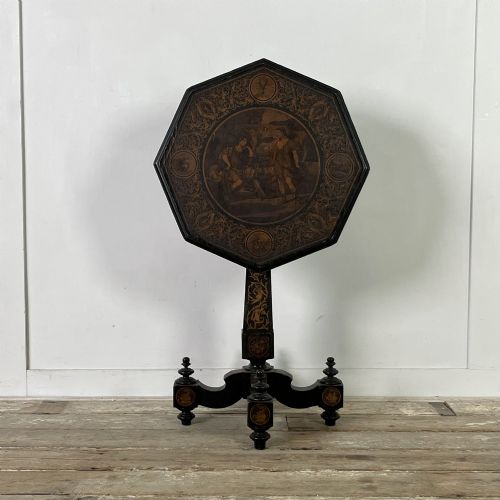


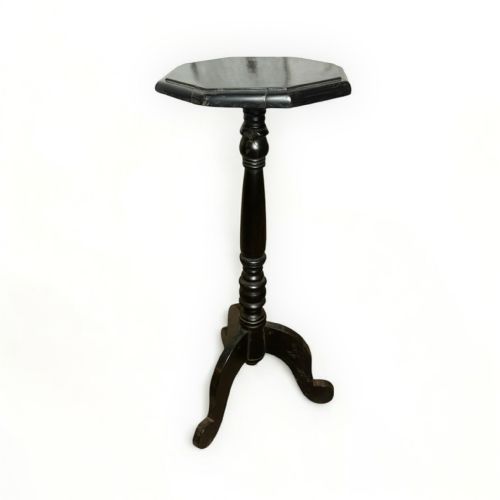
Ebonised Wine Table
An ebonised wine table offers a striking dark finish, bringing nineteenth-century utility and decorative presence to a corner or beside a chair.
Ebonised Wine Table
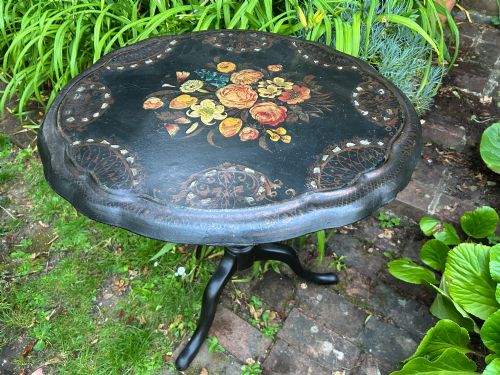
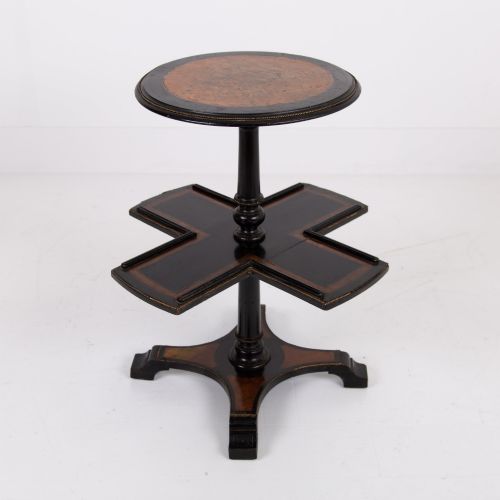
An ebonised wine table is a compact nineteenth-century piece designed for holding drinks or small decorative items, usually featuring a circular or oval top raised on a central pillar and tripod base.
Most examples found here date from the Victorian era and the Aesthetic Movement, though earlier Regency influences and diverse regional workshops also appear.
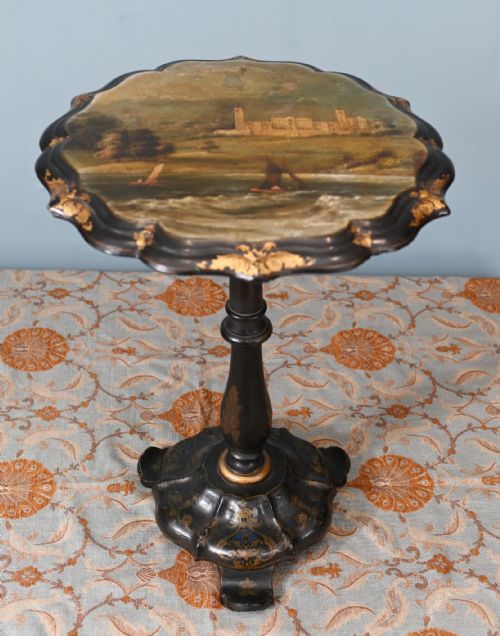
Makers often combined blackened wood with contrasting materials, resulting in side tables, occasional tables, and tilt-top designs that served both practical and display purposes in nineteenth-century interiors.
How they were made
Craftsmen utilised various timbers such as walnut, amboyna, elm, and papier mâché, treating the surfaces with a dark ebonising finish to imitate costly ebony.
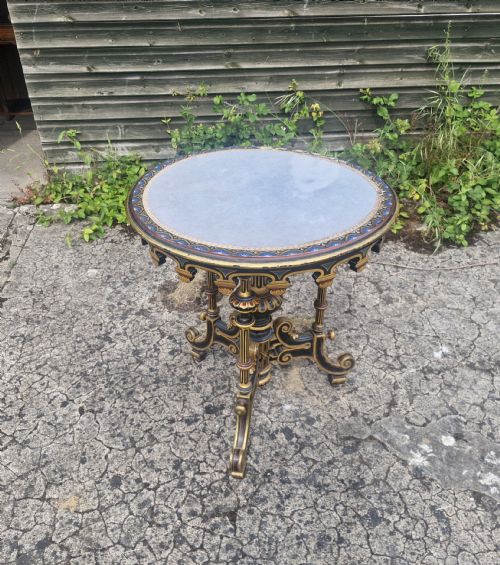
Decoration frequently involved gilt mounts, hand-painted details, marquetry, bone inlay, and mother-of-pearl to create rich visual contrast against the dark background.
Tripod bases and tilt-top mechanisms required precise joinery to ensure stability, while marble tops added heavier, durable surfaces to certain lamp and wine stands.
Among the dark timbers and quiet side tables sits an unusual Black Forest musical table, bringing a hidden tune to the parlour.
What varies in quality
Quality rests heavily on the crispness of the ebonising and the finesse of any secondary decorative work, such as marquetry, gilt mounts, or inlaid bone.
The choice of underlying timber dictates the grade of the piece, with dense hardwoods and figured veneers like burr walnut elevating the manufacture well above basic painted deal.
Structural integrity in the pillar and tripod base determines longevity, distinguishing finely turned or carved supports from simpler, looser assemblies.
Gillows
The Ebonised Wine Table Glossary
- Ebonised wood
- Timber treated with stain or paint to replicate the dark, dense appearance of genuine ebony. This finish became especially popular during the Victorian period and the Aesthetic Movement.
- Tilt-top
- A hinged tabletop mechanism allowing the surface to fold vertical when not in use. This clever design saved valuable floor space in nineteenth-century rooms.
- Tripod base
- A pedestal support resting on three feet or legs. It provides stable placement on uneven nineteenth-century flooring.
- Marquetry
- Decorative veneer patterns assembled from various woods, sometimes combined with bone or mother-of-pearl. Craftsmen used this technique to create elaborate floral or geometric motifs.
- Aesthetic Movement
- A late nineteenth-century design style emphasising visual beauty over narrative or moral function. Pieces from this movement often feature ebonised surfaces and orientalising motifs.
Ebonised Wine Table: Frequently Asked Questions
What is an ebonised wine table used for?
These compact pieces originally served for holding glassware or decanters beside seating areas during the nineteenth century. Today, they function wonderfully as lamp tables, plant stands, or bedside surfaces.
Their small footprint allows them to fit easily into awkward corners or beside modern upholstery while adding distinct period character.
How do I date an ebonised wine table?
Dating relies on observing the timber, construction methods, and decorative style recorded in the piece. Victorian examples often feature Aesthetic Movement influences, papier mâché, or gilt highlights.
Earlier Regency pieces display cleaner classical lines, whilst mid-nineteenth-century variants frequently incorporate burr walnut or amboyna veneers alongside the black finish.
Can I use a tilt-top table safely?
The tilting mechanism is designed for convenient storage against a wall when the surface is not needed. Ensure the catch or lock beneath the top is secure before placing items down.
Routine care involves checking the pivot joint for stability to prevent accidental tipping during daily use.