
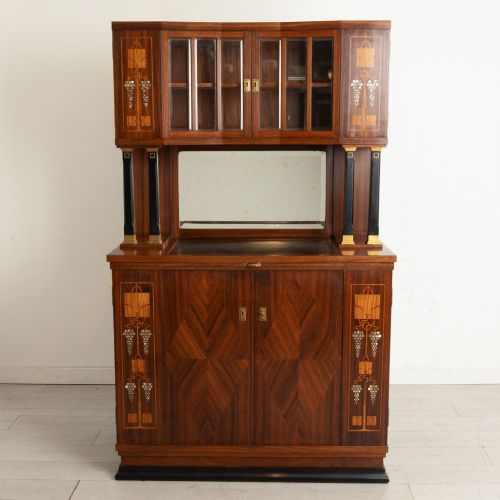
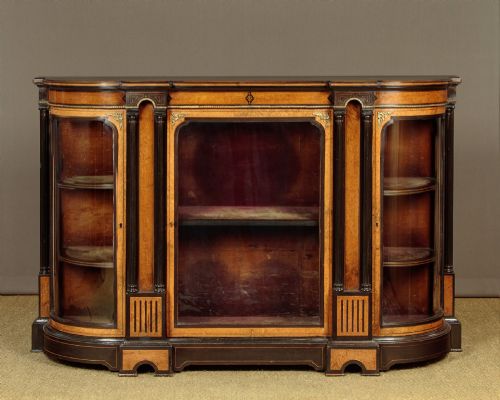
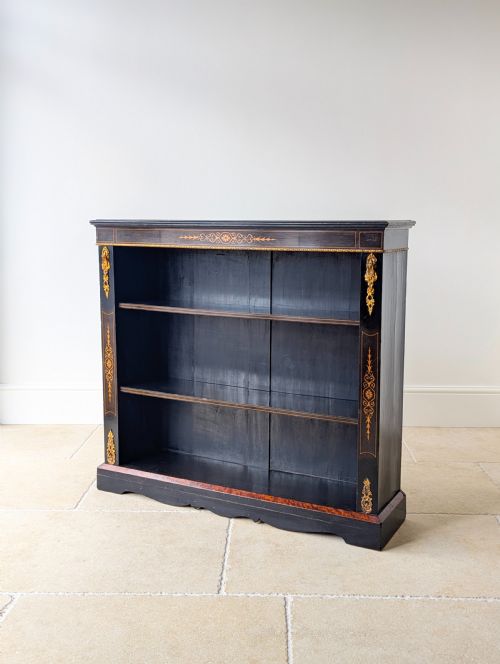


Ebonised Marquetry Display Cabinet
These ebonised marquetry display cabinets combine dark wood surfaces with intricate inlay, offering a striking way to showcase treasured collections.
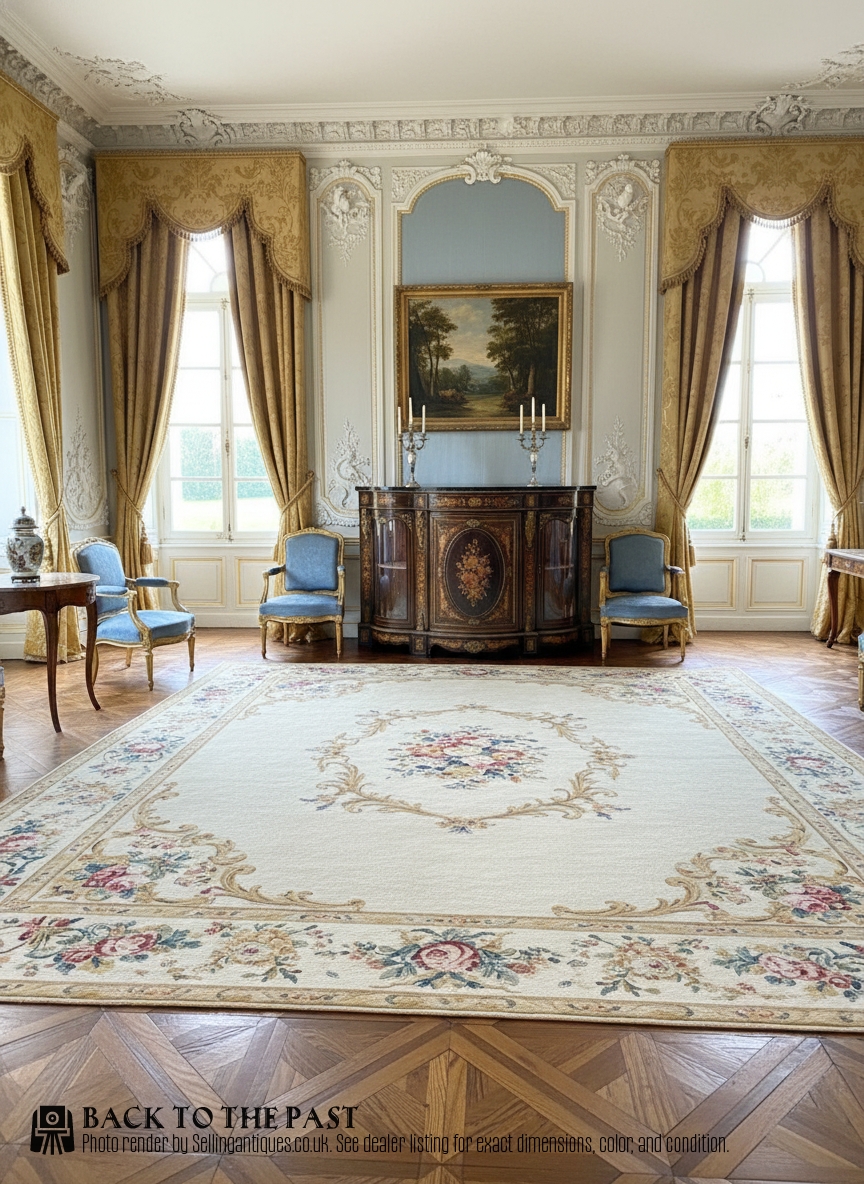
Ebonised Marquetry Display Cabinet
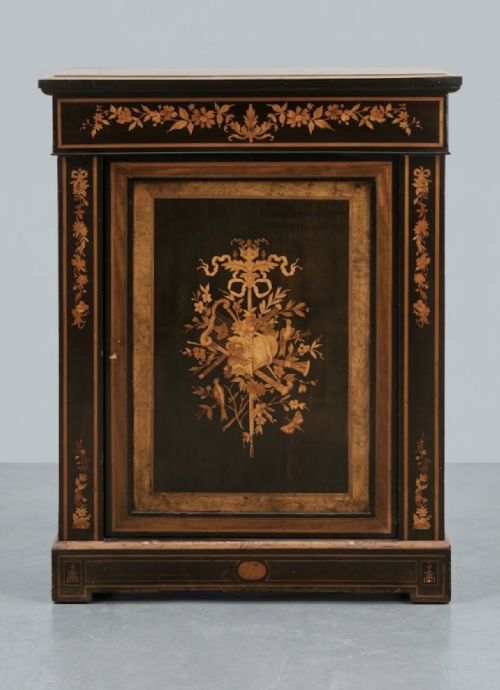
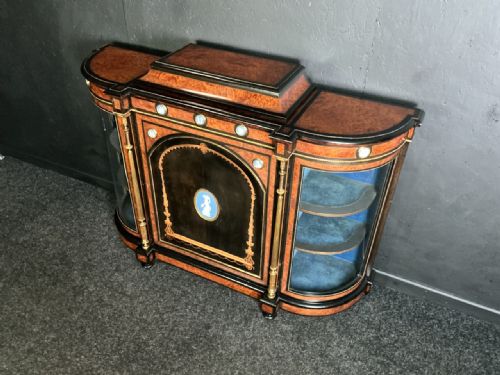
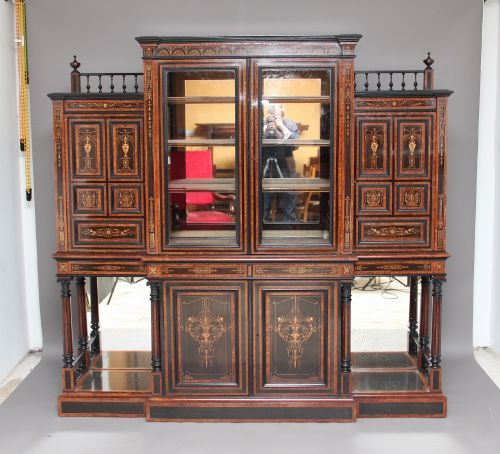
An ebonised marquetry display cabinet typically takes the form of a credenza, pier cabinet, or glazed bookcase originating from the nineteenth century. These pieces emerge predominantly from Victorian British workshops and French Napoleon III salons, blending dark tinted timber with elaborate patterned veneers.
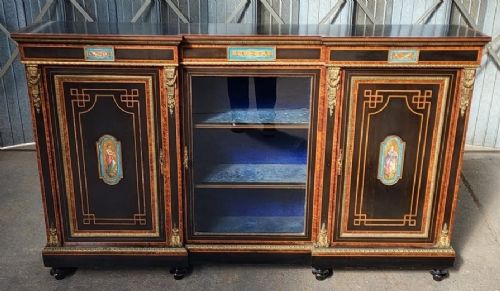
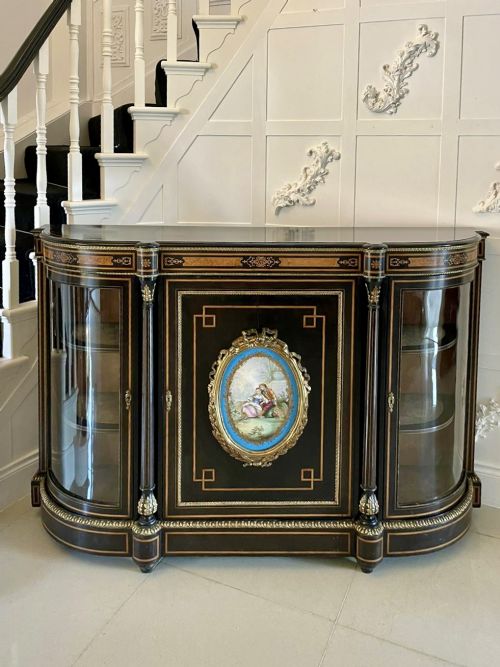
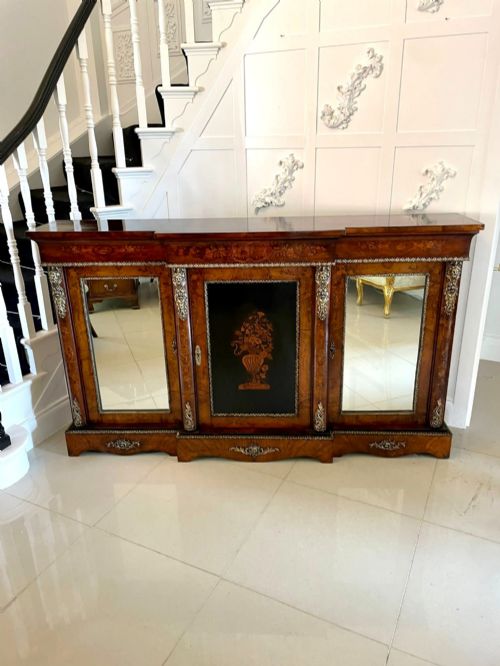
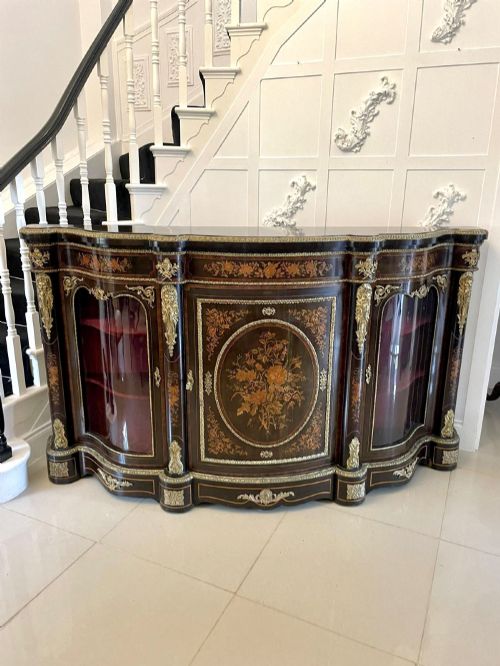
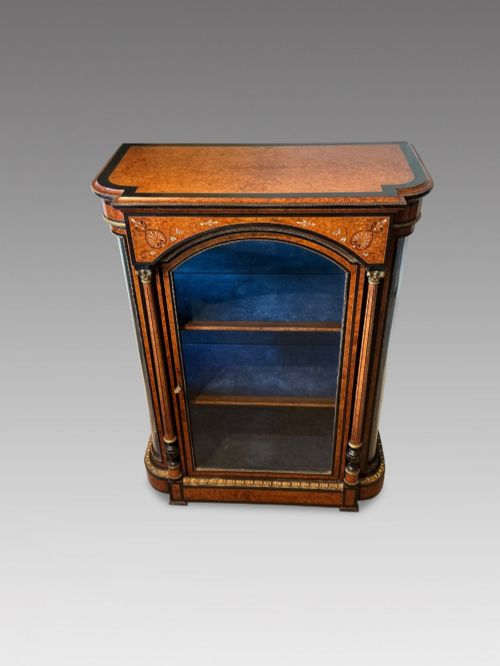
Buyers most frequently encounter Victorian examples featuring glass doors and gilt metal mounts designed for formal drawing rooms. The selection spans compact pier cabinets intended for narrow spaces to broad credenzas with serpentine fronts and mirrored backs.
Materials and Construction
Cabinet makers utilised dense hardwoods, treating timber to achieve a deep black ebonised finish that provided high contrast for floral and geometric marquetry. Artisans inlaid brass, tortoiseshell, and contrasting woods such as burr walnut and amboyna into the primary surfaces.
Ormolu mounts cast in bronze and fire gilt were applied to corners, borders, and feet to frame the glazed doors and wooden panels. These decorative elements required precise carpentry to join curved serpentine timbers and stabilise glass panels.
Design styles span Victorian, Napoleon III, Aesthetic Movement, Viennese Secessionist, and Boulle Revival periods.
Distinctions in Execution
The sophistication of the marquetry and the crispness of the cast ormolu mounts set finer examples apart from standard production. Artisans who invested greater time in cutting delicate wood veneers and tortoise shell created sharper lines and more complex pictorial scenes.
Subtleties in timber selection, such as the choice of highly figured burr walnut alongside ebonised framing, indicate superior cabinet making. The weight and detailing of the gilt bronze hardware further separate standard Victorian output from exceptional maker-attributed pieces.
Lamb of Manchester·August Ungethüm·Gillow
The Ebonised Marquetry Display Cabinet Glossary
- Ebonised
- Wood treated with stain or paint to imitate ebony. This dark finish became popular during the nineteenth century for furniture requiring high contrast.
- Marquetry
- Decorative veneer work forming pictures or patterns using various woods. Craftsmen cut thin slices of timber and fitted them together like a puzzle.
- Ormolu
- Gilt bronze mounts applied to furniture. The technique involves coating cast bronze with a mercury and gold amalgam.
- Boulle
- A style of marquetry using tortoiseshell and brass. It is named after the French cabinet maker André Charles Boulle.
- Credenza
- A sideboard or display cabinet with glass doors. These low pieces were used to display porcelain and silver in Victorian drawing rooms.
- Pier cabinet
- A narrow cabinet designed to stand against the wall between windows. They often feature single glass doors and fitted interior shelves.
Ebonised Marquetry Display Cabinet: Frequently Asked Questions
Where should I place an ebonised marquetry display cabinet?
These cabinets suit drawing rooms, dining spaces, or hallways where natural light illuminates the glass doors and inlaid panels.
Keep them away from direct sunlight and radiators to protect the delicate wooden veneers and ebonised finishes from drying out.
How do I clean the ormolu mounts?
Dust the gilt bronze mounts gently with a soft, dry brush to remove accumulated particles.
Avoid liquid cleaners and polishes, which can strip the fire gilt surface and damage the surrounding ebonised wood.
Can these cabinets hold heavy books?
Pier cabinets and credenzas are generally designed to display ceramics, glass, and lighter decorative objects behind glass panels.
Heavy volumes place excessive strain on antique shelving and internal supports, so books are better kept in dedicated bookcases.
How do I distinguish French from English pieces?
French Napoleon III examples frequently employ intricate Boulle work incorporating tortoiseshell and brass alongside pronounced ormolu mounts.
Victorian English cabinets often favour floral marquetry set against burr walnut and ebonised timber with more restrained brass detailing.