



Ebonised Wood Credenza
An ebonised wood credenza brings deep, dark elegance to a room, combining rich timber with striking brass or porcelain decoration.
Ebonised Wood Credenza
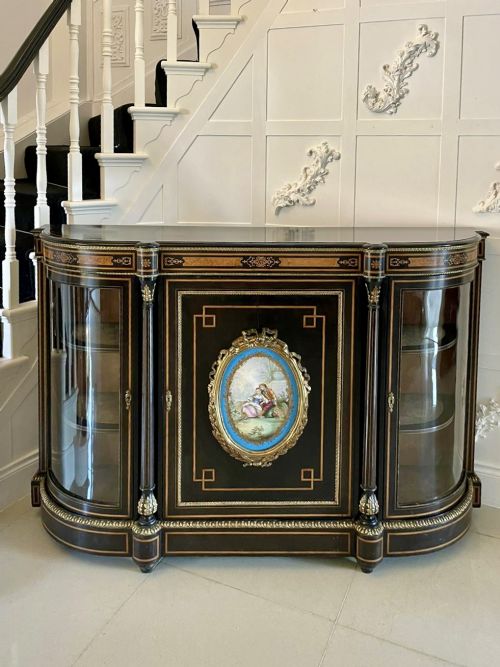
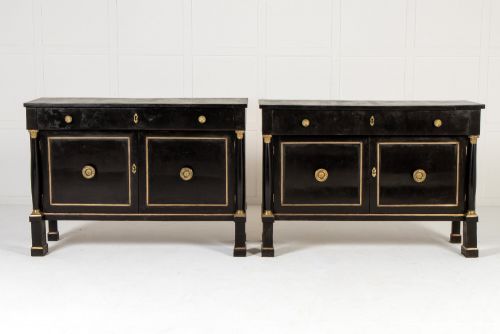
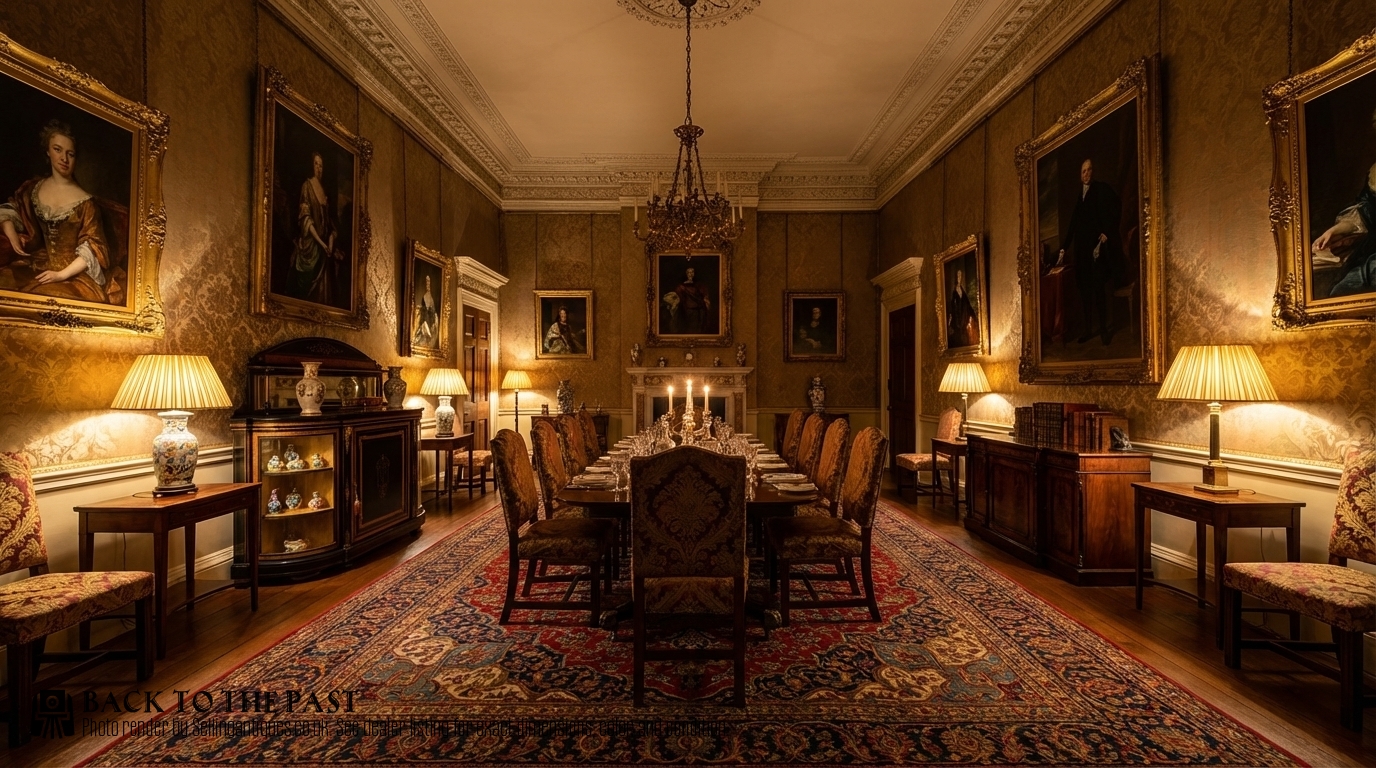
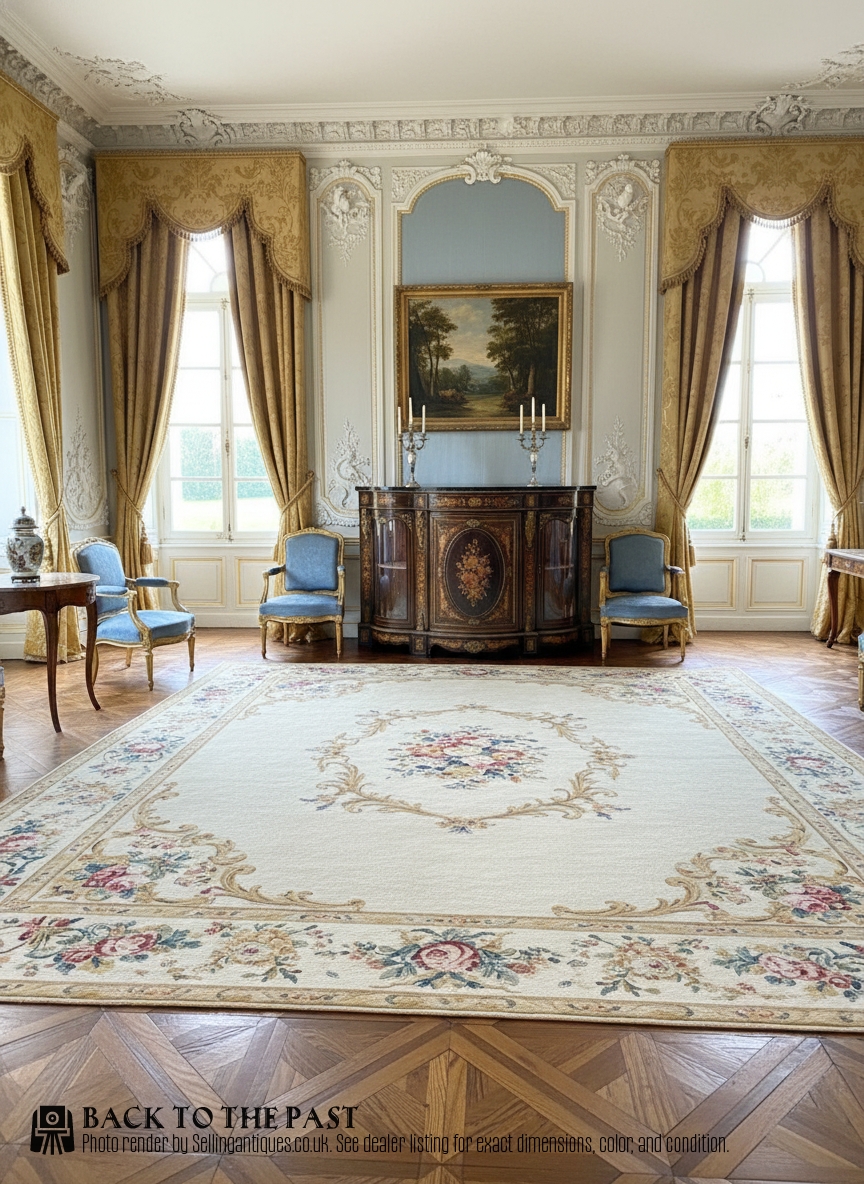
When you search for an ebonised wood credenza, you look at low storage furniture designed for the reception room or parlour. The form appears most frequently in Victorian and nineteenth-century examples, often taking the shape of a glazed display cabinet or side cabinet.
Many pieces on this page display French influence, such as Napoleon III styles or demi-lune shapes, alongside Victorian aesthetic movement designs. These cabinets function primarily to display ceramics or glass while offering enclosed shelving beneath.
The finish relies on dark wood treated to resemble ebony, providing a sombre yet dramatic backdrop for gilt mounts and inlaid marquetry. Buyers encounter credenzas, sideboards, and pier cabinets that share these characteristic dark surfaces and decorative mounts.
Materials and construction
Cabinet makers achieved the characteristic dark finish by staining timber, such as fruitwood or pine, to imitate costly ebony. This ebonised surface was then polished to a high sheen, creating a stark contrast against lighter inlaid woods or metal mounts.
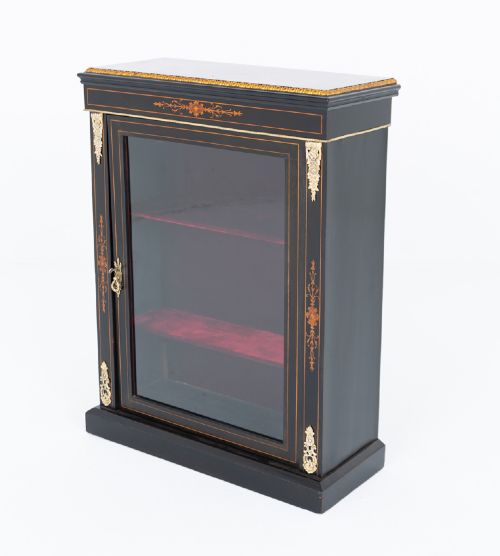
Mounts of cast ormolu and brass are frequently fixed to the corners and panels, secured with small screws to accent the dark woodwork. Many pieces incorporate floral marquetry using contrasting timbers like satinwood and amboyna within the central door panels.
Glazed doors often protect the interior shelves, while specialist touches like Sevres-style porcelain plaques or pietra dura panels are inset into the woodwork. Secondary timbers provide sturdy internal framing behind the polished exterior facades.
One tiny apprentice cabinet on this page demonstrates that miniature furniture required just as much ebonised moulding as the grandest sideboard.
Judging the quality
The distinction between ordinary and superior pieces rests on the crispness of the marquetry and the weight of the metal mounts. Finer examples display meticulous hand-cut inlay and thick, fire-gilded ormolu rather than lightweight stamped brass.
Better credenzas feature well-figured contrasting woods such as burr walnut or amboyna framing the ebonised panels. The depth of the polish and the integrity of the cabinet joints further separate standard production from masterwork pieces.
The Ebonised Wood Credenza Glossary
- Ebonised
- Wood stained or painted to look like ebony. This finish gained immense popularity during the Victorian and Napoleon III periods for formal reception furniture.
- Ormolu
- Gilt bronze mounts applied to furniture. The technique involves coating cast bronze with a mercury and gold amalgam before heating.
- Marquetry
- Decorative veneer patterns applied to a wooden structure. Craftsmen use thin slices of various timbers to create pictorial or geometric designs.
- Pier cabinet
- A narrow cabinet designed to stand against the wall space between windows. These pieces often feature glazed doors and match the height of surrounding furnishings.
- Demi-lune
- Half-moon shaped. Cabinets with this profile fit flat against a wall while presenting a curved front.
Ebonised Wood Credenza: Frequently Asked Questions
What is an ebonised wood credenza used for?
These cabinets served historically in formal rooms to store porcelain, silver, and glassware while displaying ornaments on the top surface. Today, they function similarly in living spaces as decorative storage units.
The enclosed cupboards keep items dust-free, while glazed central doors showcase collections against a dark wooden backdrop.
How do I date a Victorian credenza?
Dating relies on examining the secondary timbers, construction methods, and stylistic cues such as marquetry motifs and hardware. Pieces from the mid-nineteenth century often incorporate French tastes like ormolu mounts and porcelain plaques.
Comparing the style to documented furniture from periods like the Aesthetic Movement or Napoleon III helps narrow the decade of manufacture.
Are these credenzas made of solid ebony?
True solid ebony furniture is extremely uncommon due to the density and scarcity of the timber. Most pieces use a domestic wood like fruitwood or pine that has been heavily stained and polished to replicate ebony.
Inlaid details and contrasting veneers such as amboyna or walnut are then applied over the primary carcase construction.
How do I care for ebonised wood?
Maintenance requires keeping the piece away from direct sunlight and sudden temperature changes to protect the dark finish and delicate veneers. Gentle dusting with a soft, dry cloth prevents micro-scratching on the polished surface.
Avoid silicone-based sprays, opting instead for occasional application of appropriate furniture wax if the finish requires nourishment.