


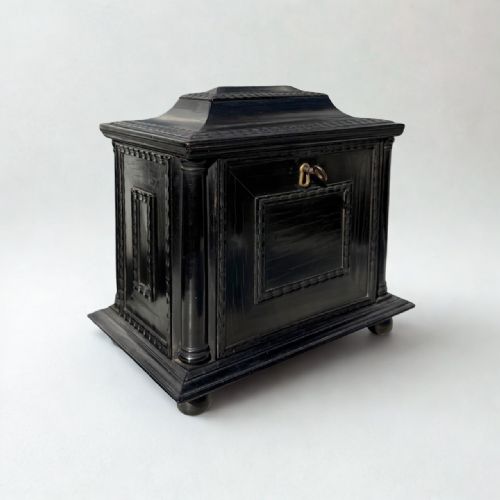


Ebonised Jewellery Box
An ebonised jewellery box is a dark, striking container for small treasures, offering depth of tone and historic character to a dressing table.
Ebonised Jewellery Box
An ebonised jewellery box is a refined container designed to hold personal trinkets and valuables, finished with a dark, dense stain that mimics costly ebony. These pieces span several centuries and originate from various European centres, reflecting changing domestic tastes.
The materials vary from solid ebonised wood to fruitwood carcasses adorned with marquetry, brass inlay, and pietra dura mounts. Each box reveals the decorative preferences of its period, from Flemish Baroque severity to Victorian elaboration.
How they were made
Makers achieved the characteristic dark finish by treating lighter timbers such as fruitwood with chemical stains or dark pigments to imitate genuine ebony. This dark surface provided a dramatic backdrop for contrasting inlays of brass, mother-of-pearl, and delicate marquetry.
Finer boxes incorporate parquetry, penwork, or pietra dura panels set directly into the ebonised surface, requiring precise carpentry and cabinet-making skills. Carcasses were joined with traditional dovetailing, and interiors were often lined with velvet or silk to protect precious items.
Periods represented span from the 17th Century and 18th Century through the Regency, Victorian era, and into the 20th Century.
What varies in quality
The quality of an ebonised jewellery box depends on the depth and execution of the surface finish, the precision of any inlay work, and the integrity of the underlying timber. Superior examples feature crisp brass stringing, intricate marquetry, or finely fitted interior trays that operate smoothly.
Weight, stability, and the retention of original hardware such as hinges, locks, and escutcheons distinguish better pieces from simpler utilitarian boxes. The presence of specialised decorative elements, including pietra dura mounts or micro-mosaic panels, elevates the standing of an individual box.
The Ebonised Jewellery Box Glossary
- Ebonised
- Wood treated to resemble solid ebony through staining, painting, or polishing. This technique gained immense popularity during the Victorian era and the 19th Century to create a formal, striking appearance.
- Pietra dura
- An artistic technique using cut and fitted polished coloured stones to create pictorial designs. It frequently appears as a decorative mount on 19th Century Italian boxes.
- Marquetry
- Decorative veneer applied to wood furniture in geometrical patterns or pictorial scenes. Makers utilised various woods to create contrast against the dark background.
- Parquetry
- Mosaic woodwork forming geometric patterns such as cubes or squares. This technique often embellished the lids and sides of table caskets.
- Table cabinet
- A small, often elaborate cabinet designed to sit upon a table or desk rather than the floor. These pieces frequently house multiple internal drawers and compartments.
Ebonised Jewellery Box: Frequently Asked Questions
How do I date an ebonised jewellery box?
Dating relies on observing construction methods, hardware types, and decorative styles characteristic of periods like the Victorian era, Regency, or the 17th Century. Linings, lock mechanisms, and secondary woods offer further clues to the decade of manufacture.
Changes in aesthetic preferences across the 18th Century and 19th Century guide collectors in narrowing down the likely origins of each box.
How should I clean an ebonised surface?
Cleaning requires a soft, dry cloth to remove dust without disturbing delicate inlays or the dark finish. Moisture and modern chemical polishes can damage historic surfaces and should be strictly avoided.
Maintaining a stable room environment protects the wood from cracking and preserves the integrity of brass mounts and internal silk or velvet linings.
Were these boxes used only for jewellery?
While designated as jewellery boxes, many of these pieces served multipurpose roles for writing implements, letters, or small collectables. Larger table cabinets and caskets held a variety of personal valuables depending on the owner's daily requirements.
Fitted interior trays and compartments often accommodated specialised items such as pocket watches, seals, and loose gemstones.
What styles are common in ebonised boxes?
Common styles include Flemish Baroque, Napoleon III, and various regional 19th Century Italian designs incorporating Sorrento marquetry. Regency and Victorian interpretations also feature prominently among surviving examples.
These diverse styles reflect the cross-cultural exchange of decorative motifs throughout European cabinet-making history.