


1920s Jewellery Box
A 1920s jewellery box offers a tangible fragment of the period's dressing table culture, built to keep precious items secure.
1920s Jewellery Box
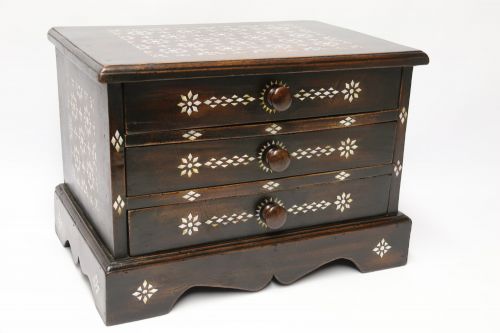
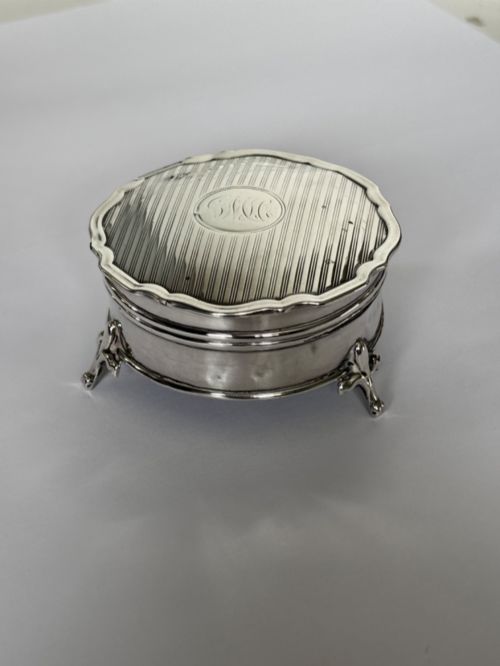
A 1920s jewellery box covers everything from fitted dressing table caskets in solid silver to portable leather cases and hardwood collector chests. These pieces serve as functional storage for rings, bracelets and trinkets, reflecting the changing vanity habits of the early twentieth century.
The versions most commonly met span compact silver ring boxes bearing Birmingham hallmarks alongside substantial wooden collector chests and crocodile skin variants. Many examples lean into the geometric lines of Art Deco design, while others retain Edwardian or Victorian influences in their construction.
Origin points vary widely, taking in English silver workshops, French provincial ateliers, Anglo-Indian craft traditions and Chinese Republic period studios. Buyers encounter diverse forms such as rectangular chests, compartmented trays and hand-painted table boxes.
Materials and Construction
Makers utilised a range of hard materials, pairing sterling silver and brass mounts with timbers such as mahogany, laburnum oyster, rosewood, ebonised wood and general hardwood. Leather and crocodile skin appear as durable exterior coverings over rigid carcases.
Surface decoration relies on applied techniques including guilloche enamel, tortoiseshell inlays, hand-painted details and semi-precious stone mounts like rose quartz and lapis lazuli. Silver components often carry crisp hallmarks establishing assay office origins.
Internal layouts frequently feature fitted trays and velvet or silk linings designed to cushion rings and small ornaments safely during daily use.
Crocodile skin makes an unexpected appearance alongside fine rose quartz and lapis lazuli.
Separating the Fine from the Ordinary
Quality rests in the integrity of the materials and the precision of the joinery, distinguishing a robust hardwood chest from a simple veneered box. Solid silver components display crisp hallmarks and heavy gauge metal rather than thin plating.
The refinement of decorative elements sets apart superior examples, seen in the clean execution of guilloche enamel, the precise fit of tortoiseshell panels, or the detailed execution of hand-painted scenes and inlay work.
The 1920s Jewellery Box Glossary
- Guilloche enamel
- A decorative technique involving precise mechanical patterns engraved beneath translucent enamel. It provides a luminous surface often seen on lids and compacts.
- Laburnum oyster
- A wood veneer cut diagonally across small branches to reveal concentric ring patterns resembling oyster shells. Cabinetmakers utilised this for decorative geometric patterning.
- Hallmark
- An official stamp applied to precious metals indicating purity, maker and assay town. English pieces frequently display Birmingham or similar town marks.
- Tortoiseshell
- The mottled brown and amber shell of certain turtle species used historically for luxury box inlays and lids. It offers a rich, polished finish.
- Anglo-Indian
- Describing items made in India under British influence, combining local timber crafting traditions with European furniture forms. These pieces often feature intricate inlaid detailing.
1920s Jewellery Box: Frequently Asked Questions
What fits inside these boxes?
These boxes suit the storage of rings, small brooches, bracelets and delicate trinkets. Many include dedicated ring rolls or shallow trays for smaller items.
Larger collector chests provide deeper space for diverse specimens and varied personal treasures.
How do I care for leather boxes?
Leather and crocodile skin exteriors require gentle dusting and protection from direct sunlight and excessive dryness. Conditioning balm helps maintain flexibility without harming old finishes.
Keep interiors dry and avoid placing damp metals directly against fabric linings.
Are silver boxes fragile?
Solid silver boxes are robust for daily dressing table use, though the hinges and catches deserve careful handling. Enamel and tortoiseshell insets require protection from sharp impacts.
Regular soft cloth cleaning preserves the polish on hallmarked surfaces.
How are periods identified?
Silver components often carry legible hallmarks indicating exact assay years, while wooden boxes rely on construction traits and stylistic clues. Art Deco geometry and specific timber treatments point towards the early decades of the twentieth century.
Comparing regional styles helps separate English dressing table pieces from continental or Asian examples.