


Silver Inlaid Box
A silver inlaid box brings tactile warmth to a dressing table, combining precious metals with organic shell, timber and stone.
Silver Inlaid Box
A silver inlaid box encompasses a broad family of decorative receptacles, ranging from miniature pill boxes and card cases to substantial jewellery caskets and dressing table boxes. The pieces gathered here span from the Georgian and Regency eras through the Victorian and Edwardian periods, reaching into the early twentieth century.
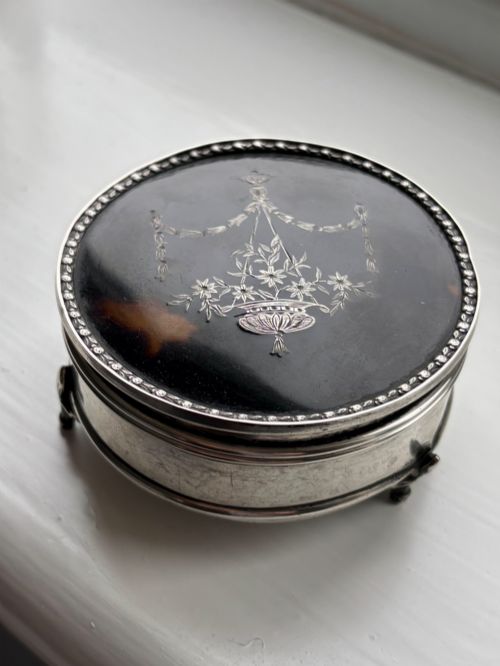
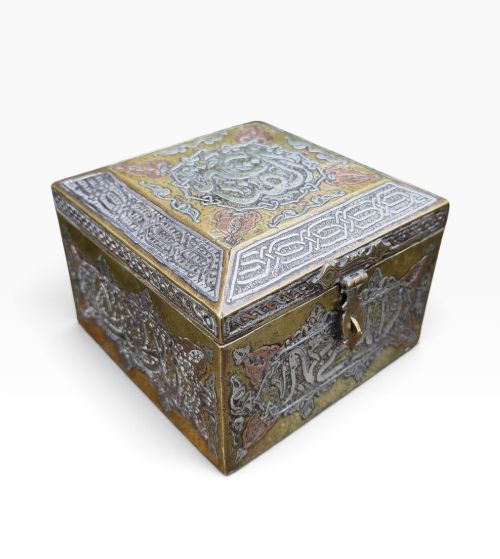
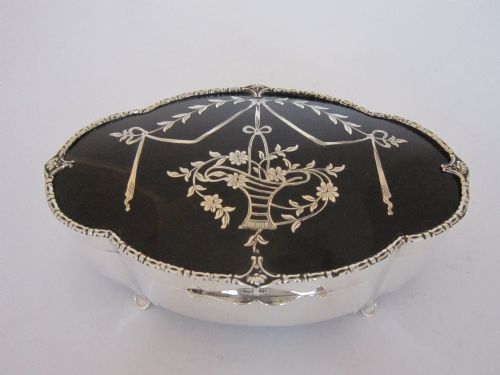
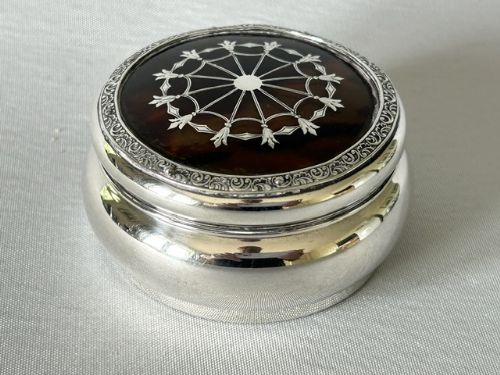
The most prevalent style meeting this search phrase is the Edwardian or George V sterling silver and tortoiseshell trinket box, often featuring intricate pique work or silver stringing. Alongside these English dressing table pieces, the selection includes brass Quran caskets, mahogany chests, and regional works from Islamic Southeast Asia and East Asia.
Buyers encounter everything from pocket snuff boxes in horn or tortoiseshell with delicate metal inlay to larger rosewood and satinwood workboxes fitted with compartments. Each functional form reflects the domestic habits of its period, whether designed for personal adornment, correspondence, or the safekeeping of valuables.
Materials and Technique
Craftsmen built these boxes from timber carcases in mahogany, satinwood, walnut, and rosewood, or constructed them entirely from organic materials such as tortoiseshell and mother-of-pearl. Sterling silver mounts, hinges, and escutcheons provide structural definition and secure closures.
Surface enrichment relies heavily on pique work, where tiny pins and strips of silver and gold are driven directly into tortoiseshell to form geometric patterns or floral motifs. Wire inlay, brass banding, and pietra dura stone panels further articulate the surfaces of these diverse containers.
Materials represented include sterling silver, brass, walnut, and bone, reflecting English, French, and Asian craftsmanship across diverse domestic forms.
The Measure of Craft
Quality rests in the precision of the inlay work and the integrity of the structural joints. Finely executed pique work demonstrates absolute regularity in the placement of individual silver pins, whereas lesser examples show irregular spacing or uneven seating in the shell.
The choice of primary materials also dictates distinction, separating standard utility boxes from luxurious dressing cases lined in silk and fitted with hallmarked silver accessories. Well-preserved original hinges, functioning locks with matching keys, and stable timber carcases without warping elevate a piece within its period.
Ollivant & Botsford·Asprey & Co.·Tien Shing
The Silver Inlaid Box Glossary
- Pique work
- A method of decorating tortoiseshell or ivory by inlaying tiny points and strips of gold or silver. This technique reached a peak of popularity during the late eighteenth and early nineteenth centuries.
- Pietra dura
- An artistic technique using cut and fitted polished coloured stones to create images or geometric patterns. These panels frequently appear inset into the lids of small silver boxes.
- Escutcheon
- A flat plate surrounding a keyhole, usually cast in brass or sterling silver. It protects the surrounding wood or shell from wear caused by the key.
- Stringing
- Thin inlaid lines of contrasting timber or metal used to outline the edges of box lids and panels. It creates a subtle border that defines the geometric form of the piece.
- Casket
- A small decorative box or chest designed for holding jewels, letters, or valuables. These items often feature heavy metal mounts and lined interiors.
Silver Inlaid Box: Frequently Asked Questions
What is a pique work box?
A pique work box utilises tortoiseshell as a base material, decorated by hand with minuscule pins and strips of silver or gold pressed into the surface. These metallic points combine to create floral sprays, monograms, or geometric borders.
The technique requires immense patience, as each metal piece must be individually set into softened shell that holds the design securely once cooled and polished.
How do I date a tortoiseshell box?
Dating relies on observing the overall form, the style of the silver mounts, and any accompanying hallmarks. Georgian and Regency examples often feature flatter profiles and simpler stringing, while Edwardian pieces frequently showcase elaborate silver pique work and rounded edges.
Interior fittings and lining fabrics also provide clues, as sewing implements and mirror arrangements shifted considerably between the eighteenth and twentieth centuries.
How were these boxes originally used?
These receptacles served specific domestic functions in the household, from holding visiting cards and stamps to securing rings and necklaces on a dressing table. Snuff boxes and pill boxes were carried in pockets or waistcoats for personal convenience.
Larger caskets and chests accommodated correspondence, sewing implements, or valuable documents, functioning as portable security vaults in an era before built-in furniture locks.
Are tortoiseshell boxes fragile?
Tortoiseshell is an organic material that responds to changes in humidity and temperature. Direct sunlight causes fading and warping, while sudden dryness makes the material brittle.
Owners should keep these boxes away from heat sources and maintain a stable indoor climate to preserve the integrity of both the shell and the metal inlay.