




Edwardian Tortoiseshell Box
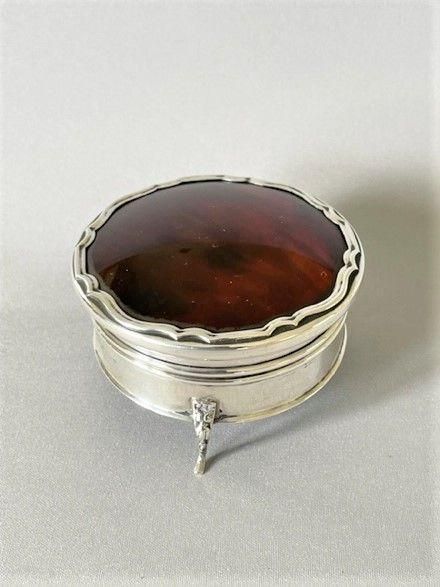
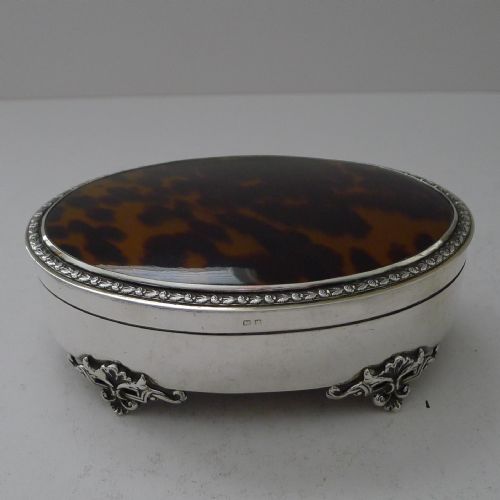
An Edwardian tortoiseshell box brings rich amber tones and sterling silver mounts together on the dressing table.
Edwardian Tortoiseshell Box
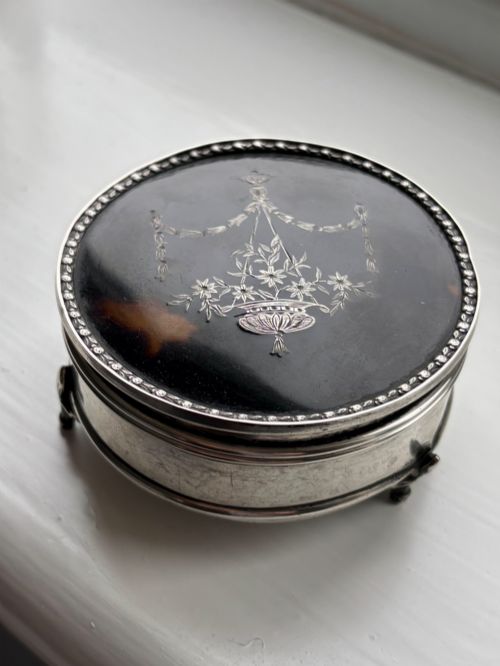
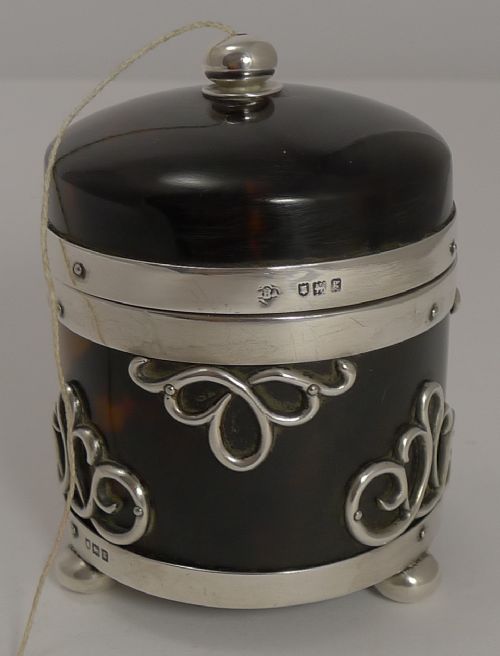
An edwardian tortoiseshell box combines translucent brown shell with sterling silver mounts, serving as a container for jewellery, trinkets, or dressing table accessories. These pieces span small pill boxes to large fitted jewellery caskets and vanity jars.
Most examples encountered date from the edwardian period through the early twentieth century, occasionally crossing into George V styles. Forms range from simple oval and heart shapes to substantial rectangular boxes designed for desks or dressing tables.
Materials and Construction
Makers laid thin plates of tortoiseshell over a metal or wooden core, securing them with sterling silver hinges, rims, and shields. Some items substitute celluloid, faux tortoiseshell, or glass bodies while retaining silver lids.
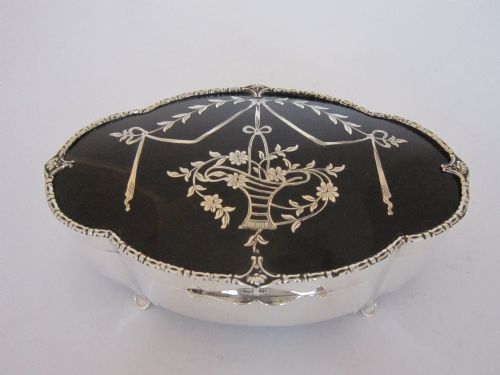
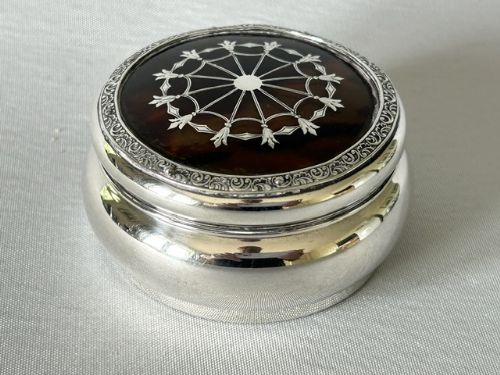
Surface decoration frequently involves pique work, embedding tiny silver or gold pins to form delicate patterns. Lids often feature inlaid motifs such as butterflies or dragonflies alongside stamped sterling silver borders.
Listings feature periods spanning from nineteen hundred to nineteen twenty, alongside George V and Victorian styles.
Assessing Quality
Quality rests upon the depth of the shell's natural figuring and the crispness of the sterling silver mounts. Rich amber and dark brown patterning creates a more pleasing surface than plain or cloudy material.
The complexity of the pique work and the weight of the silver mounts distinguish superior pieces from standard dressing table wares. Intricate inlay and substantial hinges indicate careful workshop production.
Levi & Salaman·Boardman Glossop & Co·Ollivant & Botsford·Asprey & Co.
The Edwardian Tortoiseshell Box Glossary
- Tortoiseshell
- A mottled brown material obtained from the shell of marine turtles, utilised for decorative boxes and vanity items.
- Pique work
- A technique of embedding tiny pins or strips of silver and gold into shell to form intricate patterns.
- Sterling silver
- A silver alloy containing ninety-two point five percent pure silver, used for the rims, shields, and mounts of these boxes.
- Celluloid
- An early thermoplastic material used as a substitute for natural shell in some twentieth century boxes.
- Trinket box
- A small container designed for holding rings, pins, and small personal ornaments on a dressing table.
Edwardian Tortoiseshell Box: Frequently Asked Questions
What were these boxes used for?
These containers held personal items such as rings, pins, trinkets, and pills on dressing tables or desks. Their fitted interiors kept delicate pieces separated and protected.
Larger versions accommodated vanity jars, string, or complete sets of dressing table accessories for daily grooming routines.
How do I date an edwardian piece?
Silver mounts often bear British hallmarks that indicate the assay office, standard, and specific year of production. Style markers like pique work and specific heart or oval shapes help confirm the period.
Comparative details from early twentieth century manufacturing standards also guide dating when hallmarks are rubbed or absent.
Are faux tortoiseshell boxes genuine?
Some items utilise celluloid or other early plastics to replicate the distinctive mottled appearance of natural shell. These substitutes remain period-appropriate alternatives found alongside genuine pieces.
Examining the weight, warmth, and internal structure helps differentiate natural shell from manufactured substitutes.
How do I care for tortoiseshell?
Natural shell requires gentle handling and protection from prolonged direct sunlight, extreme heat, and harsh chemicals. A soft, dry cloth removes dust without scratching the polished surface.
Keeping boxes away from radiators preserves the integrity of the shell and prevents the silver mounts from loosening.