


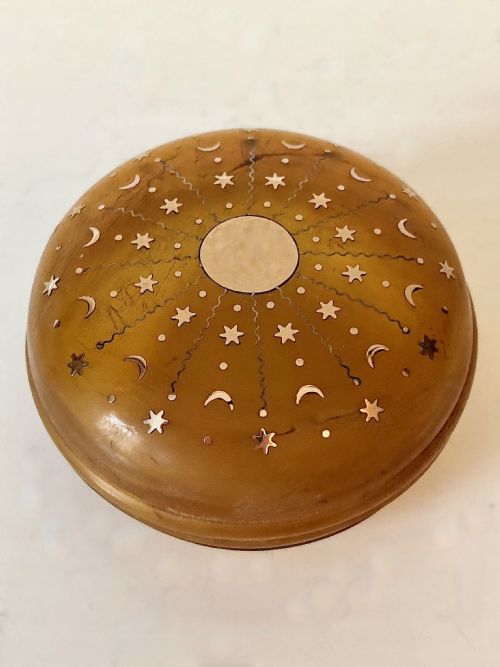
Inlaid Tortoiseshell Box
An inlaid tortoiseshell box brings tactile warmth and intricate metallic contrast to a dressing table or desk.
Inlaid Tortoiseshell Box
When you search for an inlaid tortoiseshell box, you encounter items designed to hold valuables, tea, or writing equipment from the Georgian era through to the early twentieth century. These small receptacles span intimate pocket snuff boxes and card cases to substantial tea caddies, desk stands, and larger dressing table boxes.
The pieces on this page draw from Victorian, Edwardian, and Georgian periods, with French Napoleon III and Regency examples also appearing regularly. You are most likely to meet silver-mounted trinket and jewellery boxes produced during the reigns of George V and late Victoria, alongside earlier nineteenth-century tea caddies and snuff containers.
Makers and retailers such as Asprey, Lund of Cornhill, and Ollivant & Botsford shaped many of these boxes, matching organic shell with precious metals and woods. The object types vary according to their original domestic purpose, yet all share a reliance on contrasting surface textures.
Materials and methods behind the inlay
Makers constructed these boxes by applying thin plates of tortoiseshell - and occasionally faux variants - over a rigid wooden or metal carcase. Artisans then channelled the surface to receive contrasting inlay materials including brass, sterling silver, gold, rose gold, bone, and mother-of-pearl.
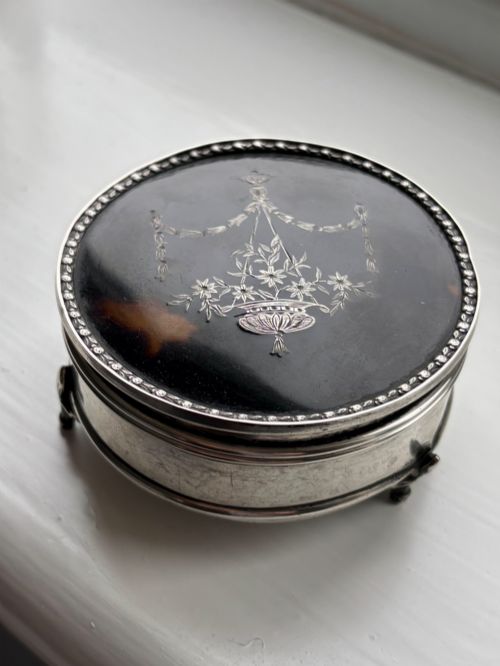
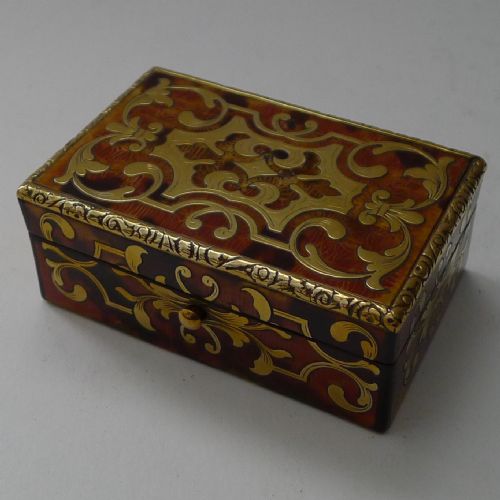
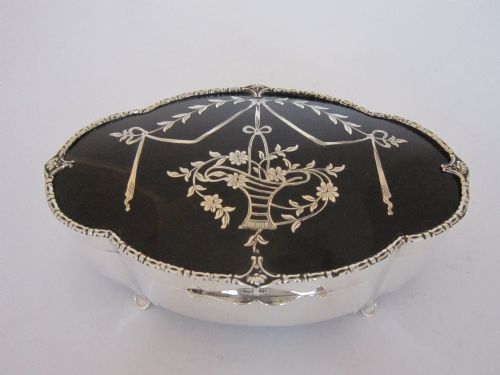
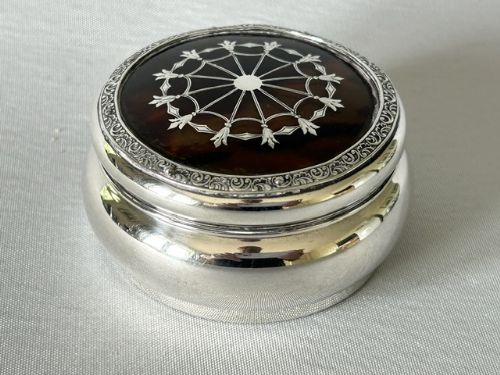
Pique work represents a specialised technique where tiny pins, strips, or dots of gold and silver are pressed individually into the softened shell to form geometric or floral motifs. Boulle work similarly utilises tortoiseshell alongside engraved brass, creating mirrored symmetrical patterns typical of French nineteenth-century and earlier revival pieces.
Keep a small card case handy for storing postage stamps when modern envelopes feel entirely devoid of charm.
Distinctions in construction and execution
The fineness of the metalwork separates simpler commercial pieces from masterwork examples. Hand-cut pique and crisp brass engraving demonstrate superior workshop skill compared to stamped or glued alternatives.
The integrity of the organic shell and its underlying carcase dictates the overall standard. Superior boxes maintain stable plates of shell without warping, alongside well-fitted silver mounts, working hinges, and complete interior compartments.
Asprey & Co.·Lund Of Cornhill·Ollivant & Botsford
The Inlaid Tortoiseshell Box Glossary
- Pique
- A method of decorating tortoiseshell by inlaying tiny points or strips of gold and silver. This technique creates delicate metallic patterns across the dark, translucent surface.
- Boulle
- A decorative style combining tortoiseshell and engraved brass in intricate counter-changed marquetry. André-Charles Boulle popularised the method for grand furniture and luxury desk accessories.
- Tea caddy
- A small lidded container originally used for storing loose tea leaves securely under lock and key. Georgian and Victorian examples often feature internal wooden canisters or glass mixing bowls.
- Blond tortoiseshell
- A rarer, lighter amber-coloured variety of shell derived from the hawksbill turtle. This material exhibits warm golden tones rather than the standard dark brown mottling.
Inlaid Tortoiseshell Box: Frequently Asked Questions
How do I date an inlaid tortoiseshell box?
Examine the metal mounts, hinges, and any accompanying hallmarks for official date letters. Stylistic clues such as Regency bow-fronts or Edwardian silver standards also help narrow the manufacturing period.
Interior fittings and construction methods provide further evidence. Hand-cut dovetails and original velvet linings often point to earlier Georgian or nineteenth-century workshops.
Were these boxes used for tea?
Larger rectangular boxes functioned as tea caddies to protect expensive imported leaves from dampness and theft. They often included lockable lids and internal divisions.
Smaller boxes served completely different domestic roles, acting as receptacles for pins, calling cards, snuff, or jewellery on a dressing table.
What is pique work inlay?
Pique work is a decorative technique where artisans press tiny pieces of gold or silver directly into heated tortoiseshell. The metal cools and remains fixed to form delicate patterns.
This meticulous method required immense skill to avoid cracking the brittle shell while creating intricate floral or geometric designs.
How should I clean my box?
Dust tortoiseshell gently with a soft, dry microfibre cloth to prevent scratching the polished surface. Avoid harsh chemical cleaners, alcohol, or excessive moisture.
Keep the box away from direct sunlight and strong heat sources to prevent the organic shell from drying out, warping, or losing its lustre.