



Edwardian Jewellery Container
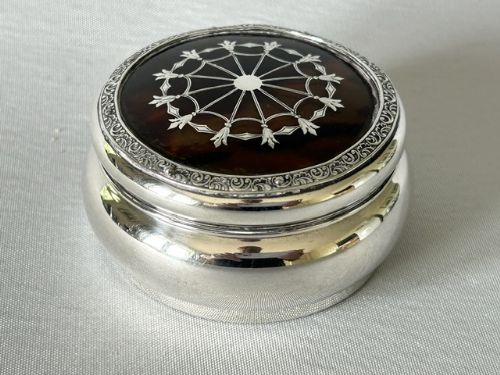
These edwardian jewellery container examples range from heavy sterling silver trinket boxes to tortoiseshell dressing table pieces, offering fitted storage for small valuables.
Edwardian Jewellery Container
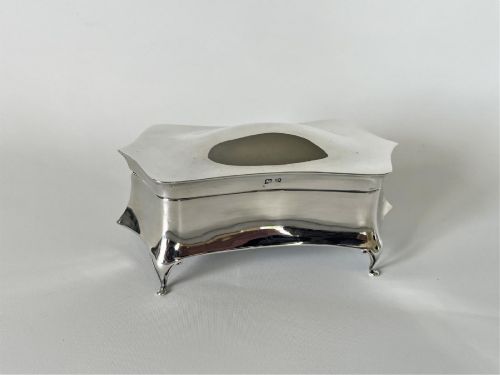
An edwardian jewellery container serves as a small receptacle for storing rings, cufflinks, and pins on a dressing table or desk. These boxes appear primarily in trinket, dressing table, and decorative box formats across this selection.
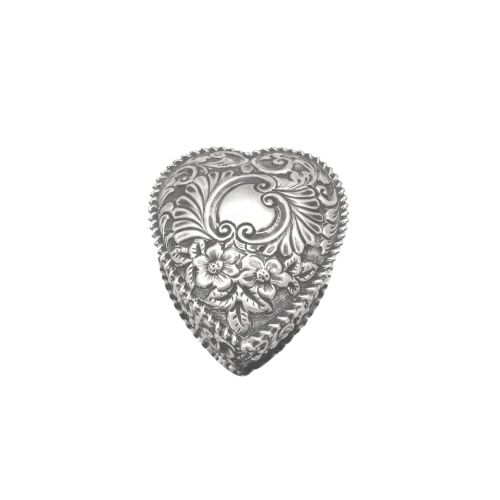
The objects frequently date from the Edwardian era alongside overlapping Victorian and George V periods. Forms span conventional rectangular shapes to heart shapes, oval profiles, and coffin silhouettes.
Makers utilised various traditional metals and decorative inlays to create functional storage vessels for domestic use. The pieces reflect the design priorities of early twentieth-century dressing table accessories.
Quality Variations
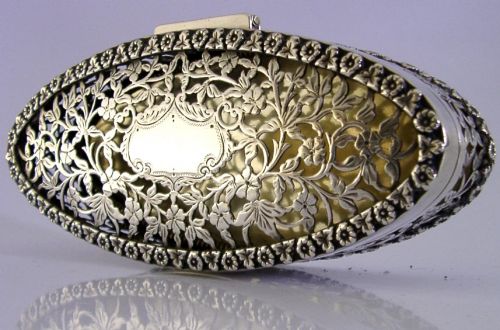
The standard of an edwardian jewellery container depends on the weight of the silver and the crispness of any embossed or pierced detailing. Heavier gauge metal provides structural integrity that lighter stamped boxes lack.
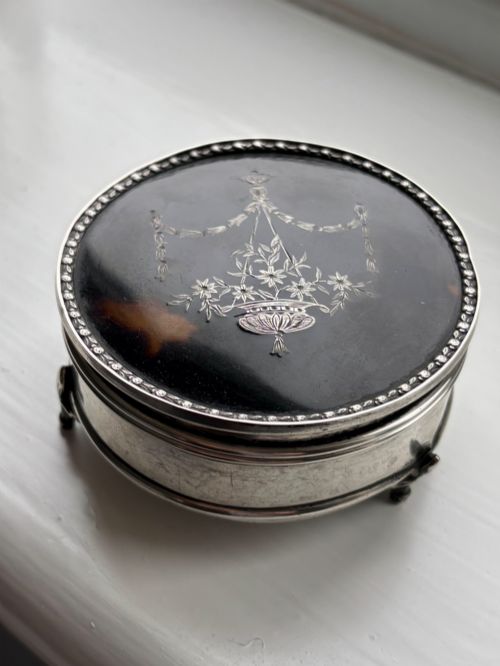
Fine execution appears in the precision of tortoiseshell inlay, pique work, and the tight fit of hinged lids. Maker involvement from established firms also influences the standing of individual pieces.
Listings feature sterling silver, tortoiseshell, ebonised wood, and citrine across Victorian, Edwardian, and George V periods.
Ollivant & Botsford·Asprey & Co.·Nathan & Hayes·Henry Williamson Ltd
The Edwardian Jewellery Container Glossary
- Sterling silver
- A silver alloy containing 92.5 percent pure silver and 7.5 percent other metals, usually copper. This standard composition appears across the majority of metal trinket boxes.
- Tortoiseshell
- A material derived from the shell of certain turtle species, utilised for decorative box panels. Pique work often embellishes these surfaces with inlaid gold or silver wire.
- Gilding
- A thin layer of gold applied to the interior silver surfaces of a box. This technique protects the metal from tarnish and provides a rich contrasting colour.
- Repoussé
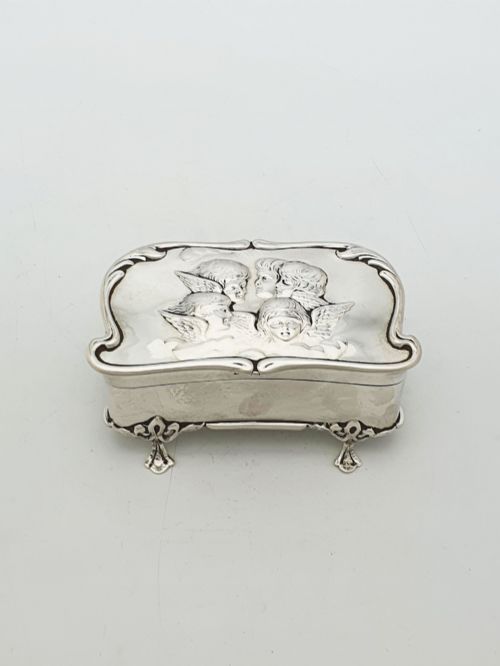
- A metalworking technique where the artisan hammers the design from the reverse side to form raised relief patterns. Cherub motifs often adorn boxes decorated in this manner.
- Citrine
- A yellow variety of quartz occasionally set into the hinged lids of Scottish silver boxes. It serves as a decorative gemstone focal point.
Edwardian Jewellery Container: Frequently Asked Questions
What is an edwardian jewellery container used for?
These boxes function as desktop or dressing table storage for small personal items such as rings, brooches, and cufflinks.
They keep delicate accessories organised and protected from dust when not being worn.
How do I date an edwardian jewellery container?
Silver examples typically carry hallmarks that indicate the assay office, standard of metal, and the specific year of manufacture.
Style indicators such as Arts and Crafts spot-hammering or Victorian gothic motifs also help narrow the production period.
Are these boxes made of solid silver?
Many pieces consist of solid sterling silver, while others utilise silver plating over base metal structures.
Listings also record non-metal materials including ebonised wood, brass, and tortoiseshell.
How should I clean silver trinket boxes?
Gentle dusting with a soft cloth preserves the original surface finish without removing thin gilding or detail.
Harsh chemical dips can damage tortoiseshell inlays, fabric linings, and applied surface patination.