



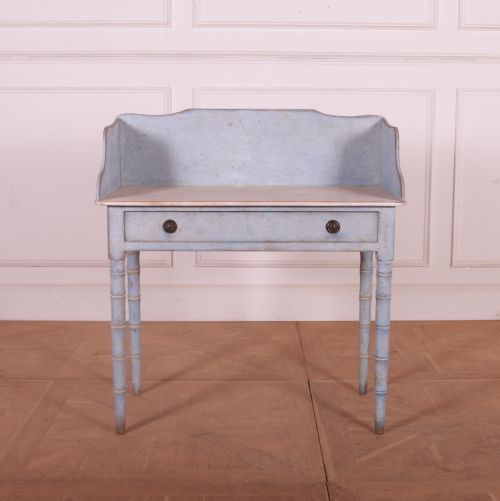

Antique Dressing Table Tray
An antique dressing table tray organises personal trinkets and brushes, bringing tactile silver, glass or mahogany to a bedroom or washstand.
Antique Dressing Table Tray
An antique dressing table tray is a small portable dish or a larger fitted surface designed to hold cosmetics, pins and hair ornaments. When searching for an antique dressing table tray, buyers encounter both small standalone silver pin trays and larger wooden tray-top tables or dressing table sets.
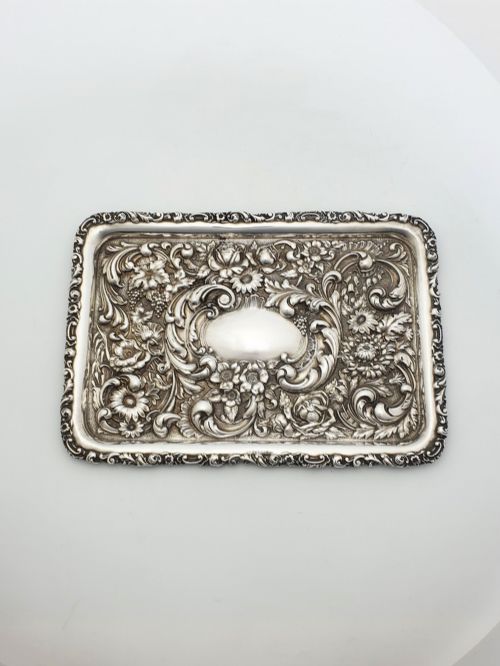
The materials span sterling silver, silver plate, porcelain, ceramic, glass and rich timbers like mahogany and satin birch. Edwardian silver examples with repoussé floral work or cherub motifs appear alongside Georgian and Regency mahogany tray-top writing desks and side tables.
Smaller tabletop trays are built for vanity surfaces, whilst larger furniture pieces integrate tray tops to secure bottles and jars safely. This variety spans the eighteenth, nineteenth and early twentieth centuries, reflecting changing domestic habits across the Georgian, Victorian and Edwardian periods.
How they were made
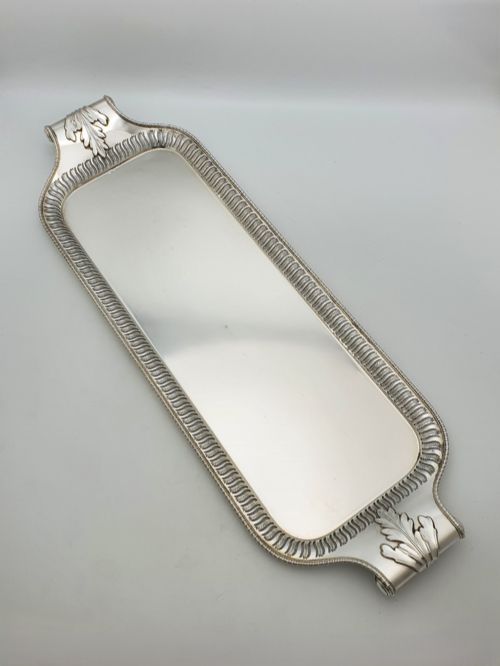
Silversmiths formed metal trays using sterling silver or silver plate, often employing repoussé and chasing techniques to hammer floral and figural designs into relief. Pierced borders and cast handles required skilled metalworking, while hallmarks stamped into the silver recorded the assay office, year and maker.
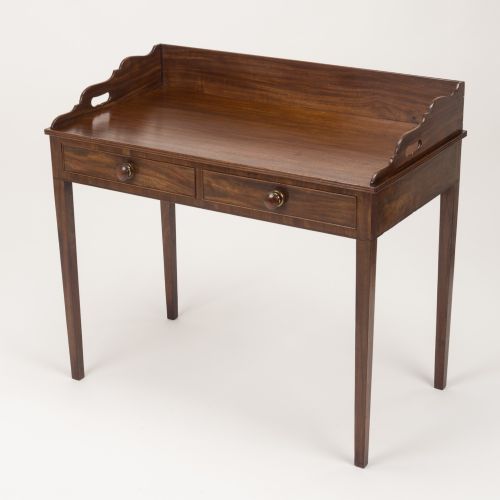
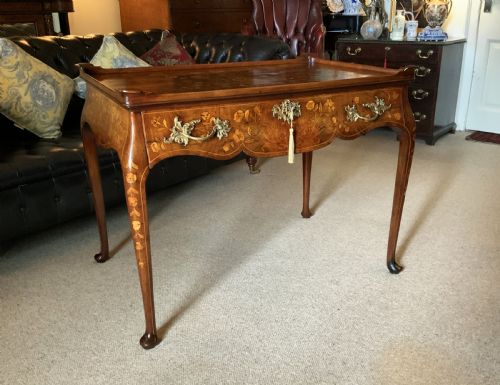
Cabinetmakers constructed wooden trays and tray-top tables in mahogany and satin birch, shaping raised edges to prevent items from rolling off the surface. Marquetry inlay, ebonising and fine joinery on drawer frames demonstrated high levels of woodwork expertise during the Georgian and Victorian eras.
Ceramic and porcelain pieces, such as those from Carlton Ware, relied on moulded earthenware decorated with hand-painted glazes and gilt accents. Enamel work, ormolu mounts and green Mary Gregory glass added colourful decorative layers to dressing table sets and pin dishes.
Reynold's Angels gaze out from Edwardian silver trays, bringing chubby cherubic faces to your daily morning routine.
What varies in quality
Timber selection dictates the distinction in wooden tray-top tables and dressing tables, where dense, well-figured mahogany or satin birch outlasts softer woods. Tight joinery around raised tray edges and smoothly running dovetailed drawers indicate careful workshop construction.
Hand-painted precision on porcelain and enamel pieces determines visual success, with clean gilt lines and vibrant glazes outperforming faded or smudged decoration. Intact mirror glass and matching sets enhance the cohesion of surviving vanity groups.
William Comyns·Mappin Bros.
The Antique Dressing Table Tray Glossary
- Repoussé
- A metalworking technique where the artisan hammers the design from the reverse side to create a raised pattern on the front. This method was widely used on Edwardian silver dressing table trays.
- Tray-top
- A furniture surface edged with a raised wooden gallery to contain loose objects. It appears on Georgian and Regency side tables and desks.
- Ormolu
- Gilded bronze mounts applied to decorative objects and furniture. French nineteenth-century pieces often utilised this technique alongside champlevé enamel.
- Marquetry
- The art of applying thin pieces of wood veneer to a structure to form decorative patterns. Dutch pieces frequently showcased floral and bird designs through this method.
- Hallmark
- A series of official marks stamped on precious metals to show standard of purity, maker and year of assay. These symbols help date silver trays precisely.
Antique Dressing Table Tray: Frequently Asked Questions
What is an antique dressing table tray used for?
These trays were originally designed to hold hairpins, scent bottles, trinkets and brushes on a Victorian or Edwardian dressing table. They kept small personal items organised and protected delicate wooden surfaces from cosmetic spills.
Today, collectors use them on modern dressing tables, sideboards or hallway surfaces for loose pocket items, jewellery or keys. Their compact size makes them versatile display pieces for almost any room.
How do I date an antique silver tray?
Dating silver trays relies primarily on the stamped hallmarks, which include a town mark, a standard mark and a date letter corresponding to the assay office records. Maker marks also help narrow down the active years of firms like William Comyns.
Stylistic clues such as Art Nouveau whiplash lines or Edwardian floral repoussé provide further chronological context when hallmarks are rubbed or absent.
What is the difference between silver plate and sterling silver?
Sterling silver consists of a solid silver alloy containing a high proportion of pure silver, giving the metal lasting intrinsic value. It carries distinct hallmarks indicating its precious metal standard.
Silver plate involves a thin layer of silver bonded to a base metal core, such as copper or nickel brass. Over decades of polishing, silver plate can wear down to reveal the underlying metal.
How do I clean an antique silver tray?
Cleaning antique silver requires a gentle, non-abrasive silver polish and a soft cloth to remove tarnish without harming the underlying detail. Harsh rubbing should be avoided, particularly on delicate repoussé relief work where the raised metal is thin.
Preserving a light patina is often desirable, as complete removal of all age marks can diminish the historical character of the piece.
Were these trays part of larger sets?
Many dressing table trays formed part of larger matched or fitted vanity sets that included hairbrushes, clothes brushes, mirrors and trinket boxes. These comprehensive sets were popular wedding gifts during the Victorian and Edwardian eras.
Individual trays often survived independently after other components of the original set were lost or separated over generations.