



Victorian Floral Platter
A victorian floral platter brings painted blossoms to the table on durable ceramic or lustrous metal.
Victorian Floral Platter
A victorian floral platter serves as a grand centrepiece for family dinners or a decorative wall display, embodying the nineteenth-century enthusiasm for botanical motifs in the home. You will frequently encounter large earthenware and porcelain meat platters bearing hand-painted or transfer-printed floral sprays from this period.
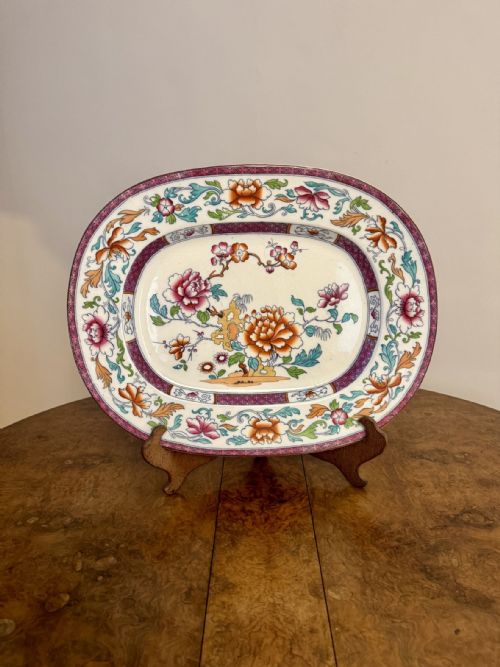
The selection ranges from sturdy ironstone serving dishes intended for heavy daily use to delicate cabinet plates and serving trays designed for display. Many pieces combine floral arrangements with blue and white palettes, gilt highlights, or Japanese-inspired patterns.
Origins stretch across English potteries, French porcelain manufactories, and Japanese export workshops, reflecting a global taste during the Victorian era. These serving dishes and platters survived because households valued their utility and decorative appeal equally.
How they were made
Potters shaped earthenware, ironstone, and porcelain using moulds and throwing techniques before applying underglaze transfers or hand-painted enamel colours. Gilding and gold leaf often highlight the rims and floral centres after a secondary kiln firing.
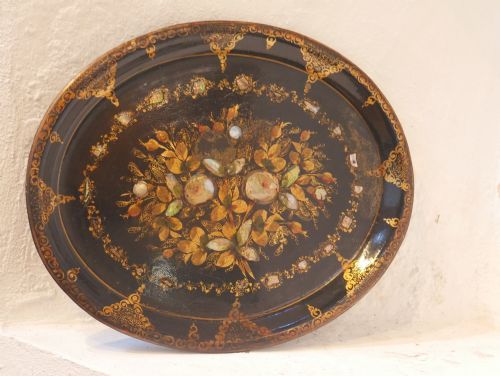
Metal alternatives such as silver plate, Sheffield plate, and toleware utilise rolled or cast base metals adorned with engraved floral flourishes. Papier-mâché trays receive multiple layers of lacquer and hand-painted botanical designs.
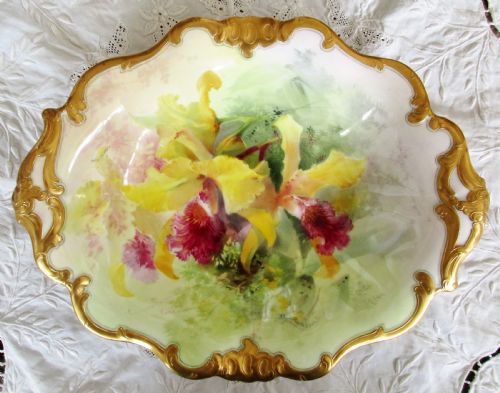
Specialised decorators added botanical subjects like orchids, irises, and garden flowers using mineral pigments that bonded permanently during the glazing process.
Listings feature items spanning from the 1850s to the early 20th century, encompassing materials from ceramic and ironstone to papier-mâché and silver plate.
What varies in quality
The precision of the botanical painting separates standard transfer-printed wares from superior pieces that receive meticulous hand-colouring by skilled ceramic artists. Crispness in the moulded details of ironstone and the application of genuine gold leaf indicate a higher grade of production.
The weight and purity of the ceramic body, alongside the depth of the glaze, dictate the overall durability and refinement of the dish. Maker attribution, particularly to known English potteries or named porcelain artists, elevates the standing of a platter within the range.
Royal Doulton·Minton·Wedgwood·John Ridgway·Mason s Ironstone·Royal Crown Derby·Walker & Hall·Elkin Knight & Bridgwood
The Victorian Floral Platter Glossary
- Ironstone
- A heavy, durable type of earthenware patented in the nineteenth century to imitate Chinese porcelain. It withstands frequent use while holding crisp moulded patterns.
- Charger
- A large decorative plate used traditionally beneath service courses or displayed upright on a sideboard. These pieces often feature elaborate floral and gilt decoration.
- Transferware
- Ceramic decorated by pressing a printed paper design from an engraved copper plate onto the biscuit surface. This technique allowed intricate floral scenes to be reproduced efficiently.
- Toleware
- Painted and japanned tinplate or metalware decorated with floral motifs. It provides a durable surface for serving trays and decorative dishes.
- Imari
- A Japanese export style characterised by underglaze blue, iron red, and gold paint. Victorian makers frequently adopted these floral and compartmentalised patterns.
Victorian Floral Platter: Frequently Asked Questions
How do I use a Victorian platter today?
These large dishes function effectively for serving roasts, vegetables, or fruit at a dining table. They also mount securely onto walls or rest on plate stands as decorative artwork.
Wash them by hand rather than placing them in modern dishwashers to protect the old glaze and any hand-painted gilt borders.
Were these platters meant for daily dining?
Sturdier ironstone and earthenware versions saw regular service during nineteenth-century family meals and large dinner parties. Fine porcelain and cabinet pieces stayed in glass-fronted display cabinets or emerged only for formal occasions.
Examine the glaze wear on the centre of a dish to gauge how heavily a particular piece was used in past households.
How can I tell ironstone from porcelain?
Ironstone is heavier, opaque, and possesses a robust ceramic body designed to resist chipping during heavy kitchen use. Porcelain feels lighter, appears more delicate, and often transmits light translucent when held near a lamp.
Both materials frequently carry floral patterns, but the density of the base clay remains the clearest differentiator.
What does Japanese influence mean for these pieces?
Nineteenth-century European potteries embraced Japanese design elements after international trade opened during the Meiji period. Makers combined traditional floral arrangements with asymmetrical compositions and Imari colour palettes.
This stylistic cross-pollination created distinct hybrid wares that bridge Victorian domestic tastes and Eastern craftsmanship.