




Black Wood Trinket Box
A black wood trinket box gathers the dark tones of ebony, ebonised timber and carved walnut to hold small valuables with quiet restraint.
Black Wood Trinket Box
A black wood trinket box is a functional receptacle for keeping jewellery, keepsakes, and small personal items secure. The pieces available encompass diverse forms including snuff boxes, humidors, table caskets, and dedicated jewellery boxes.
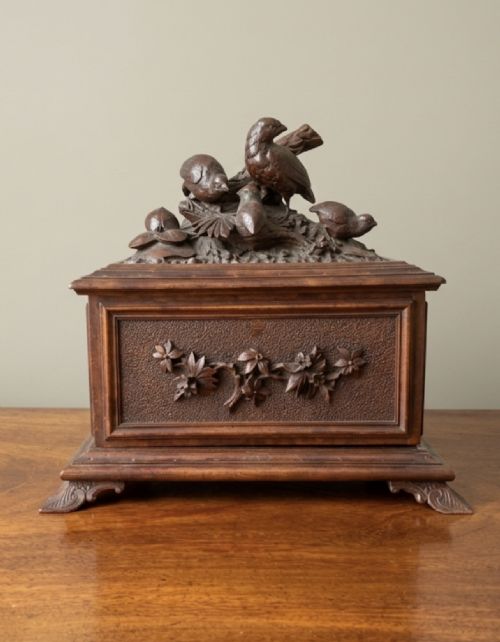
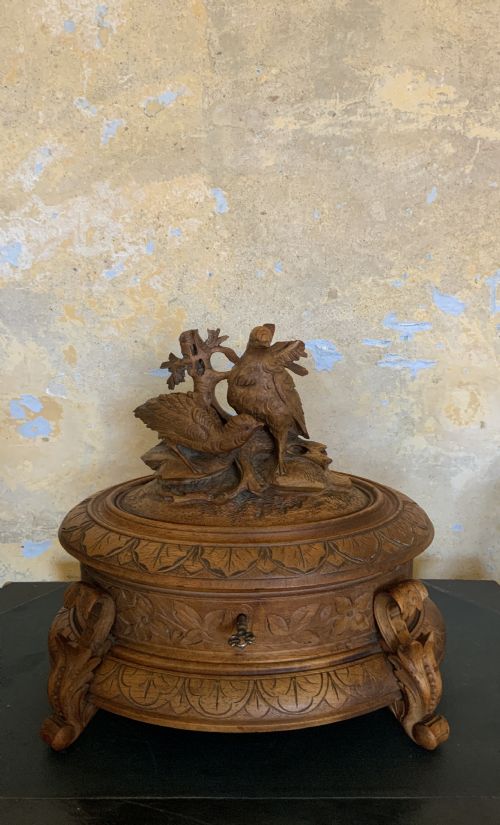
The selection ranges from Regency and Victorian examples to specific regional traditions. Buyers will frequently encounter Black Forest carvings, Italian micro-mosaic or pietre dura mountings, and Anglo-Indian solid ebony work.
These vessels serve as both practical storage and miniature display pieces for desks, dressing tables, and cabinets. Their dark surfaces often contrast with contrasting metal mounts, ivory, or lighter wood inlays.
Materials and construction methods
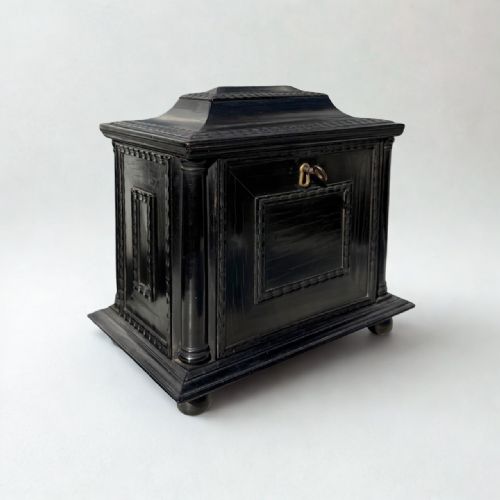
Construction relies heavily on dense timbers such as ebony, walnut, and pine, alongside ebonised woods where cheaper substrates receive a dark painted or stained finish. Artisans employed solid timber construction as well as complex parquetry, marquetry, and fine veneer work.
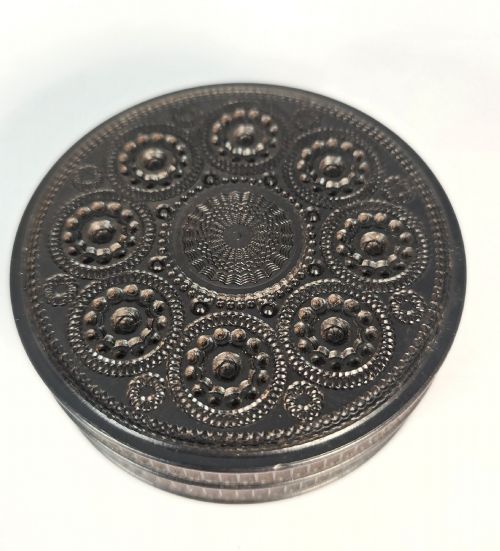
Surface ornamentation involved intricate hand-carving, engine-turning, pokerwork, and the insertion of contrasting materials including brass, silver, tortoiseshell, and porcupine quill. Specialised regional workshops utilised local botanical woods and traditional joining techniques to form hinged lids and fitted interiors.
The listings show a range of dark wood items utilising walnut, ebony, pine, and brass, spanning the 18th, 19th, and early 20th centuries.
Distinctions in craftsmanship
Quality rests upon the precision of the joinery and the depth and sharpness of any carved or applied decoration. Superior pieces display seamless mitre joints, well-fitted lids that close flush, and stable hinges that operate smoothly without straining the surrounding wood.
The sophistication of the surface finish and the integrity of inlaid elements differentiate finer examples from standard production. Intricate hand-carved foliage in Black Forest boxes or precisely fitted pietre dura panels on ebonised bases denote superior workshop output.
The Black Wood Trinket Box Glossary
- Ebonised
- Wood that has been treated, stained, or painted to imitate the deep black colour of genuine ebony. This technique allowed cabinetmakers to achieve a luxurious dark finish using more accessible domestic timbers.
- Pietre dura
- An Italian technique of inlaying polished, cut-coloured stones such as marble, lapis lazuli, and jasper to create pictorial designs. These panels frequently adorn the lids of high-status 19th-century European wooden boxes.
- Engine-turned
- A mechanical method of engraving precise, intricate geometric patterns into a surface using a specialised lathe. This meticulous process was often applied to small snuff boxes and decorative containers.
- Parquetry
- A geometric mosaic of wood veneers arranged in repeating patterns on the exterior of a box. The technique creates visual depth through the contrast of different timber grains and tones.
- Pokerwork
- The art of decorating wood by burning designs into the surface with heated metal points. It produces distinct sepia-toned linear patterns seen on regional folk art pieces.
Black Wood Trinket Box: Frequently Asked Questions
What were black wood trinket boxes used for?
These vessels originally stored small personal valuables, daily accessories, letters, and specialised items like tobacco or snuff. They protected delicate possessions from dust and damage while resting on dressing tables, writing desks, or drawing room surfaces.
Over time, their domestic function expanded from purely utilitarian storage to decorative display pieces that signaled the refined taste of the owner. Today, they serve the same purpose for housing modern jewellery and keepsakes.
How do I identify a Black Forest box?
Black Forest boxes are characterised by deeply carved naturalistic motifs, particularly foliage, animals, and rustic scenes executed in walnut or softer woods. The carving is three-dimensional and often covers the entire lid and sides of the casket.
Originating from the mountainous regions of central Europe, these pieces focus heavily on sculptural woodworking rather than flat marquetry or metal mounts.
What is the difference between ebony and ebonised wood?
Genuine ebony is a naturally dense, heavy, and intensely black heartwood derived from tropical trees, requiring no surface dye to achieve its dark hue. It was typically reserved for high-end luxury items and solid construction.
Ebonised wood is a domestic or alternative timber, such as beech, fruitwood, or pine, that has been stained or painted black to mimic true ebony. Examining the interior or underside often reveals the lighter base wood beneath the dark finish.
How should I care for an antique wooden box?
Keep wooden boxes away from direct sunlight and sudden temperature shifts to prevent the wood from warping and the glue or veneers from failing. Maintaining stable indoor humidity protects both the timber and any delicate inlays.
Dust the exterior gently with a dry, soft cloth and avoid using modern liquid polishes or silicone sprays, which can damage historic finishes. Occasional applications of appropriate microcrystalline wax help preserve dry wood.