



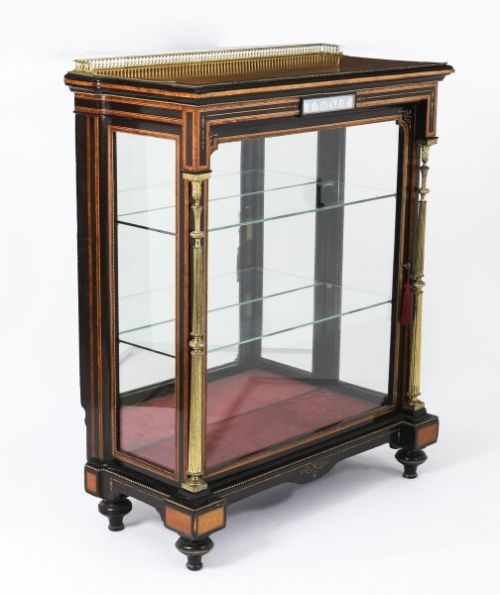


Ebonised Glazed Cabinet
An ebonised glazed cabinet brings dark polished timber and clear glass together to display and protect valued possessions.
Ebonised Glazed Cabinet
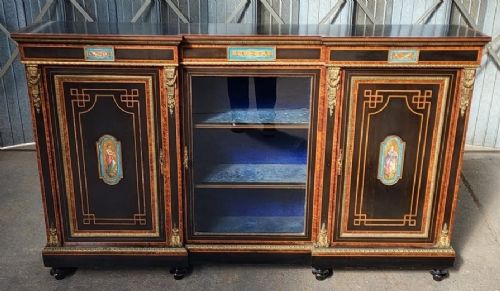
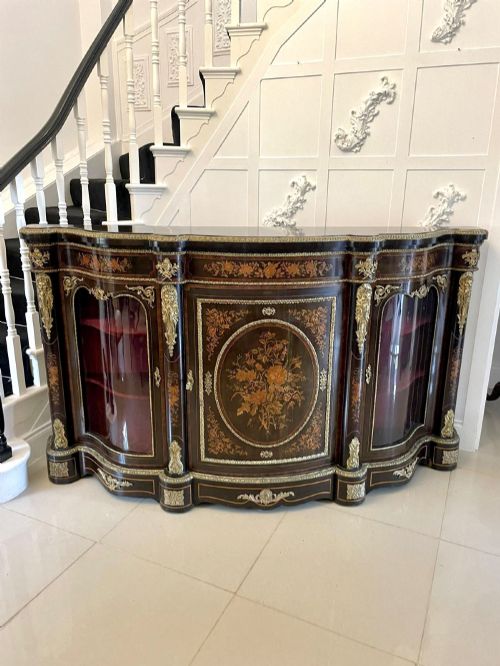
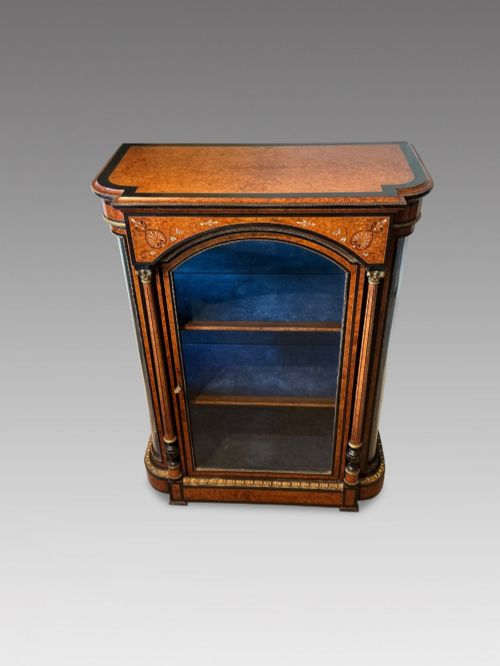
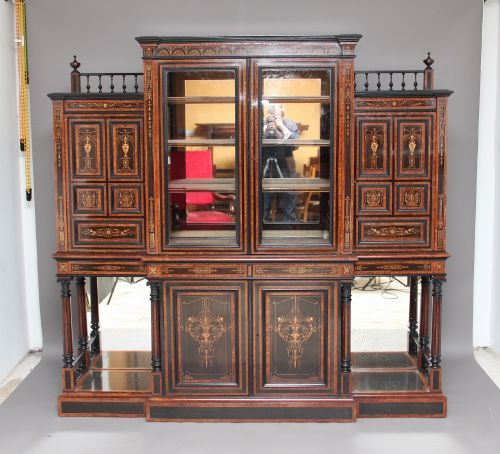
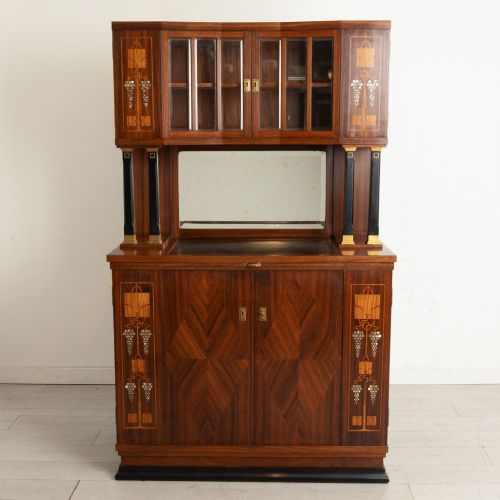
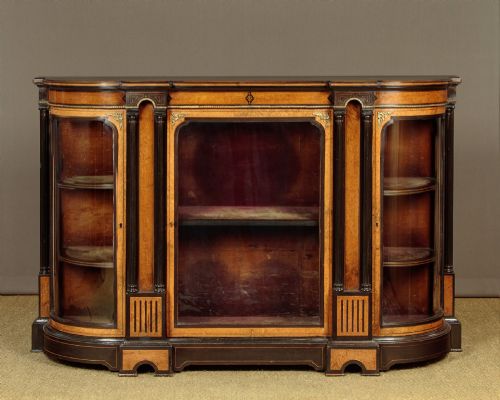
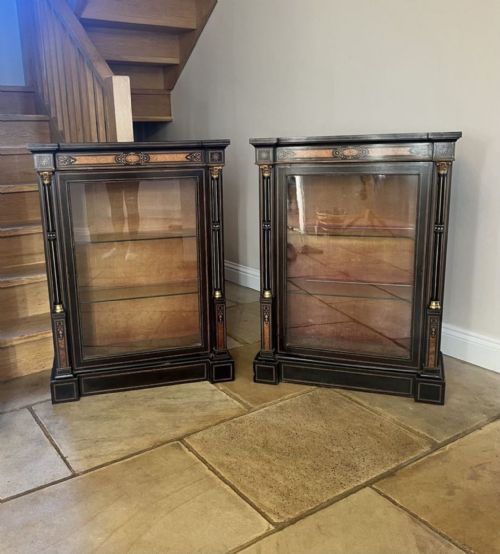
An ebonised glazed cabinet is a display piece built to hold books, ceramics, or curiosities behind transparent glass doors. These items emerge chiefly from the Victorian and nineteenth-century periods, spanning forms such as compact pier cabinets, wide credenzas, and breakfront bookcases.
Makers and manufacturers shaped these units in various styles including Aesthetic Movement, Napoleon III, and French Empire. The pieces on this page are most commonly Victorian side cabinets or vitrines fitted with single or multiple glass doors.
Makers constructed these cabinets to serve formal reception rooms and drawing rooms as both storage and decorative furniture. Their dark, polished surfaces provided a stark contrast to gilded mounts and colourful marquetry inlays.
How they were made
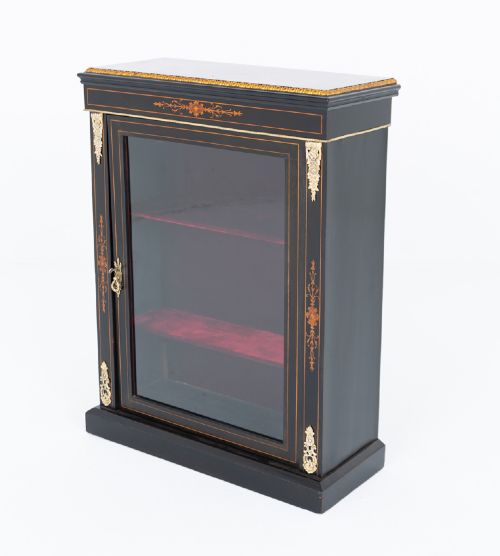
Craftsmen typically darkened fruitwoods or hardwoods through ebonising processes to mimic solid ebony, often combining the dark finish with contrasting veneers like amboyna, burr walnut, or tortoiseshell. They added structural and decorative highlights using brass stringing, gilt mounts, and ormolu.
Makers fitted the front sections with glazed panels, sometimes curved or serpentine, and incorporated adjustable wooden shelving inside the cabinet carcass. Surface ornamentation frequently included floral marquetry, parcel-gilt details, and inlaid brass work in the Boulle technique.
Ebonised Glazed Cabinet Retail Price Guide 2026
Typical asking prices for ebonised glazed cabinet among the pieces listed under this phrase on Sellingantiques today, from the lower quarter to the upper quarter. They describe what is for sale here now, not the wider market.
One past piece once guarded a taxidermy pheasant behind its glass, proving Victorians loved nature indoors just as much as porcelain.
What varies in quality
Quality rests in the precision of the cabinetwork, the depth of the ebonised finish, and the complexity of the secondary timbers used for contrasting inlays. Superior examples display crisp ormolu mounts, finely cut brass and tortoiseshell marquetry, and well-fitted glazed doors that move smoothly.
Makers of note, such as Gillow or Lamb of Manchester, produced pieces with more refined proportions and meticulous joinery compared to standard workshop output. The complexity of the carcass shape, from simple rectangular pier cabinets to serpentine breakfronts, also indicates the level of craftsmanship involved.
Lamb of Manchester·August Ungethüm·Gillow
The Ebonised Glazed Cabinet Glossary
- Ebonised
- Wood treated with stain, dye, or polish to imitate genuine ebony. This dark finish gained popularity during the Victorian period for creating high-contrast furniture.
- Ormolu
- Gilded bronze mounts applied to furniture for decoration. Artisans cast and chased these metal ornaments to accent corners, doors, and friezes.
- Boulle
- A method of marquetry using tortoiseshell and brass inlaid in contrasting patterns. Named after French cabinetmaker André-Charles Boulle, this technique appears on nineteenth-century French and English furniture.
- Pier Cabinet
- A narrow display cabinet designed to stand against the wall space between windows. These pieces often feature glazed single doors and velvet-lined interiors.
- Credenza
- A low cabinet, frequently fitted with cupboards and central glass doors. Victorian iterations often incorporated marquetry panels and side display sections.
Ebonised Glazed Cabinet: Frequently Asked Questions
What is an ebonised glazed cabinet?
An ebonised glazed cabinet is a piece of display furniture featuring dark, polished wood and glass door panels. These cabinets were designed to showcase porcelain, books, and decorative objects while protecting them from dust.
Most surviving examples date from the nineteenth century and incorporate styles ranging from simple Victorian pier cabinets to elaborate French Boulle credenzas.
Where should I place an ebonised glazed cabinet?
These cabinets suit drawing rooms, studies, or reception halls where their dark timber and glass panels can catch natural light. Because many nineteenth-century examples feature finished backs or sides, certain pier cabinets and vitrines work well freestanding against a wall.
Keep them away from direct sunlight to protect interior fabrics and delicate wood veneers from fading.
How do I clean an ebonised cabinet?
Dust the ebonised wood regularly with a soft, dry cloth to prevent buildup on the polished surface. Avoid harsh chemical cleaners or abrasive polishes that can damage the dark finish or nineteenth-century wax.
Glass panels can be cleaned with a mild glass cleaner applied to a cloth rather than sprayed directly onto the timber.
What is the difference between a vitrine and a pier cabinet?
A vitrine generally refers to a glass-sided display cabinet designed to show objects from multiple angles. A pier cabinet is a specific nineteenth-century form built to occupy the narrow wall space between windows.
Both types utilise glazed doors and ebonised timber framing, but pier cabinets often feature a more enclosed wooden carcass with a single glass door.