


Ebonised China Cabinet
An ebonised china cabinet brings dark elegance to a room, offering glazed display space for cherished porcelain behind deep, blackened wood.
Ebonised China Cabinet
When you search for an ebonised china cabinet, you are looking at nineteenth-century display furniture designed to show off fine ceramics and glass behind glass doors. The pieces listed here span the Victorian era, the Aesthetic Movement and continental workshops, ranging from compact pier cabinets to substantial library bookcases.
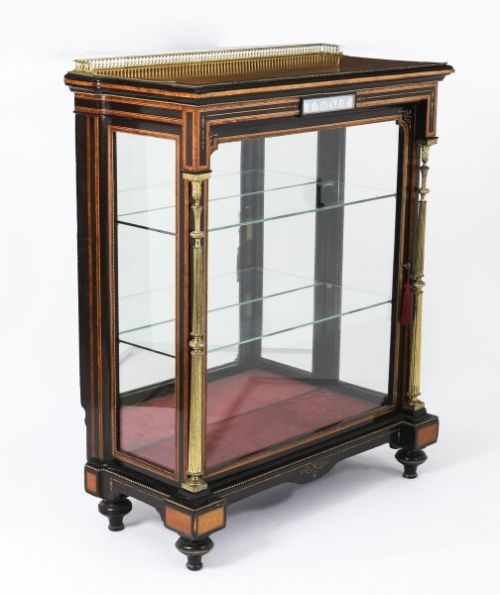
You are most likely to encounter Victorian and nineteenth-century examples that combine dark blackened timber surfaces with glazed viewing panels. Many incorporate contrasting woods, gilt mounts or stringing to highlight the architectural lines of the cabinet.
The forms vary from tall vitrines and freestanding bookcases to low pier cabinets designed to sit beneath a mirror. These pieces reflect the nineteenth-century passion for display, whether executed in a straightforward Victorian manner or through the refined lens of the Aesthetic Movement.
Materials and construction methods
Cabinet makers achieved the characteristic dark finish by ebonising wood, a process that stained timber to mimic costly ebony. This was frequently combined with contrasting veneers such as walnut, burr walnut and amboyna to create striking visual depth.
Mounts of cast brass and ormolu often embellished the corners, friezes and door frames of the finest examples. Glazed doors protected the interior shelves, sometimes lined with velvet, while delicate stringing and marquetry provided linear definition across the surfaces.
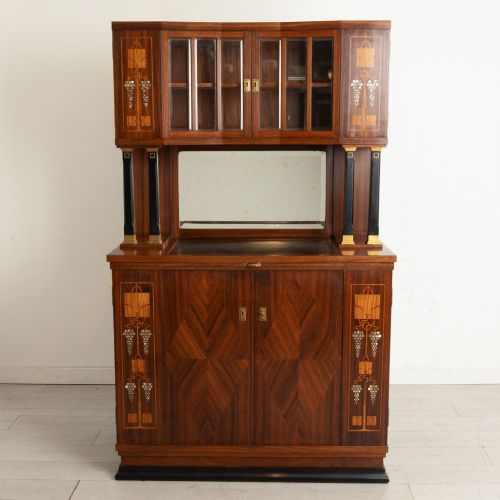
Listings feature Victorian, Aesthetic Movement and Viennese Secessionist pieces utilising ebonised wood, walnut, ormolu, and glass.
Distinctions in quality and execution
The standard of a piece rests upon the crispness of its ebonised finish and the quality of the underlying timber. Superior examples display meticulous attention to detail in the joinery, the precision of the brass ormolu mounts and the subtlety of any inlaid stringing.
Proportion and the handling of secondary woods also separate standard production from exceptional cabinet work. A well-balanced composition with harmonious veneers and original glass elevates the piece far beyond simpler utilitarian storage.
August Ungethüm
The Ebonised China Cabinet Glossary
- Ebonised
- Wood treated with stain or pigment to imitate genuine ebony. This dark finish gained immense popularity during the nineteenth century for its dramatic contrast against gilt mounts and porcelain.
- Vitrine
- A glass-fronted cabinet or display case designed specifically for showing curiosities and fine china. These pieces often feature glass on the sides as well as the doors to maximise light.
- Ormolu
- Gilded bronze used for decorative mounts and fittings on furniture. Skilled artisans chased the cast metal to achieve sharp, ornate details before applying gold leaf or mercury gilding.
- Pier cabinet
- A low display cabinet designed to fit against the wall space between windows. Victorian makers favoured this slender form for smaller drawing rooms.
- Stringing
- Thin inlay of contrasting wood or light-coloured material set into grooves on the cabinet surface. It creates fine linear borders that frame panels and drawers.
Ebonised China Cabinet: Frequently Asked Questions
What is an ebonised china cabinet?
An ebonised china cabinet is a nineteenth-century display piece featuring wood finished in a dark, ebony-like stain and fitted with glass doors. These cabinets were built to showcase ceramic collections and decorative objects within formal reception rooms.
Cabinet makers utilised this dark finish to create a striking backdrop for colourful porcelain and gilt-bronze mounts. The style bridges several nineteenth-century movements, from strict Victorian designs to more artistic continental interpretations.
How do I date a nineteenth-century cabinet?
Dating relies on examining the construction methods, timber choices and stylistic markers recorded in the piece. Victorian examples often show distinct revival styles or Aesthetic Movement influences that place them securely in the latter half of the nineteenth century.
Secondary woods, hinge types and the method of glass manufacture also provide clues to the period of origin. Comparing the decorative vocabulary, such as ormolu mounts or marquetry, helps narrow down the decade.
Where should I place a display cabinet?
These cabinets suit dining rooms, drawing rooms or libraries where their glass doors can protect and display collections. Positioning them away from direct sunlight preserves both the ebonised finish and the interior velvet linings.
Consider the proportions of the room, as forms range from compact pier cabinets to large bookcases. Ensuring adequate clearance for the glazed doors allows for easy access to the shelves inside.
How do I care for ebonised wood?
Maintenance involves dusting with a soft, dry cloth to prevent the accumulation of particles on the dark surfaces. Avoid harsh chemical cleaners that can degrade the ebonised finish or the underlying polish.
Maintaining a stable room temperature prevents the timber from warping and protects the nineteenth-century glue joints. Periodic waxing with appropriate formulations keeps the blackened wood nourished and deep in tone.