


French Chateau Style Cabinet
These french chateau style cabinet pieces bring grand continental presence and practical storage to a room, drawing on centuries of European design.
French Chateau Style Cabinet
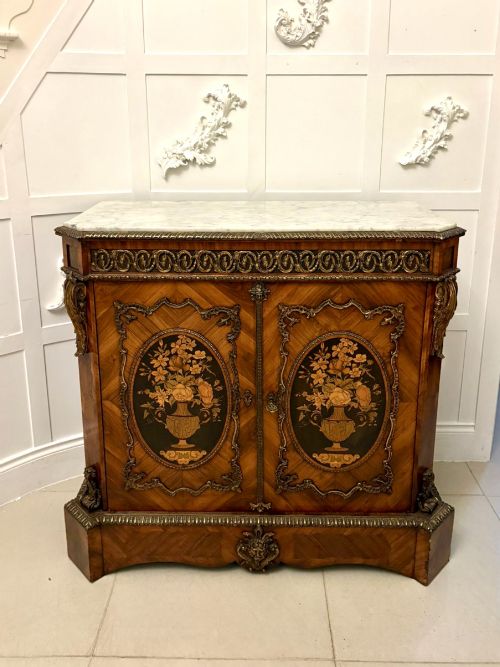
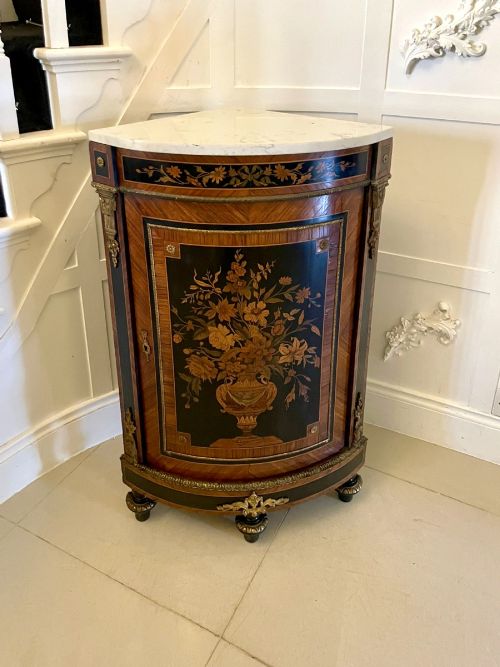
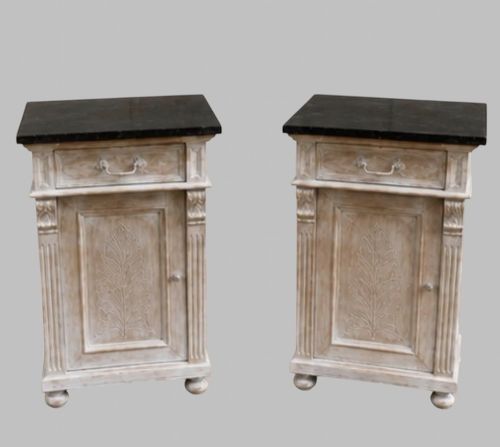
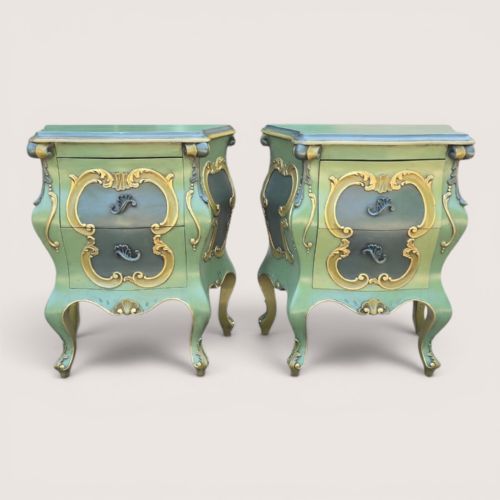
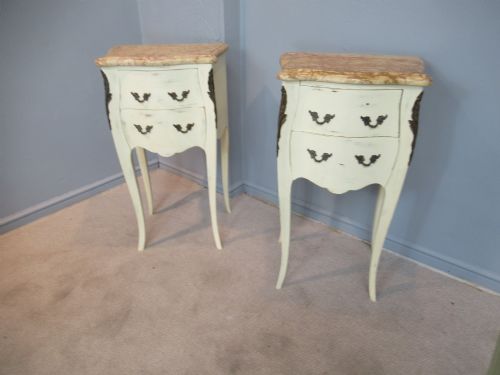
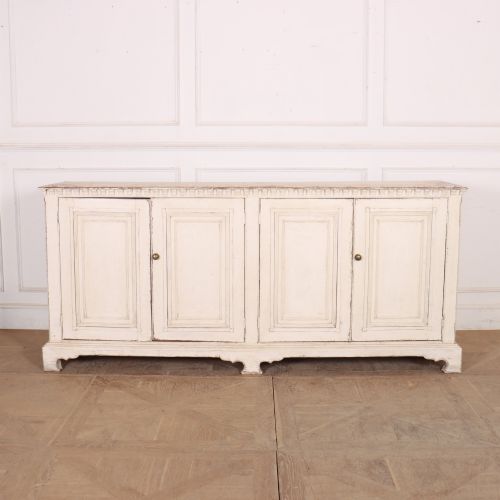
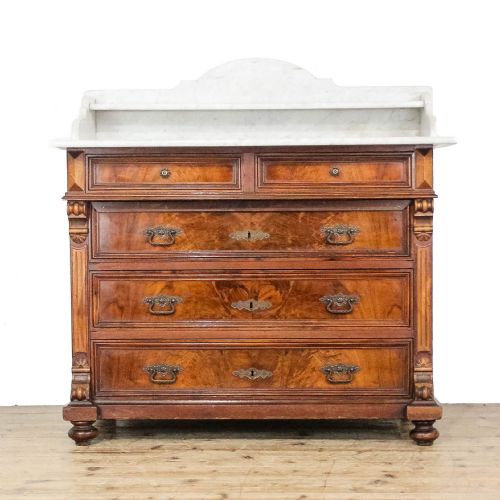
A french chateau style cabinet encompasses a variety of storage and display furniture rooted in continental aesthetics, ranging from sideboards and corner cabinets to bedside chests. The pieces appearing here span eras from the eighteenth century through the early twentieth century, including Victorian interpretations and revival styles.
Buyers will most frequently encounter bedside cabinets, commodes, and display pieces finished in painted wood, walnut, or kingwood. These items often incorporate marble tops and brass or ormolu mounts, reflecting specific design traditions such as Louis XV and Louis XVI revivals.
How They Were Made
Cabinet makers utilised dense hardwoods such as walnut and kingwood as foundations, frequently applying elaborate marquetry patterns to flat surfaces. Structural integrity often relied on traditional joinery methods suited to heavy timbers.
Decorative impact was achieved through the integration of marble tops, cast ormolu mounts, and brass detailing. Painted wood finishes also appear extensively, providing decorative surface depth alongside hand-carved elements.
Periods represented across the items span from the 18th Century through the 1930s, alongside Victorian era pieces.
What Varies in Quality
The degree of refinement in decorative mounts and hand-carved details marks the distinction between standard production and superior examples. Finer pieces display crisper casting in ormolu elements and more intricate marquetry work across walnut and kingwood surfaces.
Materials also dictate the tier of an item, with solid marble tops and heavier timber construction indicating a higher grade of craftsmanship. The cohesion of revival styles, whether leaning toward Louis XV or Italian Neoclassical idioms, determines stylistic success.
The French Chateau Style Cabinet Glossary
- Ormolu
- Gilded bronze mounts applied to furniture for decorative effect. This technique was widely utilised in French cabinet making during the nineteenth century.
- Marquetry
- Inlaid pieces of wood fitted together to form decorative patterns on a furniture surface. Craftsmen used contrasting timbers like walnut and kingwood to achieve tonal variety.
- Commode
- A low chest of drawers, typically featuring decorative mounts and a finished top. The form evolved significantly through successive French decorative periods.
- Enfilade
- A suite of rooms or a long sideboard designed for grand reception spaces. These items offer substantial storage capacity and a continuous horizontal surface.
- Kingwood
- A dense, richly grained tropical timber favoured for high-end cabinet making. It provides a dark, decorative ground for intricate inlay work.
French Chateau Style Cabinet: Frequently Asked Questions
What is a french chateau style cabinet?
A french chateau style cabinet is a piece of furniture inspired by the grand residences of France, incorporating traditional forms such as sideboards, display units, and commodes.
These items draw on design languages from the eighteenth and nineteenth centuries, often featuring revival elements like marble tops and ormolu mounts.
How do I identify Louis XVI style furniture?
Louis XVI style pieces typically display straighter lines, geometric symmetry, and classical motifs in contrast to the earlier curving forms of the Louis XV period.
Look for fluted legs, rectangular proportions, and restrained brass or ormolu mounts that reflect neoclassical influences.
Where should I place a display cabinet?
A display cabinet works well in a dining room, drawing room, or hallway where its glass panels and fitted shelves can showcase decorative objects.
Ensure the piece has adequate clearance for its doors and sits away from direct heat sources to protect timber and veneer.
What is kingwood furniture?
Kingwood furniture utilises a heavy, highly figured tropical timber known for its deep purplish-brown tones and contrasting pale grain.
Cabinet makers frequently employed this wood for veneer and marquetry on formal pieces produced during the nineteenth century.