
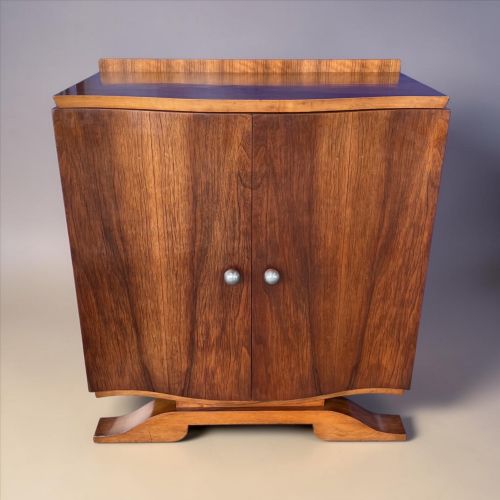


Curved Wood Side Cabinet
These curved wood side cabinet pieces combine fluid architectural lines with practical storage, offering a sophisticated focal point for any sophisticated interior.
Curved Wood Side Cabinet
When you search for a curved wood side cabinet, you encounter versatile storage furniture defined by rounded fronts, bow shapes, or demi-lune profiles. These pieces encompass everything from compact bedside tables to substantial credenzas and display cabinets.
The selections span distinct periods, drawing heavily from Victorian craftsmanship, Art Deco designs, and the graceful proportions of the nineteenth century. Walnut, mahogany, and burr yew frequently emerge as the primary timbers shaping these rounded silhouettes.
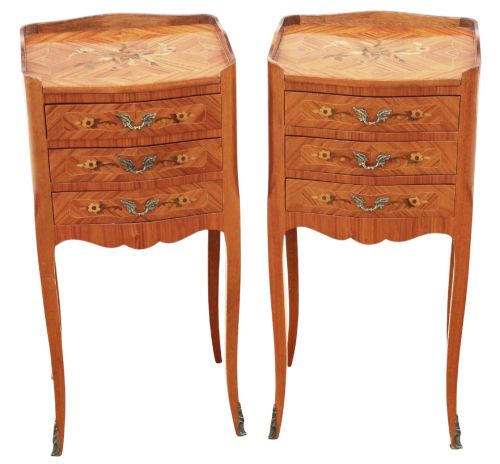
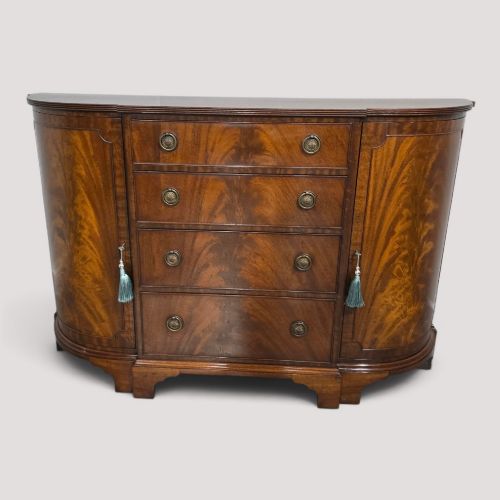
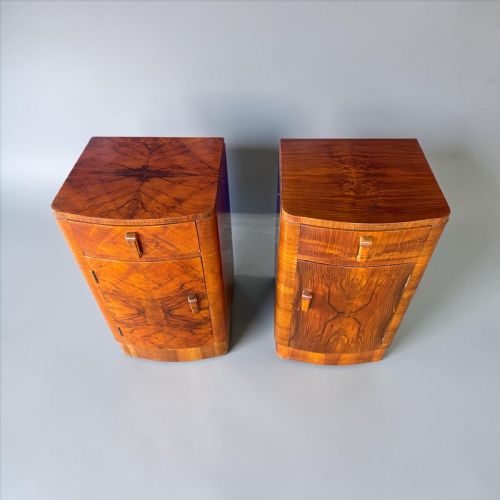
You are most likely to meet twentieth-century Art Deco walnut tables or nineteenth-century Victorian credenzas on this page. Their curved facades often incorporate glass panels, marquetry inlay, or brass mounts to accentuate the sweeping lines.
How they were made
Cabinetmakers constructed these rounded forms by carefully bending solid timbers or laminating multiple veneers over shaped wooden cores. This technique required considerable skill to maintain structural integrity while achieving smooth, continuous curves.
Surface decoration relies on figured veneers such as burr walnut and mahogany, arranged to highlight natural grain patterns across the curved surfaces. Marquetry inlay, brass stringing, and parcel gilt details frequently enhance the polished exterior.
Structural stability is reinforced with brass feet, Ormolu mounts, and glazed doors framed by curved woodwork. Ebonised finishes and glass panels appear regularly, adding textural contrast to the primary timbers.
The available furniture includes Art Deco music cabinets, Victorian credenzas, Regency side cabinets, and French marquetry bedside tables.
What varies in quality
The distinction between standard examples and the finest pieces rests on the complexity of the timber selection and the precision of the curved joinery. Superior items employ highly figured burr veneers matched symmetrically across the rounded facade.
Hand-cut marquetry inlay, intricate brass or Ormolu mounts, and original glass panes elevate a piece above simpler utilitarian storage. The seamless alignment of doors along a curved track demonstrates advanced cabinetmaking ability.
The Curved Wood Side Cabinet Glossary
- Demi-lune
- Half-moon shape. This description applies to furniture with a semicircular front and a flat back designed to sit flush against a wall.
- Credenza
- A side cabinet or sideboard. Originally featuring low profiles and often enclosed by doors, these items frequently display elaborate marquetry or mirror backs.
- Marquetry
- Decorative veneer work. Artisans assemble thin pieces of wood, shell, or ivory to create pictorial or geometric patterns across the surface.
- Burr walnut
- Figured timber. This wood comes from growths on walnut trees, yielding swirling grain patterns prized for decorative furniture facades.
- Ormolu
- Gilt bronze. This material appears as decorative mounts and feet on furniture, particularly pieces influenced by French styles.
Curved Wood Side Cabinet: Frequently Asked Questions
Where should I place a curved wood side cabinet?
These cabinets suit hallways, living rooms, and dining spaces where a rounded profile softens rigid architectural angles. Their compact footprints allow them to fit snugly into corners or against flat walls without dominating the room.
Larger credenzas and display versions serve well as focal points beneath artwork or mirrors. Smaller bedside tables bring curved lines and enclosed storage directly into sleeping quarters.
How do I care for walnut and mahogany finishes?
Protect the polished wood surfaces by keeping them away from direct sunlight and consistent heat sources. Dust regularly with a soft, dry cloth to prevent particulate buildup on the delicate veneers.
Occasional application of appropriate wax polish maintains the moisture and lustre of the timber. Avoid using liquid cleaners or silicone-based sprays that can penetrate older finishes.
What is the difference between a credenza and a side cabinet?
A credenza traditionally refers to a low-profile storage piece, often associated with Victorian drawing rooms and detailed marquetry decoration. They frequently incorporate sliding or hinged doors concealing central shelving.
Side cabinets encompass a broader category of storage furniture, including taller cupboards, glass-fronted display units, and corner pieces. Both share functional storage roles but vary significantly in height and silhouette.
How can I identify Art Deco pieces?
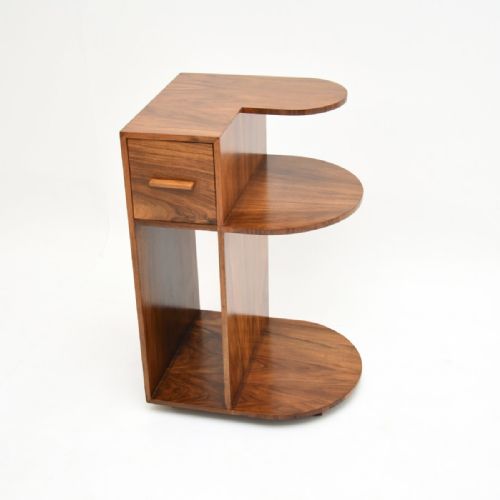
Art Deco furniture relies on streamlined geometric forms, sleek curves, and symmetrical arrangements. Figured walnut and contrasting veneers dominate the aesthetic of this twentieth-century movement.
These pieces typically lack the heavy ornamentation of Victorian items, favouring clean lines and polished wooden surfaces. Marquetry designs from this era often feature stylized motifs rather than floral revivals.