







Black Gold Display Cabinet
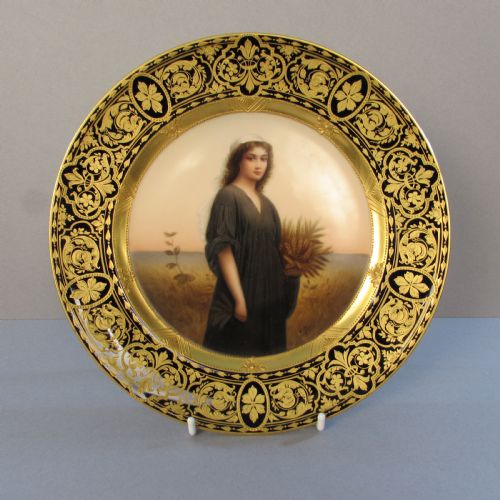
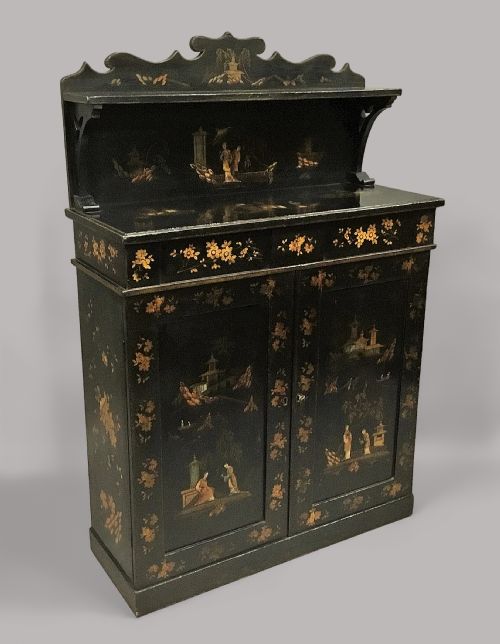
A black gold display cabinet combines dark polished surfaces with gilded highlights, offering a striking stage for precious porcelain and ornaments.
Black Gold Display Cabinet
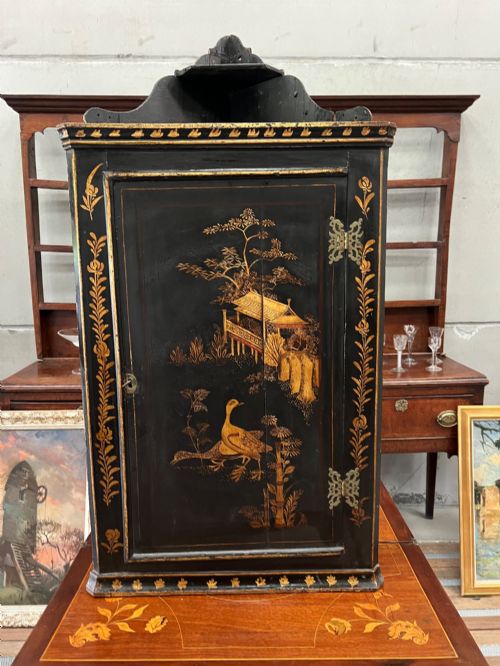
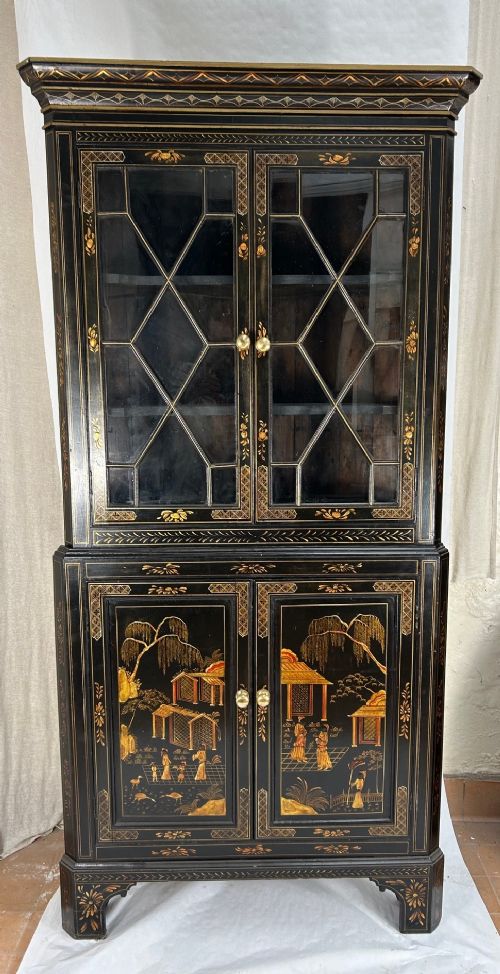
A black gold display cabinet gathers pieces defined by dark finishes and gilt ornamentation, spanning the 19th Century, Victorian, Regency, and Edwardian eras. Buyers encounter forms ranging from corner cupboards and pier cabinets to elaborate credenzas and cabinets on stand.
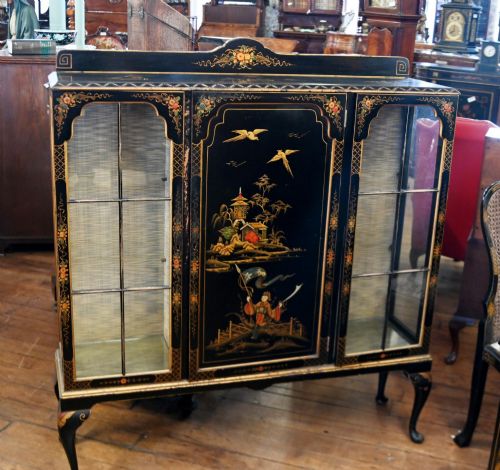
The aesthetic bridges several distinct design movements, most notably French Napoleon III, Chinoiserie, Aesthetic Movement, and Regency styles. Many examples incorporate glass panels or vitrine doors to showcase contents while protecting them from dust.
How They Were Made
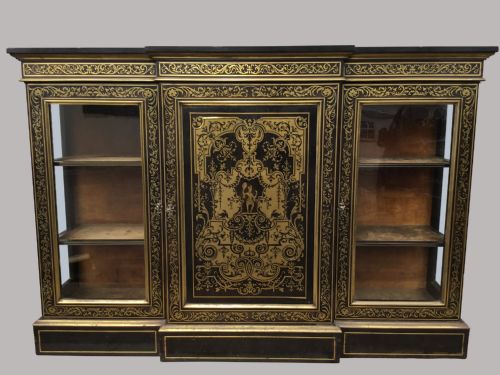
Maker workshops utilised ebonised wood, ebony, and lacquer to achieve deep black surfaces, frequently embellished with gold leaf, parcel-gilt, and intricate penwork. Boulle marquetry employing tortoiseshell and brass provides rich surface pattern on French and English pieces.
Cast ormolu mounts and brass details frame doors and corners, while porcelain plaques, such as Sevres style inserts, are integrated into the timber structures. Glass is fitted into doors and side panels to create viewing areas for collectors.
Black Gold Display Cabinet Retail Price Guide 2026
Typical asking prices for black gold display cabinet among the pieces listed under this phrase on Sellingantiques today, from the lower quarter to the upper quarter. They describe what is for sale here now, not the wider market.
Listings feature ebonised wood, lacquer, and Boulle marquetry paired with ormolu mounts across the Victorian and Edwardian periods.
What Varies in Quality
The refinement of the surface work distinguishes finer examples, particularly the depth of the ebonisation and the crispness of the gold leaf or ormolu mounts. Cabinets featuring hand-painted Chinoiserie lacquer or intricate Boulle marquetry require exceptional skill.
Structural complexity also dictates standard, with serpentine fronts, breakfront configurations, and fitted cabinets on stand representing higher ambition in cabinetmaking. The quality of the bronze casting and the integration of porcelain plaques further elevate the piece.
The Black Gold Display Cabinet Glossary
- Ebonised Wood
- Timber treated to resemble ebony through staining and polishing. This dark finish provides a contrasting background for gilt details.
- Ormolu
- Gilded bronze mounts applied to furniture for decorative effect. These cast metal ornaments frame doors and highlight structural corners.
- Boulle
- Marquetry technique utilising brass and tortoiseshell inlaid into wood. Developed in France, this method creates shimmering surface patterns.
- Vitrine
- A glass-fronted cabinet designed for displaying objects. These pieces allow visible storage of porcelain and decorative items.
- Penwork
- Decorative drawing technique using ink on wood or lacquer surfaces. This method creates fine illustrative details found on Chinoiserie pieces.
Black Gold Display Cabinet: Frequently Asked Questions
Where were these cabinets placed?
These cabinets sat in principal reception rooms, drawing rooms, and parlours to showcase valuable porcelain, glass, and curiosities collected during travels.
Corner units and pier cabinets utilised specific architectural spaces, fitting neatly into alcoves or between windows to maximise light on the displayed objects.
How do I distinguish French and English pieces?
French examples frequently employ elaborate ormolu mounts, Sevres style porcelain plaques, and Boulle marquetry associated with the Napoleon III style.
English interpretations often incorporate Chinoiserie lacquer, penwork, or Aesthetic Movement designs with simpler linear geometry and ebonised finishes.
What is a cabinet on stand?
A cabinet on stand consists of a main enclosed storage or display section resting upon a separate supporting frame with legs.
This form elevates the display surface to eye level and introduces lighter vertical proportions compared to floor-standing credenzas.
How should I clean ebonised surfaces?
Dusting with a soft, dry cloth prevents the accumulation of particles without disturbing the delicate gold leaf or lacquer.
Moisture and modern chemical polishes can damage historic ebonised finishes and gilt highlights, so preservation requires gentle, dry maintenance.