





Antique Chinoiserie Vitrine
These antique chinoiserie vitrines bring painted lacquer, gleaming glass and gilded detail together to display treasured collections with theatrical flair.
Antique Chinoiserie Vitrine
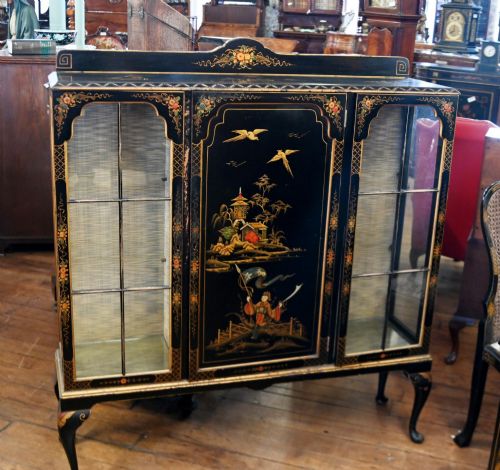
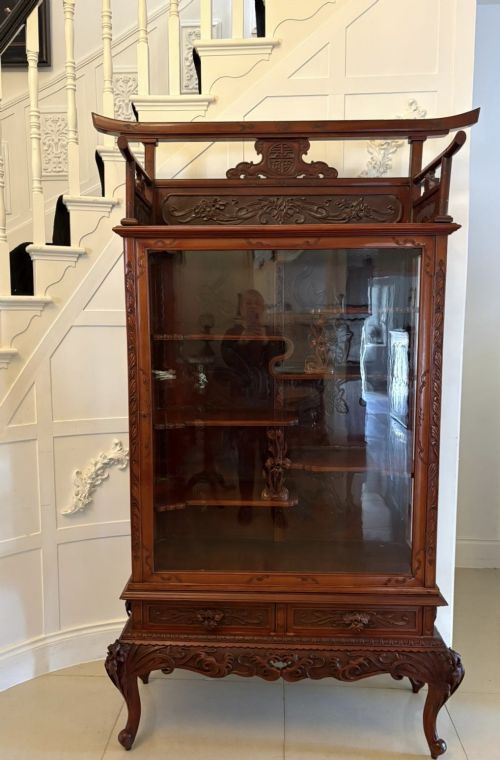
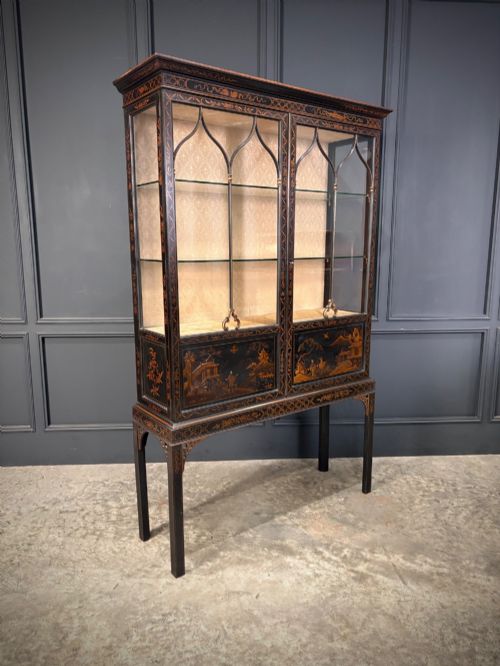
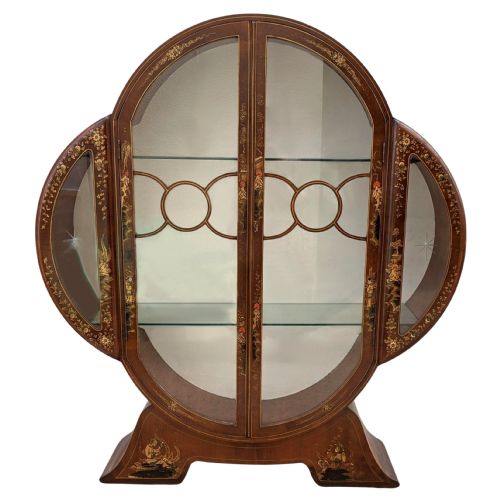
An antique chinoiserie vitrine serves as a glazed display cabinet designed to showcase fine ceramics and small valuables behind glass panels. These decorative display cabinets appear in various forms, from black lacquer freestanding units to red lacquer hardwood cabinets and mahogany revival pieces.
The pieces on this page span the nineteenth century through the early twentieth century, including Edwardian interpretations and Art Deco iterations. Buyers frequently encounter Edwardian lacquered examples alongside 19th-century mahogany display cabinets influenced by Chinese Chippendale revival styles.
Makers such as Edwards & Roberts contributed to this tradition with mahogany pier display cabinets featuring distinctive glazing. Alongside these formal cabinets, listings include glazed bamboo bookcases and Japanese Meiji period items that share the same aesthetic focus on display.
Materials and construction
Wood serves as the primary structural body for these cabinets, with mahogany, hardwood, and bamboo utilised across the different pieces. Craftsmen constructed the frames to support substantial glass viewing areas for housing china and ornaments.
Surfaces receive decorative treatments including black lacquer, red lacquer, and gold leaf applications characteristic of the style. Carved wood details and lacquered finishes define the exterior appearance, set against glazed doors and panels.
Antique Chinoiserie Vitrine Retail Price Guide 2026
Typical asking prices for chinoiserie vitrine among the pieces listed under this phrase on Sellingantiques today, from the lower quarter to the upper quarter. They describe what is for sale here now, not the wider market.
The listings on this page span the 19th century through the Art Deco era of the 1930s, featuring materials such as mahogany, bamboo, and lacquered wood.
Judging quality in a vitrine
Quality rests in the execution of the lacquerwork and the crispness of any carved wooden enrichment on the frame. Superior examples demonstrate skilled application of gold leaf and balanced proportions that elevate the cabinet beyond a simple storage box.
The integration of the glazing bars and the stability of the stand or base determine the overall integrity of the piece. Refined cabinets show careful attention to detail in the interior shelving and the fit of the glazed doors.
Edwards & Roberts
The Antique Chinoiserie Vitrine Glossary
- Vitrine
- A glazed cabinet or glass-fronted case designed specifically for displaying fine objects and porcelain. These pieces protect delicate items while offering clear visibility from multiple angles.
- Chinoiserie
- European decorative art imitating East Asian artistic styles, often featuring painted or lacquered scenes of figures, pagodas, and landscapes. This aesthetic dominates the surface decoration of the cabinets.
- Pier display cabinet
- A tall, narrow cabinet proportioned to sit against the wall space between windows. These pieces maximise vertical display potential in smaller rooms.
- Meiji
- The period in Japanese history spanning from 1868 to 1912, known for craftsmanship exported to Western markets. Items from this era bring authentic cultural artistry to the selection.
- Chippendale revival
- A late nineteenth and early twentieth-century style drawing inspiration from Thomas Chippendale's eighteenth-century designs. This movement produced mahogany china display cabinets with classical fretwork and glazing.
Antique Chinoiserie Vitrine: Frequently Asked Questions
What is an antique chinoiserie vitrine?
An antique chinoiserie vitrine is a glazed display cabinet adorned with decorative lacquer, painted motifs, and gilded details influenced by East Asian art. These pieces were built to showcase valuable ceramics and curiosities behind protective glass doors.
They combine practical storage with ornamental presence, often featuring internal shelving and mirrored or fabric-lined backs to enhance the display.
How were these cabinets used?
Historically, these cabinets stood in drawing rooms and reception spaces to display imported porcelain, ivories, and other collector's items. The glass protected delicate pieces from dust while allowing guests to admire the owner's collection.
Today, they serve the exact same purpose in modern homes, providing a focal point for curated objects and tableware.
How do I identify an Edwardian piece?
Edwardian examples often feature light lacquered woodwork with delicate hand-painted Chinoiserie scenes produced in the early twentieth century. They tend to reflect a lighter, more refined aesthetic compared to heavier mid-nineteenth-century dark wood furniture.
Makers of this era frequently paired traditional lacquer techniques with contemporary display requirements.
How do I live with a lacquered cabinet?
Living with a lacquered vitrine involves placing it away from direct sunlight to protect the painted finishes and gold leaf from fading. Regular dusting with a soft cloth keeps the lacquer gleaming without the need for harsh polishes.
Ensure the cabinet sits on a level floor to maintain the alignment of the glazed doors and internal shelves.