

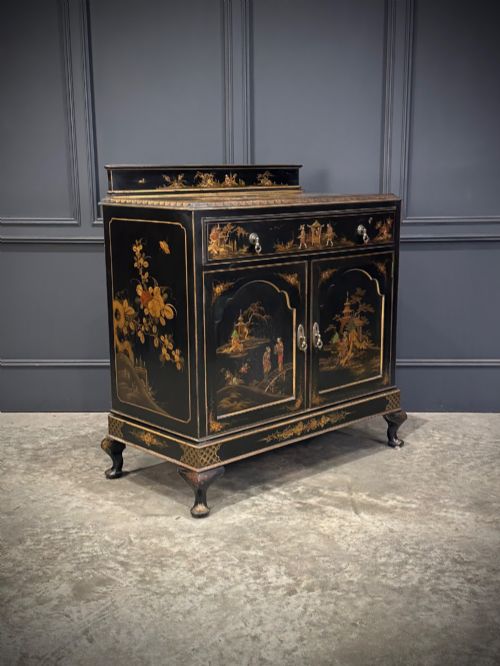


Edwardian Black Lacquer Cabinet
An edwardian black lacquer cabinet brings dark surfaces and gilt motifs into a room, offering both display space and storage for treasured objects.
Edwardian Black Lacquer Cabinet
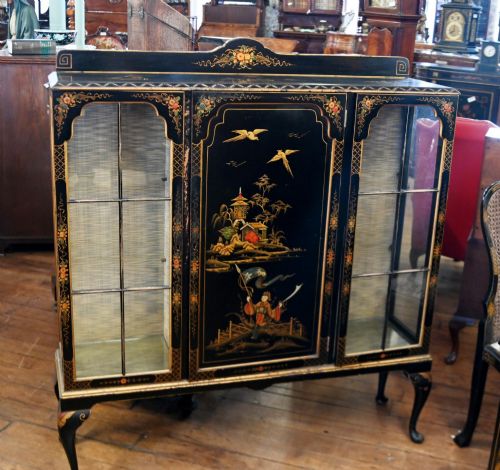
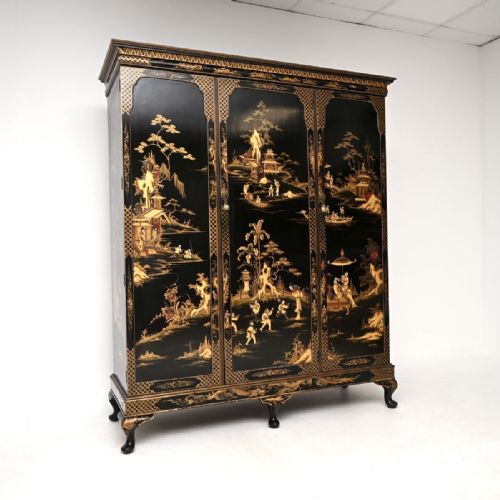
An edwardian black lacquer cabinet encompasses a variety of forms designed to display or conceal objects, including vitrines, side cabinets, armoires, and bureau bookcases. These pieces frequently draw upon Chinoiserie and Japanned decorative traditions, presenting dark varnished surfaces adorned with gold leaf and oriental motifs.
How they were made
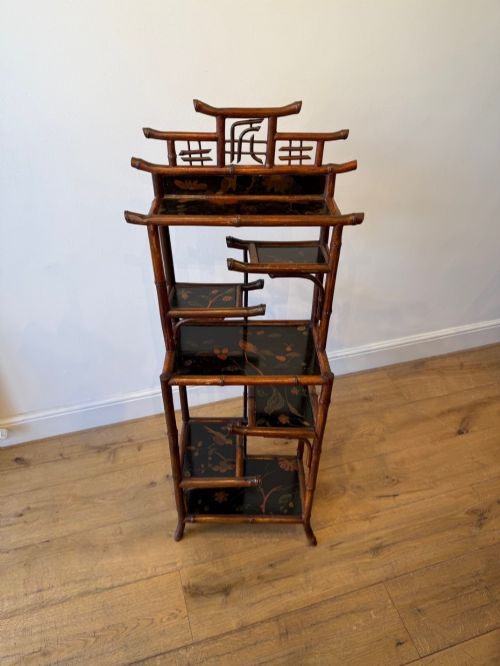
Makers built these pieces using wood foundations, applying layers of black lacquer and finishing details in gold leaf or gilt. Certain examples incorporate bamboo frameworks or brass hardware to complement the dark lacquered surfaces.
Decoration relied heavily on Chinoiserie and Japanned techniques, translating oriental landscape and figural designs onto European furniture forms. Glazed panels appeared on display cabinets and vitrines to protect contents while allowing visibility.
Edwardian Black Lacquer Cabinet Retail Price Guide 2026
Typical asking prices for edwardian black lacquer cabinet among the pieces listed under this phrase on Sellingantiques today, from the lower quarter to the upper quarter. They describe what is for sale here now, not the wider market.
One exceptional Victorian jewellery cabinet relies on papier-mache rather than timber to hold its hidden treasures.
What varies in quality
The sophistication of the lacquerwork and the precision of the gilt detailing separate standard production from superior examples. Hand-painted Chinoiserie scenes display varying degrees of artistic depth and line clarity across different pieces.
Structural complexity also defines the range, moving from simpler side cabinets to elaborate bureau bookcases and cabinets on carved stands. The integration of materials such as brass fittings and glass panels alters the overall presence of each piece.
Hille for Harrods
The Edwardian Black Lacquer Cabinet Glossary
- Chinoiserie
- European artistic interpretation of Chinese and East Asian motifs, prominent in decoration on these cabinets.
- Japanned
- A European imitation of Japanese lacquerwork, achieved through layered varnishes and metallic dusts.
- Vitrine
- A glass-fronted display cabinet used for showing porcelain, silver, or curiosities.
- Commode
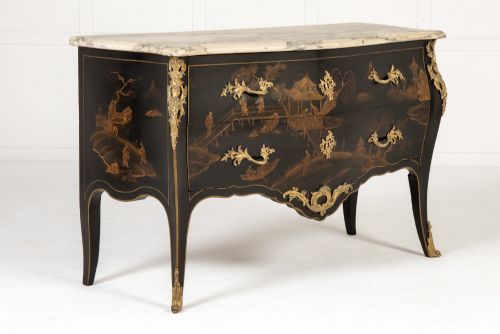
- A low chest of drawers or cabinet, sometimes taking a French bombe form.
- Bureau bookcase
- A combination of a sloping desk workspace and upper shelving enclosed by doors.
Edwardian Black Lacquer Cabinet: Frequently Asked Questions
Where should I place an edwardian black lacquer cabinet?
These cabinets suit reception rooms, drawing rooms, or hallways where their dark finishes and gilt details can catch the light. Placing them away from direct sunlight protects the lacquer surfaces and gold leaf from fading over time.
Because they range from compact corner units to large armoires and bureau bookcases, measure your space carefully before choosing a form. Ensure the surrounding furniture allows the decorative Chinoiserie scenes to remain visible.
How do I care for black lacquer furniture?
Dust the surfaces gently with a soft, dry cloth and avoid using chemical cleaning sprays or abrasive materials. Maintaining a stable room temperature prevents the wood beneath the lacquer from expanding and contracting.
Keep the interior glass panels clean with standard glass cleaner applied to a cloth rather than sprayed directly onto the cabinet. This protects the surrounding woodwork and gilt decoration from moisture damage.
What is the difference between Chinoiserie and Japanning?
Chinoiserie is a broader stylistic movement encompassing European interpretations of Chinese art, architecture, and daily life. It appears across various decorative mediums including wallpaper, ceramics, and furniture.
Japanning refers specifically to the technique of imitating East Asian lacquer finishes using varnishes and metallic powders. On these cabinets, Japanned surfaces provide the dark background for Chinoiserie painted scenes.
Are all these cabinets from the Edwardian period?
The pieces span multiple periods, including nineteenth-century Victorian examples alongside Edwardian items and later twentieth-century pieces. Makers continued to draw upon earlier Chinoiserie and Rococo Revival styles across these decades.
Examining the construction methods, handles, and internal woodwork helps determine the age of each individual piece. The overarching style remains rooted in traditional decorative arts regardless of the exact decade of manufacture.