



Edwardian Painted Display Case
An edwardian painted display case brings lightness to a room, offering glass and painted timber to hold curiosities and books.
Edwardian Painted Display Case
An edwardian painted display case encompasses glazed cabinets, corner cupboards, and vitrines intended to protect and exhibit precious objects. These pieces originate from the Edwardian period and neighbouring eras, running from late nineteenth-century Victorian pieces through to nineteen-thirties examples.
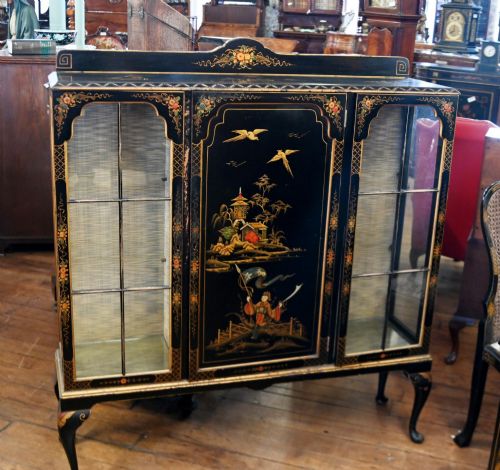
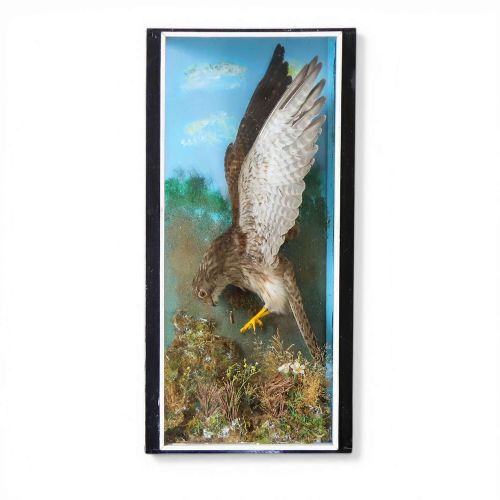
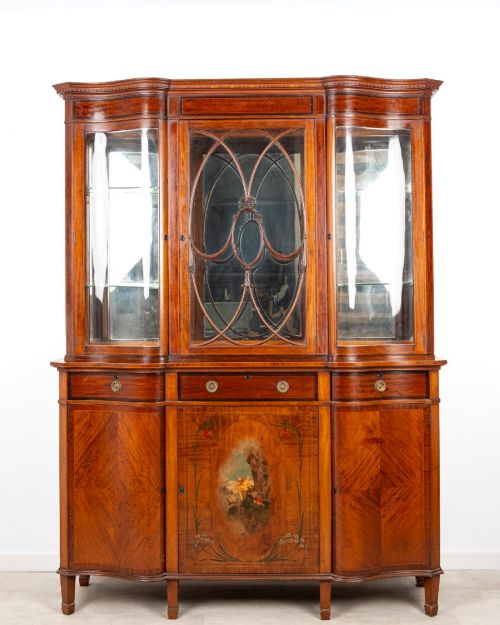
The forms vary from serpentine bookcases and bombe cabinets to corner units and taxidermy dioramas. Most examples meet the eye in mahogany, kingwood, or lacquered finishes embellished with painted floral details or Chinoiserie scenes.
Buyers encounter variations including French Louis XV style influences, Georgian revival lines, and natural history specimens housed in glazed wooden boxes. The selection balances domestic display furniture with specialised curiosity cabinets.
How they were made
Cabinet makers utilised foundational timbers such as mahogany and kingwood, often applying satinwood inlay or black lacquer over the primary structure. Ormolu mounts occasionally provided structural or decorative accents to French revival forms.
Painted decoration took the form of delicate floral motifs or elaborate Chinoiserie scenes applied directly to the wood or lacquer surface. Glazing techniques secured glass panels within wooden frames to protect the contents while maintaining visibility.
Edwardian Painted Display Case Retail Price Guide 2026
Typical asking prices for edwardian painted display case among the pieces listed under this phrase on Sellingantiques today, from the lower quarter to the upper quarter. They describe what is for sale here now, not the wider market.
Listings include mahogany, satinwood, kingwood, and black lacquer combined with painted details and glass.
What varies in quality
The distinction between standard domestic furniture and the finest examples rests upon the execution of the painted surfaces and the choice of secondary veneers. Cabinets featuring meticulous hand-painted floral work or Vernis Martin decoration command attention above plain timber counterparts.
Construction details such as serpentine contours, bombe shaping, and integrated satinwood inlay separate ambitious cabinet work from simpler production. The integrity of the original lacquer and the refinement of the glass framing ultimately determine the standing of each piece.
The Edwardian Painted Display Case Glossary
- Vitrine
- A glass-fronted cabinet designed for the display of porcelain, curiosities, or books. These pieces protect delicate items while offering all-round visibility.
- Vernis Martin
- A simulated Japanese lacquer technique developed in eighteenth-century France and emulated in later revival pieces. It uses multiple layers of translucent varnish over painted decoration.
- Serpentine
- A furniture contour featuring a gentle curve that is convex in the middle and concave at the sides. This shaping demands high skill from the cabinet maker.
- Chinoiserie
- European artistic style reflecting Chinese motifs and decorative techniques, popular in lacquerwork and painted furniture. It often depicts figures, pagodas, and landscapes.
- Bombe
- An outward-swelling curved form seen on the sides and fronts of drawer units and cabinets. It derives from French cabinet making traditions.
Edwardian Painted Display Case: Frequently Asked Questions
What fits inside an edwardian painted display case?
These cabinets suit porcelain collections, small books, decorative objects, and natural history specimens.
Larger vitrines accommodate varied curiosities, while corner cabinets utilise awkward room angles for display.
How do I care for painted lacquer cabinets?
Keep wooden and lacquered surfaces away from direct sunlight and steady humidity changes to protect the finish.
Dust gently with a soft dry cloth without applying modern chemical polishes.
Are taxidermy cases part of this group?
Yes, natural history specimens such as birds and dioramas frequently appear housed in glazed wooden display boxes.
These pieces share the period aesthetic of domestic display furniture.
How do I spot French revival styles?
Look for bombe shaping, ormolu mounts, and Vernis Martin lacquer finishes typical of Louis XV style furniture.
These decorative elements distinguish continental-influenced cabinets from standard English pieces.