
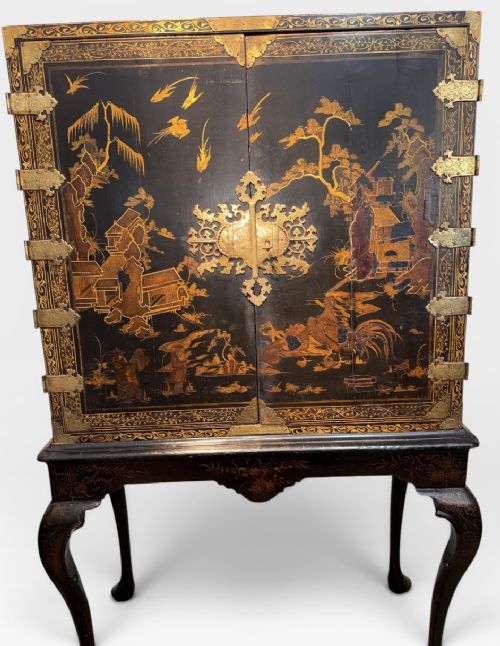


Black Lacquer Display Cabinet
A black lacquer display cabinet brings depth and figurative detail into a room, offering a disciplined stage for porcelain and silver.
Black Lacquer Display Cabinet
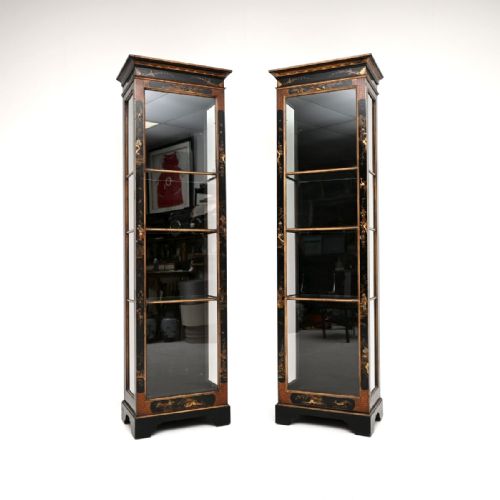
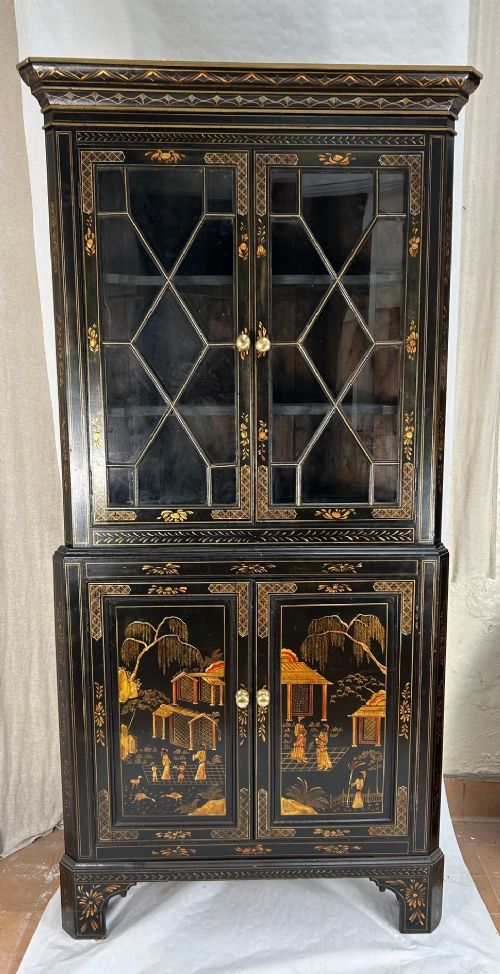
A black lacquer display cabinet combines glazed or open shelving with dark, glossy surfaces derived from Asian export traditions or European Chinoiserie interpretations. When you search for a black lacquer display cabinet, you meet forms ranging from corner cupboards and bureau bookcases to grand cabinets on stands.
The material lineage stretches across several centuries, with pieces emerging from the eighteenth century, the Regency era, and the Edwardian period. Edwardian interpretations and pieces from around nineteen hundred appear frequently, often decorated with motifs of birds, flowers, and figures.
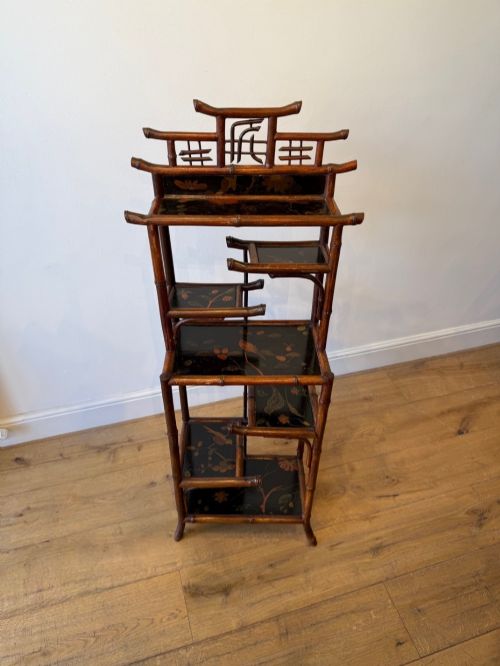
Makers drew on diverse design vocabularies including Qing Dynasty aesthetics, Japanese Meiji period techniques, and Victorian ebonised timber work. Buyers encounter standing cabinets, wall-hanging corners, and low chiffoniers sharing that characteristic dark finish.
How they were made
Construction relies upon solid wood frameworks, pine carcasses, and ebonised timber substrates built to receive layers of lacquer. Artisans applied gold leaf, penwork, and intricate inlay to build up figurative scenes and botanical details across the doors and panels.
Metalwork played a structural and decorative role, with brass hinges, handles, and occasionally ormolu mounts securing the doors and framing the glass panels. Glazing bars segmented the display areas to showcase contents while protecting them from dust.
Materials recorded across the inventory include brass, gold leaf, ebonised wood, glass, and pine alongside traditional lacquer.
What varies in quality
Quality reveals itself in the depth of the lacquer finish and the crispness of the hand-painted or gilt Chinoiserie decoration. Superior examples display subtle tonal variations within the dark ground and finely drawn figures that retain their precision across the panels.
The integrity of the underlying woodwork and the integration of mounts, brasswork, and glass dictate the structural success of the piece. Cabinets that retain their original stands, balanced proportions, and well-fitted doors command greater interest than later adaptations.
The Black Lacquer Display Cabinet Glossary
- Chinoiserie
- European decorative style reflecting Chinese artistic influences, frequently seen in gilt motifs on dark lacquer grounds. It gained popularity in various waves from the eighteenth century onwards.
- Shodana
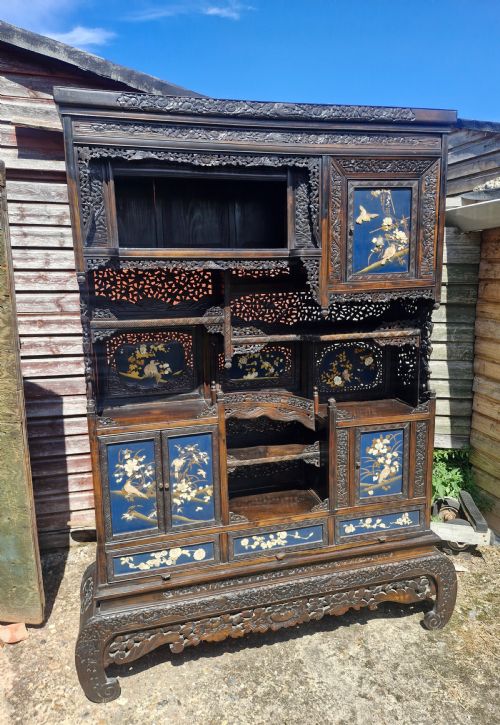
- Japanese tiered display cabinet featuring staggered shelves and cupboards, originating in the Meiji period. These pieces often incorporate elaborate lacquer and Shibayama inlay.
- Ormolu
- Gilded bronze mounts applied to furniture for decorative enrichment, common in nineteenth-century cabinet work. It provides a bright contrast against ebonised and lacquered surfaces.
- Penwork
- Decorative technique using ink or India ink on wood to create fine, detailed line drawings resembling engravings. It frequently mimics Asian design motifs on Regency cabinets.
- Ebonised wood
- Timber stained or treated to imitate ebony, providing a dense black surface often used as an alternative to traditional lacquer. Victorian workshops utilised this finish extensively.
Black Lacquer Display Cabinet: Frequently Asked Questions
Where should I place a black lacquer display cabinet?
Position your cabinet away from direct sunlight to protect the lacquer finish and any gilt decoration from fading over time.
Keep the piece in a room with stable humidity to prevent the timber framework and panels from shifting or cracking.
How do I clean a lacquer display cabinet?
Dust the surfaces gently with a soft, dry microfibre cloth, avoiding commercial polishes or abrasive cleaning agents entirely.
Take care around raised gilt motifs and painted details so you do not catch the edges of the decoration.
How do I date a black lacquer cabinet?
Examine the construction methods of the carcass, drawer linings, and backboards to establish the baseline period of manufacture.
Compare the style of the Chinoiserie decoration and hardware against known examples from the eighteenth, nineteenth, and early twentieth centuries.
What items look best inside?
Display porcelain, glass, and small silver objects whose light tones contrast sharply against the dark interior.
Limit the number of pieces on each shelf to let the decorated back panels and framing remain visible.