

Ebonised Glass Cabinet
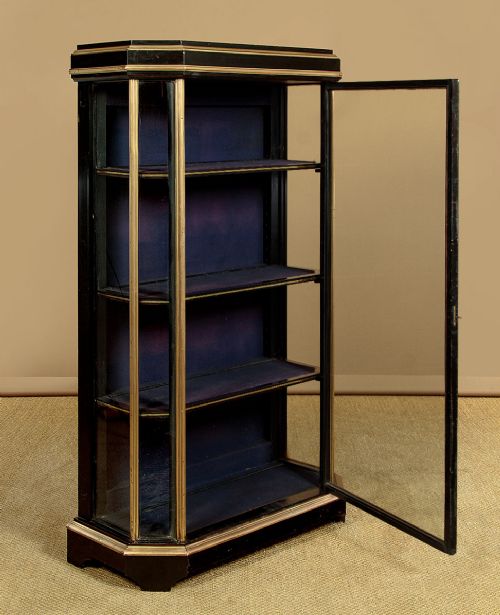
An ebonised glass cabinet brings together dark timber and clear glazing, offering a disciplined frame for collections that Victorian and later makers perfected.
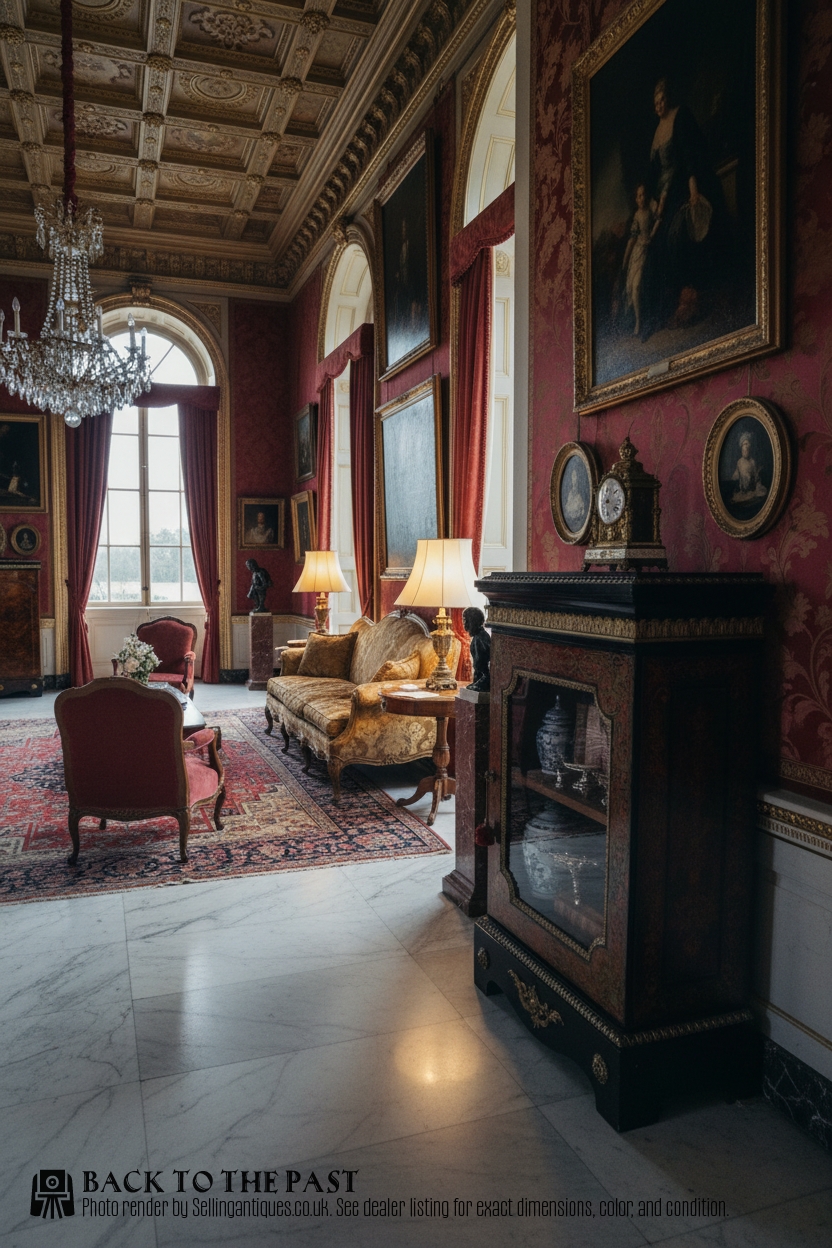
Ebonised Glass Cabinet
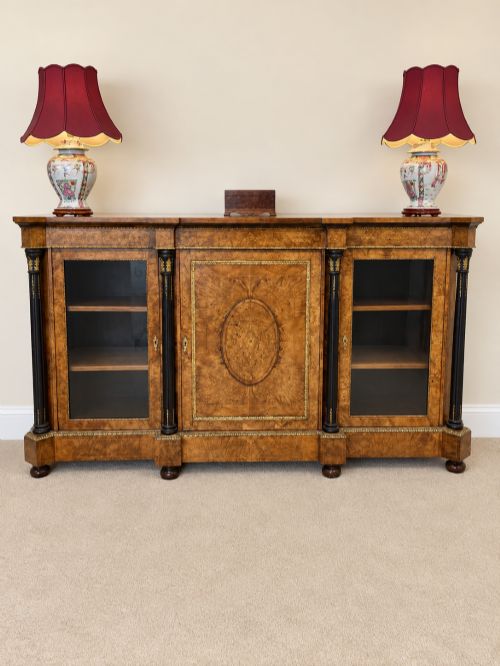
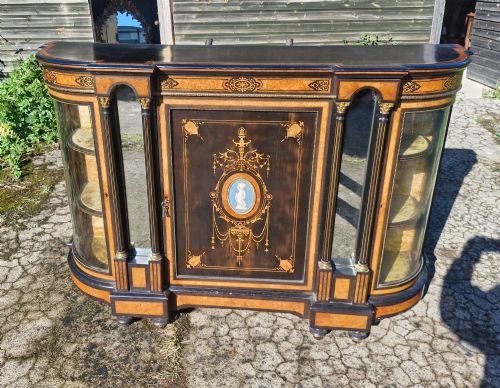
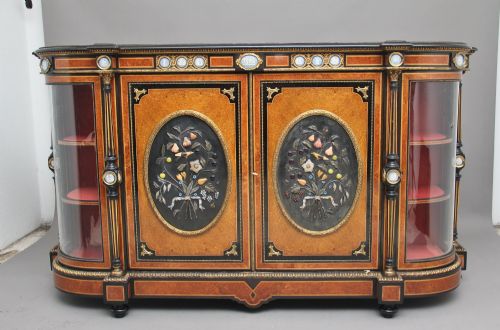
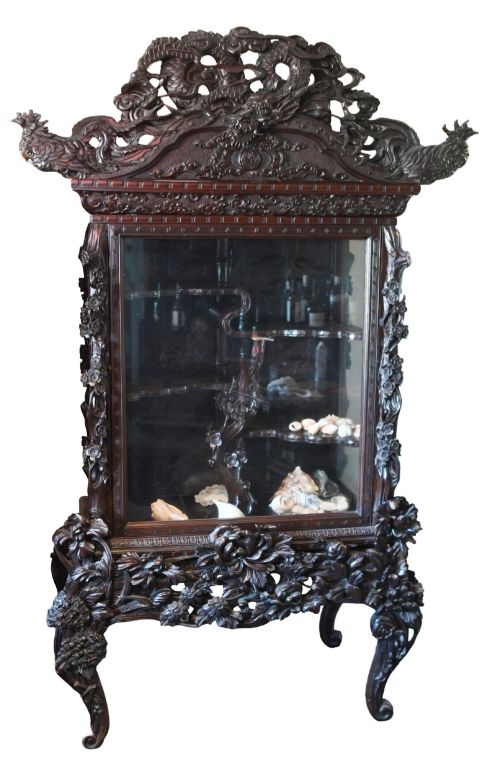
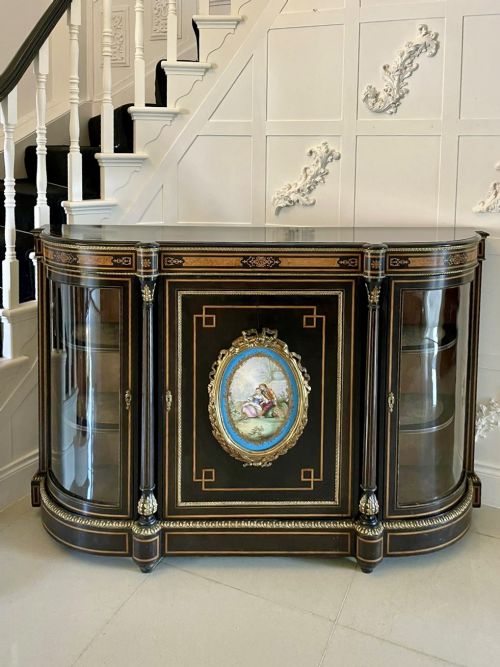
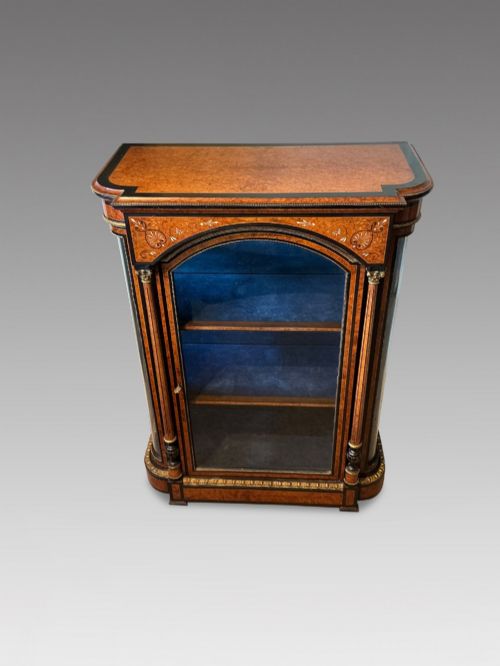
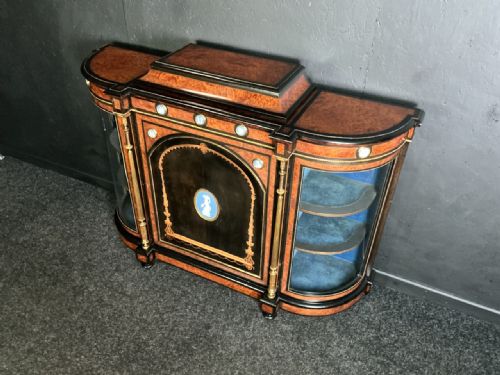
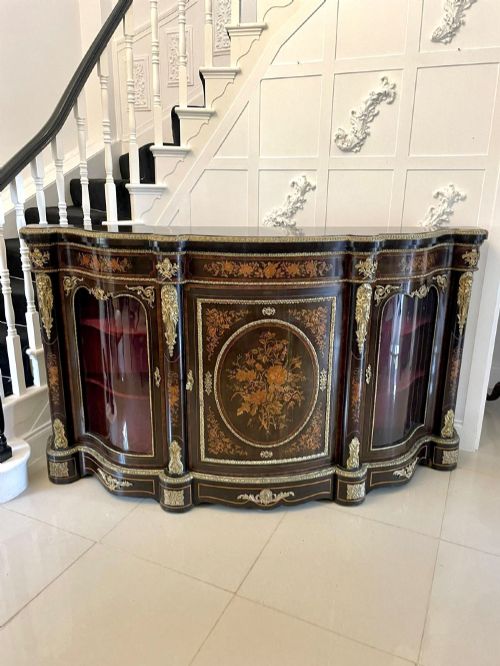
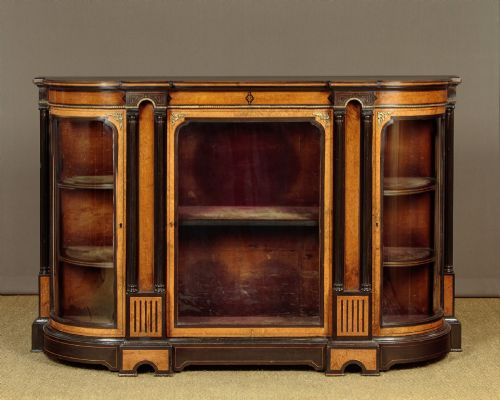
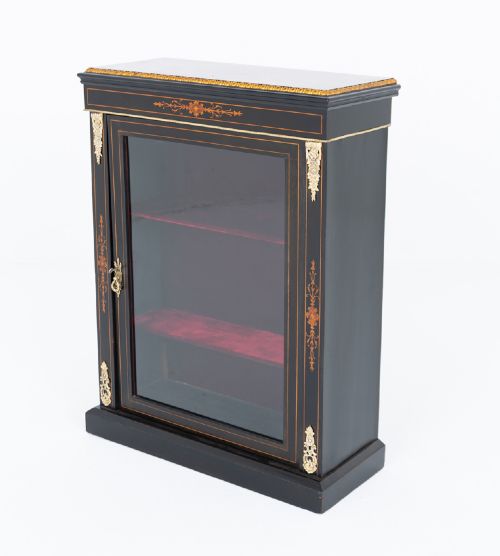
An ebonised glass cabinet appears in several distinct architectural guises across the nineteenth and early twentieth centuries, most frequently as a credenza, pier cabinet, or countertop showcase. These pieces emerge predominantly from Victorian workshops, alongside French Napoleon III and Aesthetic Movement interpretations designed to display porcelain, books, and curiosities behind glazed doors.
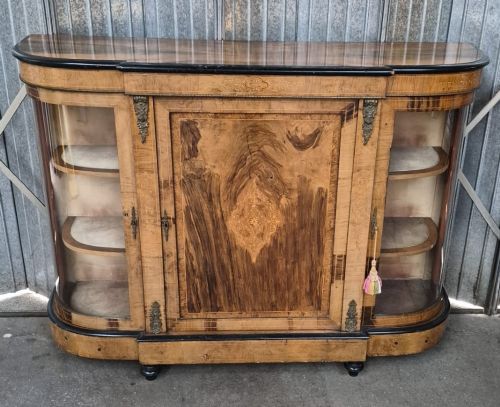
The credenza form provides a broad, low-slung presentation surface often flanked by curved glass panels, while pier cabinets utilise narrow wall spaces with single glazed doors. Countertop and shop display variants appear from later decades, offering smaller-scale containment for delicate objects while retaining the signature dark-stained finish.
Origins span English cabinet-makers and French ateliers, capturing a cross-channel dialogue in revivalist styles. Surviving examples demonstrate how domestic display evolved from formal drawing room credenzas to specialised tabletop showcases by the early twentieth century.
Materials and construction
Makers achieve the characteristic dark surface by ebonising timber such as fruitwood or walnut, often contrasting the deep black finish with amboyna, burr walnut, or marquetry panels. This dark ground highlights intricate brass inlay, ormolu mounts, and ceramic plaques incorporated into the door frames and friezes.
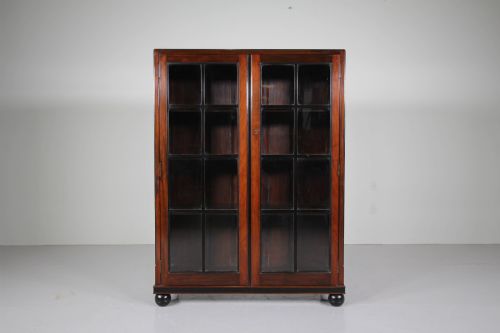
Glazing relies on flat or curved glass panes held securely within rebated wooden framing, sometimes supplemented by mirrored backs to reflect light through the interior shelves. Structural integrity depends on tight joinery and stable carcases designed to support heavy glass doors without sagging.
Ebonised Glass Cabinet Retail Price Guide 2026
Typical asking prices for ebonised glass cabinet among the pieces listed under this phrase on Sellingantiques today, from the lower quarter to the upper quarter. They describe what is for sale here now, not the wider market.
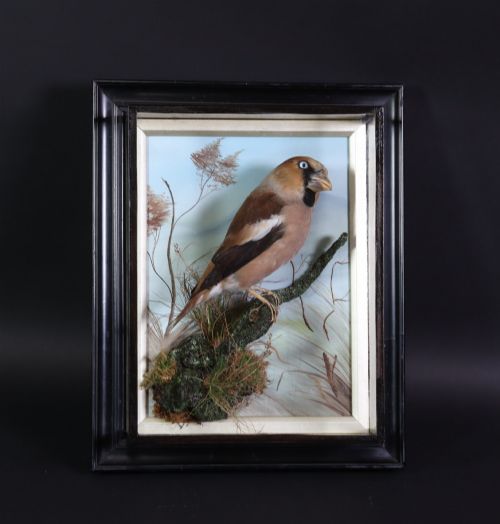
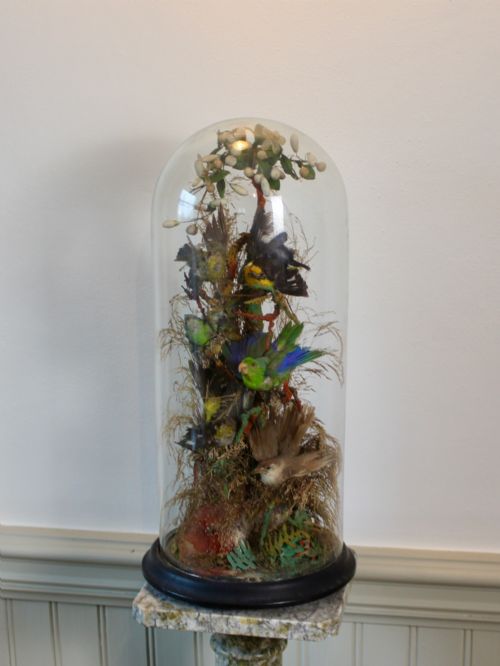
Among the glass cases hide stuffed birds and taxidermy bats, proving the Victorians liked their darkest furniture packed with wildlife.
Distinctions in manufacture
The division between standard production and top-tier work rests on the crispness of the ebonising finish, the precision of brass stringing or marquetry, and the quality of cast ormolu mounts. Finer pieces employ secondary timbers of high grade and feature hand-carved mouldings rather than applied composition ornaments.
Interior execution further separates tiers of craftsmanship, observable in the thickness of adjustable wooden or glass shelving, the choice of velvet lining, and the snugness of door closures. Cabinets bearing maker signatures or originating from established workshops reflect superior structural planning and material selection.
Gillow·James Gardner·A Pollard
The Ebonised Glass Cabinet Glossary
- Ebonised
- Wood stained or painted to resemble ebony, a technique widely used in Victorian and Aesthetic Movement furniture to create a dense black surface.
- Credenza
- A low, formal side cabinet featuring central cupboards flanked by curved glass end doors, frequently utilised for displaying ceramics.
- Pier cabinet
- A tall, narrow display case built to occupy the wall space between windows, usually fitted with a single glazed door and velvet-lined interior.
- Ormolu
- Gilt-bronze mounts applied to furniture edges and panels, adding decorative metallic detail to the dark ebonised wooden carcase.
- Marquetry
- Inlaid patterns of contrasting wood veneers, such as amboyna and burl, assembled to create floral or geometric designs on cabinet doors.
Ebonised Glass Cabinet: Frequently Asked Questions
Where should I place an ebonised glass cabinet?
Position these cabinets away from direct sunlight to protect interior velvet linings and delicate timber veneers from fading. Placing them against interior walls helps maintain stable ambient temperatures, which preserves the joined carcase and glass seals.
Ensure the floor is level so the heavy glazed doors hang true and latch properly without straining the brass hinges. Adequate room lighting allows the reflective mirrored backs and glass panels to illuminate your displayed collection effectively.
How do I clean the ebonised wood finish?
Dust the exterior regularly with a soft, dry cloth to prevent particulate buildup on the dark polished surfaces. Avoid silicone-based sprays or harsh chemical polishes, which can cloud the ebonised coating over time.
For occasional maintenance, use a slightly damp cloth followed immediately by dry buffing with clean cotton. Take care around brass mounts and marquetry inlays to keep moisture out of hairline joints.
Can these cabinets support heavy books?
Most surviving examples are designed primarily for ceramics, glassware, and small curiosities rather than heavy libraries. Pier cabinets and credenzas distribute weight across adjustable wooden shelves that suit lighter display objects.
If storing dense volumes, check the thickness and support brackets of the internal shelving to ensure the carcase remains structurally sound. Overloading can cause the wooden bases or glass frames to warp over prolonged periods.
How do I identify a Victorian piece?
Examine the interior construction, secondary timbers, and hardware style for characteristics consistent with nineteenth-century cabinet-making. Hand-cut dovetails, traditional adhesives, and mercury-silvered mirror glass point directly to the Victorian period.
Stylistic cues such as Aesthetic Movement ebonising or heavy ormolu mounts align with mid to late nineteenth-century manufacturing trends. Look for maker stamps or labels on the reverse or inside drawer linings for definitive attribution.