


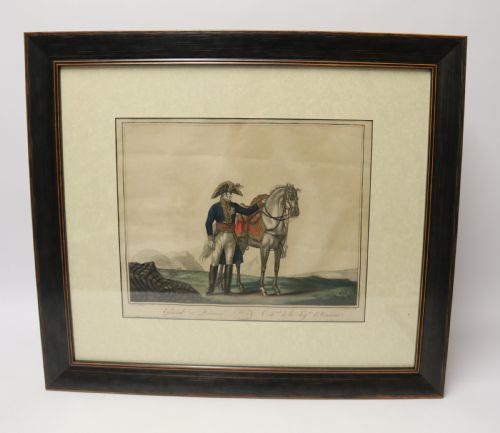

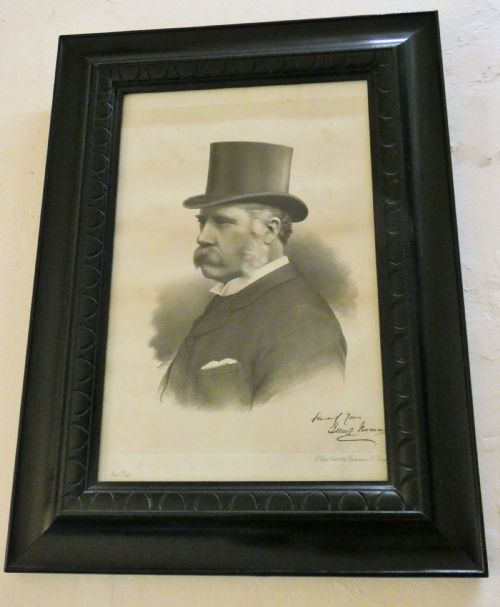
Ebonised Framed Portrait Print
An ebonised framed portrait print brings crisp, dark timber framing to historic likenesses, offering a striking contrast that draws the eye straight to the subject.
Ebonised Framed Portrait Print
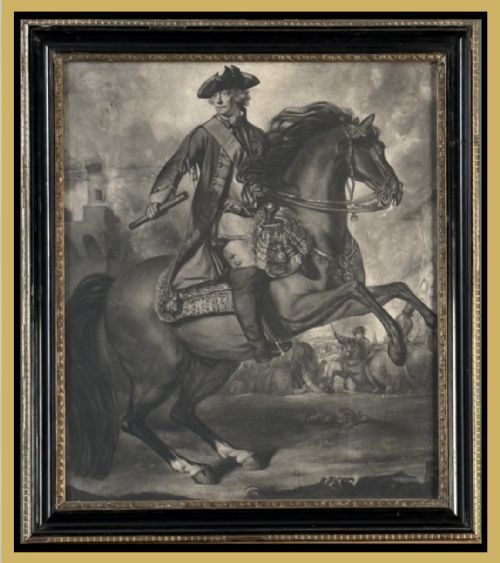
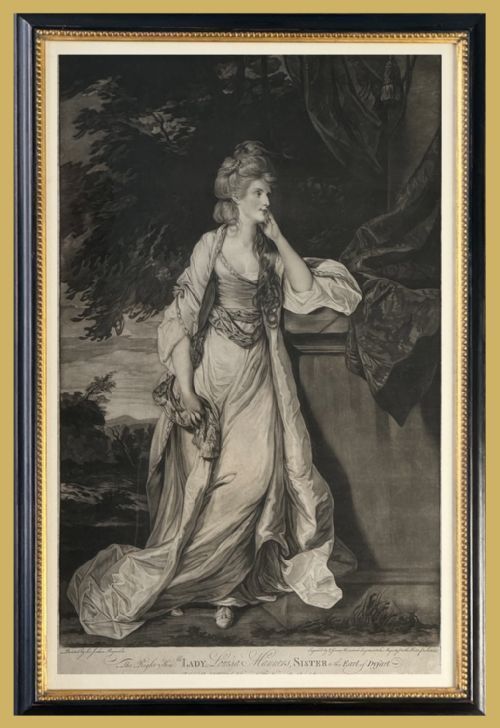
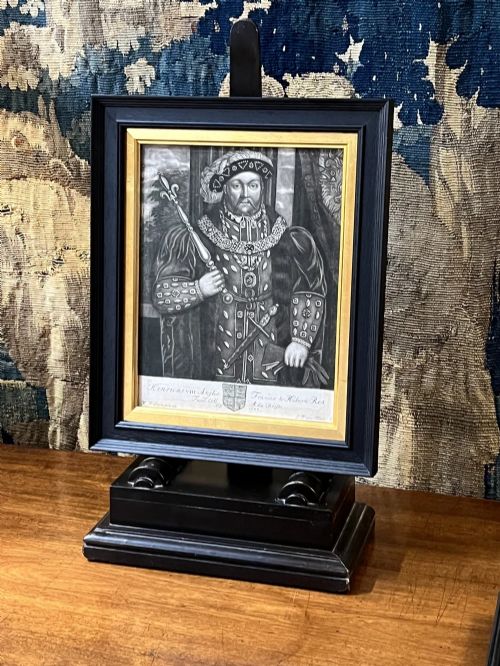
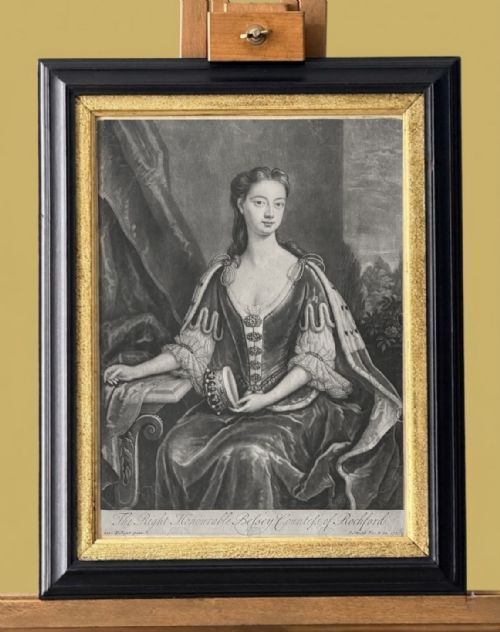
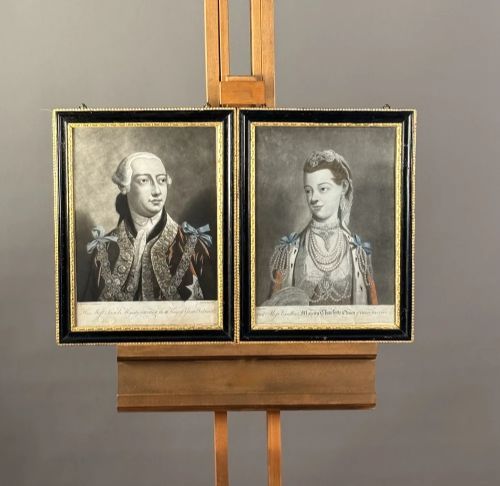
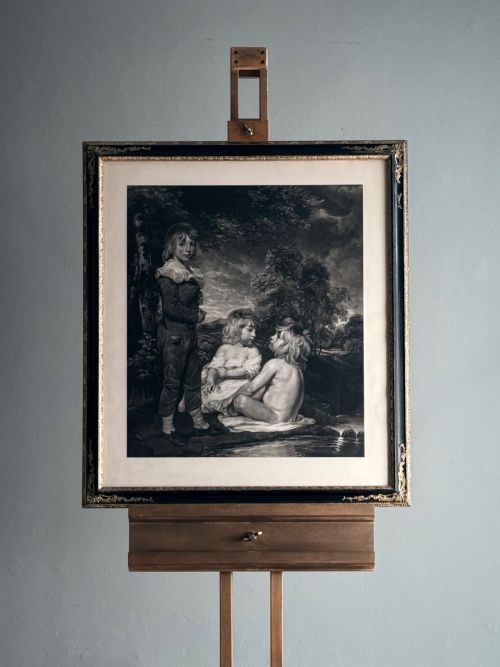
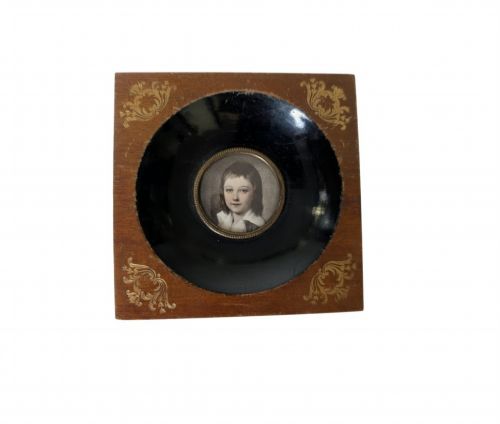
An ebonised framed portrait print combines historic likenesses with dark, darkened wood surrounds that define the perimeter of the artwork. The examples meeting this description on this page span the eighteenth century, the Georgian era, the Regency period, and the nineteenth century.
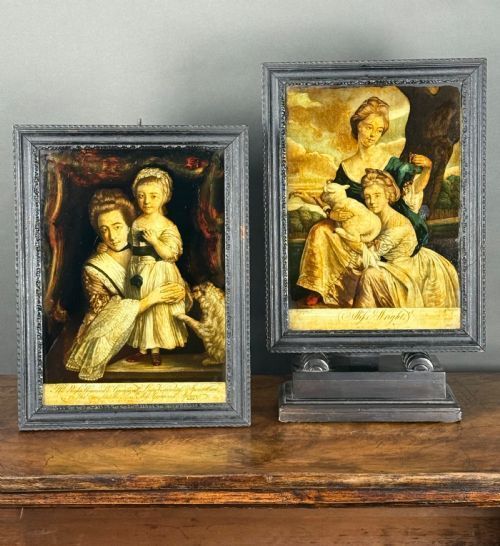
Most entries focus on graphic works behind glass, including mezzotints, reverse glass prints, etchings, and stipple-engravings. Subjects range from nobility and royalty to military figures and children.
Makers and engravers recorded in the titles include Edward Fisher, Valentine Green, John Faber Senior, John Smith, Thomas Frye, James Ward, and Bartolozzi, working after painters such as Sir Joshua Reynolds and Hans Holbein.
Judging quality
The distinction between tiers rests upon the clarity of the printed impression and the preservation of the paper or glass support. Stronger impressions yield deeper contrasts in the ink work.
Original framing adds distinction, particularly where ebonised surfaces retain their depth and complement the period of the artwork within.
Listings feature works spanning the eighteenth century, the Georgian era, the Regency period, and the nineteenth century.
Edward Fisher·Valentine Green·John Faber Senior·John Smith·Thomas Frye·James Ward·Bartolozzi
The Ebonised Framed Portrait Print Glossary
- Ebonised wood
- Timber treated to resemble ebony, providing a deep black finish common on period frames.
- Mezzotint
- A printmaking process of the intaglio family where the plate is roughened to achieve rich tones and subtle gradations.
- Reverse glass print
- An artwork painted or transferred directly onto the underside of a glass panel, creating a glossy surface finish.
- Stipple-engraving
- A technique using dots of varying density to build up shapes and shading on a printed plate.
- Regency
- The period spanning the early nineteenth century characterised by specific neoclassical design traits.
Ebonised Framed Portrait Print: Frequently Asked Questions
What is an ebonised frame?
An ebonised frame is made from timber that has been stained, painted, or chemically treated to achieve a dense black finish resembling ebony. This style was widely utilised during the Georgian and Regency periods to provide a stark, formal border.
The dark boundary serves to isolate the artwork from the surrounding wall, drawing focus entirely toward the tonal values of the portrait print inside.
How are reverse glass prints made?
Reverse glass prints involve applying ink or paint directly to the rear surface of a glass panel. Viewers look through the glass to observe the finished image, which protects the pigments from atmospheric dirt.
This technique yields a smooth, reflective surface quality distinct from standard paper prints mounted behind traditional glazing.
How do I date an antique portrait print?
Dating relies upon examining the printmaking technique, the style of the subject's dress, and the construction methods of the frame. Eighteenth-century examples often employ mezzotint methods, whereas later nineteenth-century pieces show different engraving styles.
Paper characteristics, maker inscriptions, and framing timbers also provide reliable indicators of age.
How should I hang these framed prints?
These framed works require stable indoor wall spaces away from direct sunlight, which can fade historic paper and discolour ink over time. Secure fixings matching the weight of the timber frame and glass are essential.
Grouping complementary subjects together on a neutral wall allows the dark frames to anchor the display effectively.