

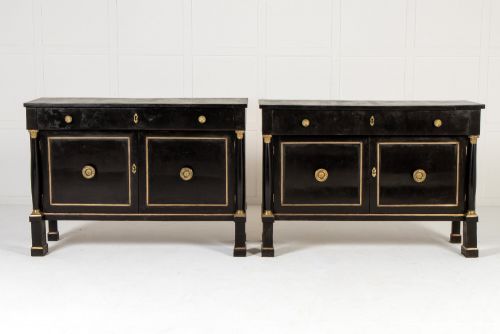
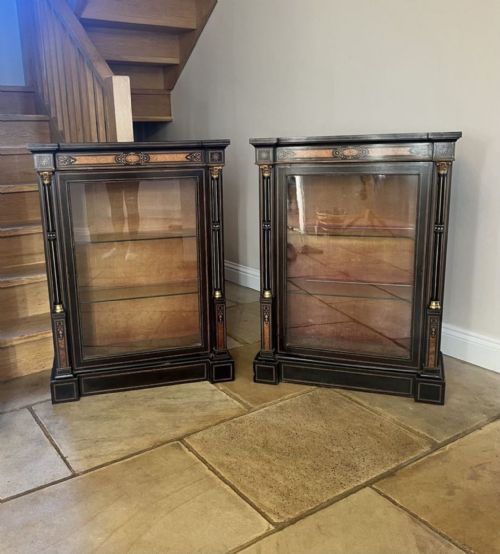
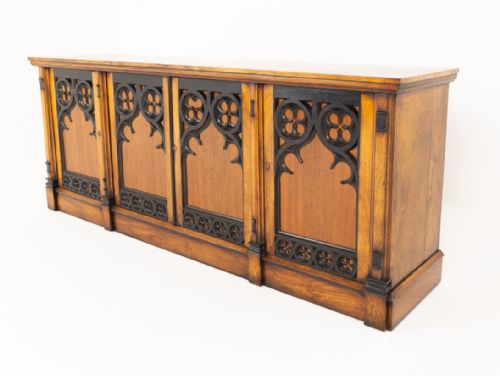
Ebonised Credenza Cabinet
An ebonised credenza cabinet brings dark timber polish and gilt mounts into a reception room, offering display space and enclosed storage.
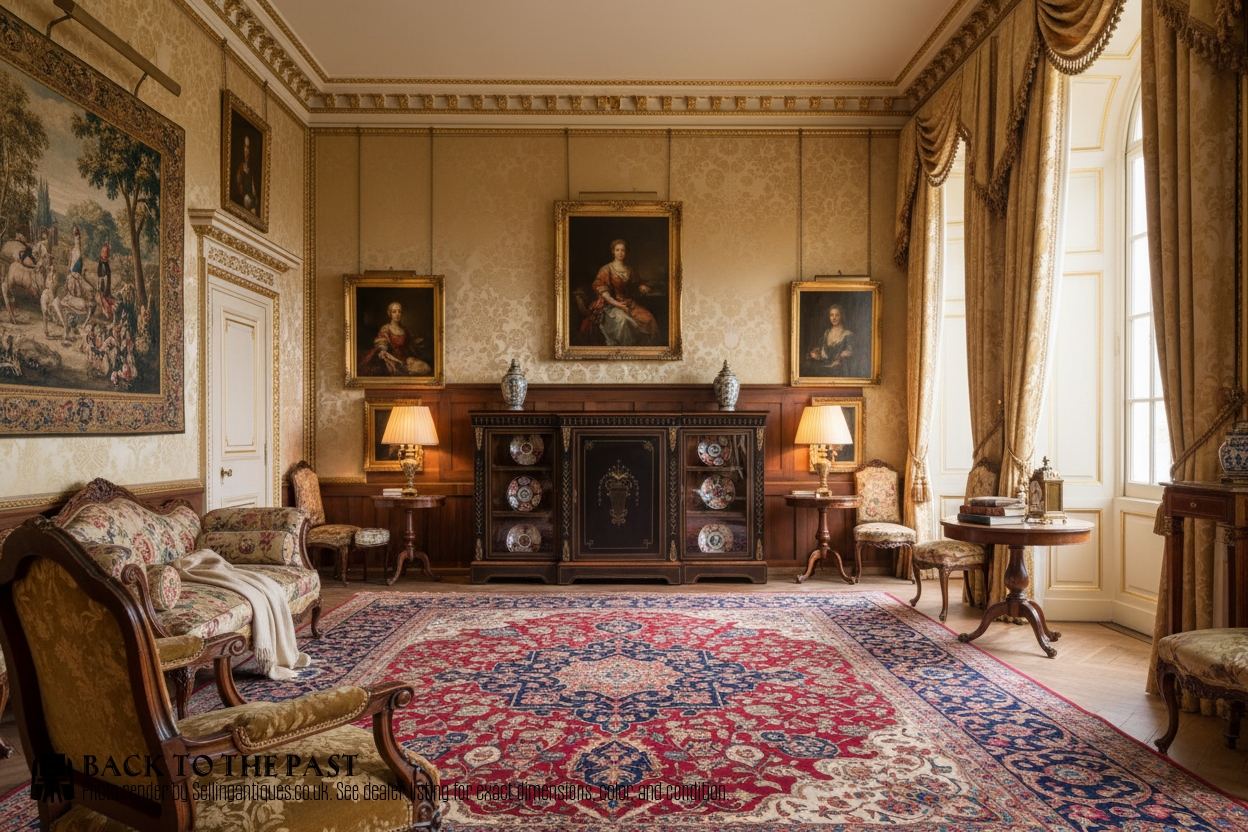
Ebonised Credenza Cabinet
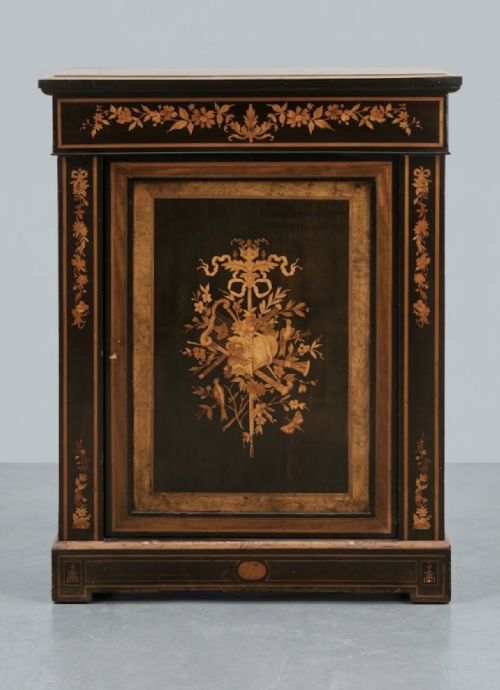
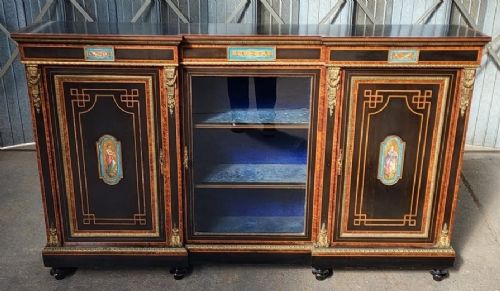
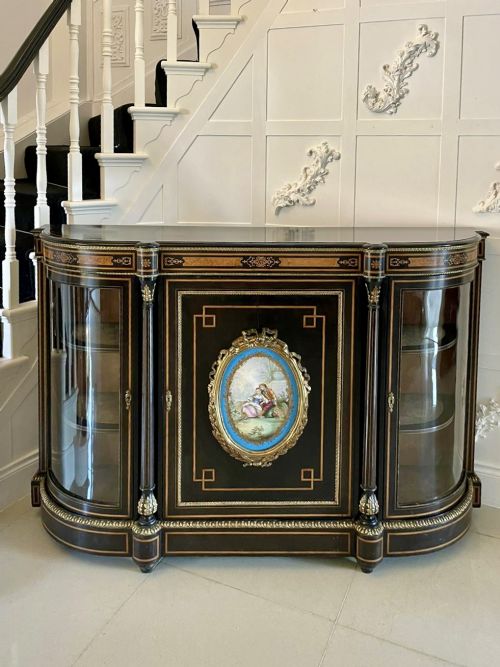
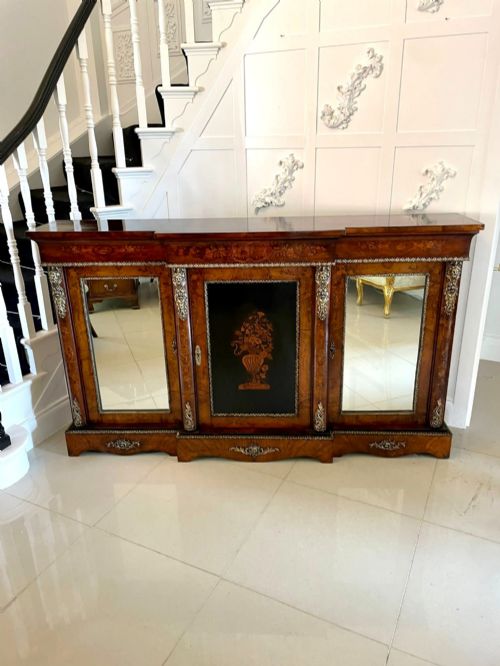
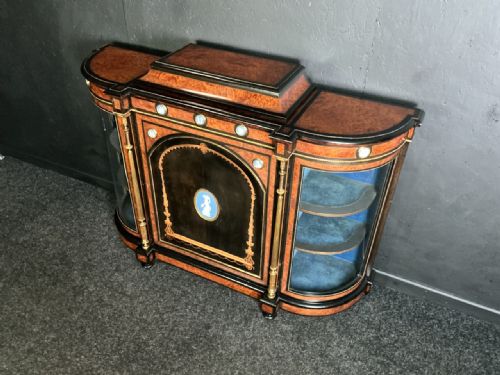
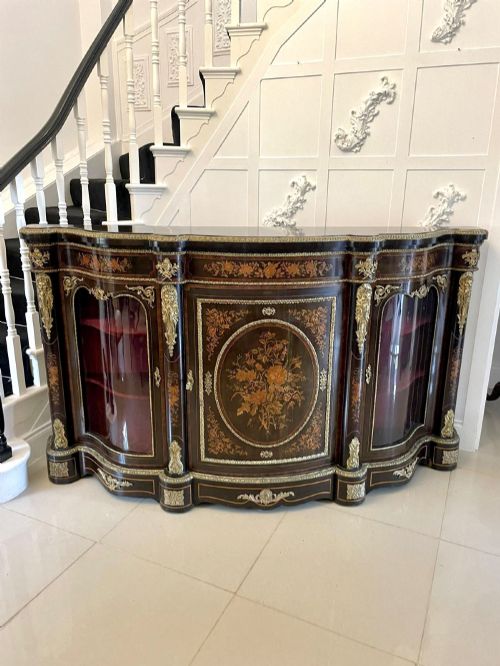
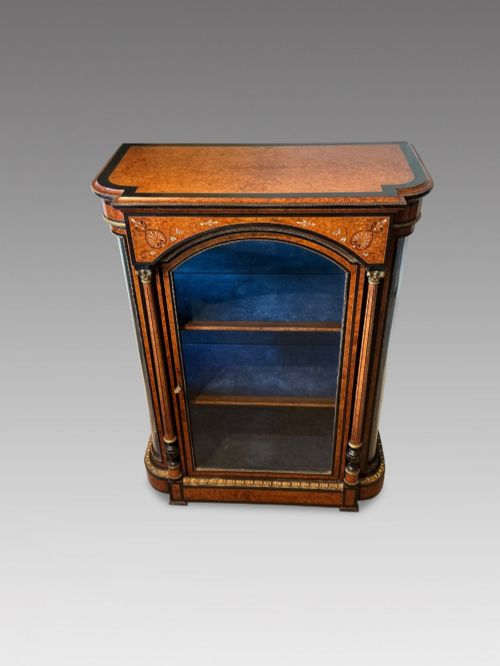
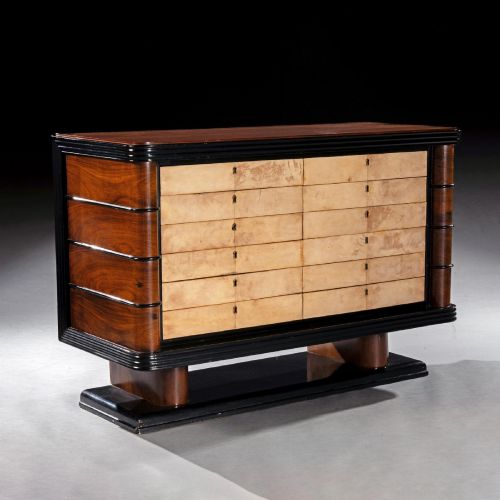
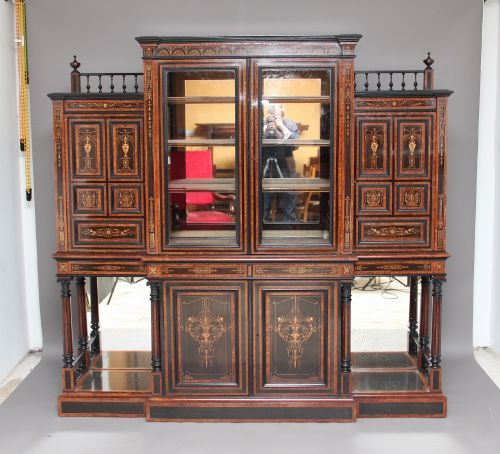
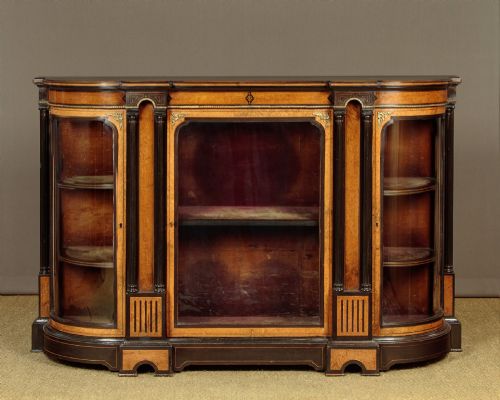
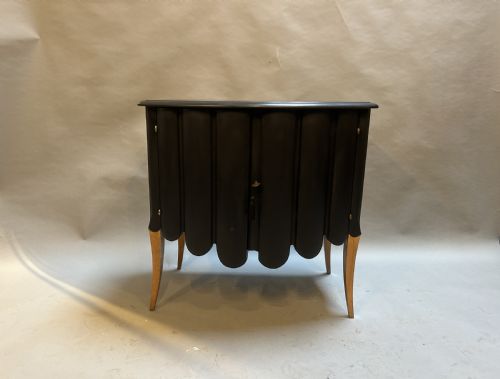
An ebonised credenza cabinet is a low-standing display and storage unit, most frequently found in Victorian and Napoleon III interpretations. The search phrase covers forms ranging from serpentine-fronted sideboards to glazed pier cabinets and breakfront bookcases.
Makers and workshops across England and France produced these pieces during the mid to late 19th century, incorporating marquetry panels, porcelain plaques and glass doors. Buyers encounter credenzas alongside allied side cabinets sharing similar proportions and decorative vocabularies.
Materials and construction
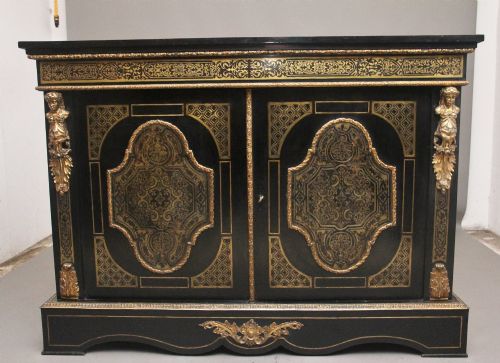
The technique relies on staining fruitwood or other timber to imitate ebony, providing a deep black ground for contrasting veneers such as amboyna, burr walnut and satinwood. Cabinetmakers set brass, ormolu and tortoiseshell into the surfaces using boullework methods alongside floral marquetry.
Gilt bronze mounts edge the doors, plinths and glazed panels, while marble tops feature on specific French and Victorian examples. Interior shelves sit behind glass or panelled doors framed by turned columns and pilasters.
Ebonised Credenza Cabinet Retail Price Guide 2026
Typical asking prices for ebonised credenza cabinet among the pieces listed under this phrase on Sellingantiques today, from the lower quarter to the upper quarter. They describe what is for sale here now, not the wider market.
Tortoiseshell and brass wander across these doors in patterns that kept Parisian workshops busy long after dark.
Design and execution
Quality rests upon the precision of the marquetry inlay and the crispness of the cast ormolu mounts rather than the sheer scale of the piece. Finer examples display detailed hand-engraved brass work within tortoiseshell panels and individually cast gilt mounts that integrate cleanly with the timber.
The secondary woods and internal construction reveal the workshop standard, distinguishing mass production from pieces attributed to known makers such as Gillow, Garnett and Sons, or Lamb of Manchester.
Lamb of Manchester·Garnett and Sons·Gillow
The Ebonised Credenza Cabinet Glossary
- Ebonised
- Wood treated with a dark stain or finish to simulate the appearance of solid ebony. This dark surface acts as a visual contrast for lighter marquetry and metallic mounts.
- Credenza
- A low cabinet designed for dining rooms or parlours, featuring a central cupboard flanked by curved glass side doors. It evolved during the 19th century to display porcelain and decorative objects.
- Boullework
- A form of marquetry using brass and tortoiseshell inlaid in counterpoint patterns. Named after French cabinetmaker André-Charles Boulle, it appears on Napoleon III and Victorian pieces.
- Ormolu
- Gilt bronze mounts applied to furniture corners, friezes and door frames. The metal is cast and chased before receiving a gold gilt finish.
- Marquetry
- Veneers cut and fitted into intricate pictorial or floral patterns across the cabinet front. Woods like amboyna, satinwood and walnut create tonal variation against the black background.
Ebonised Credenza Cabinet: Frequently Asked Questions
What is an ebonised credenza cabinet?
An ebonised credenza cabinet is a low-standing timber piece finished in a deep black stain, typically featuring glazed display sections and cupboard storage. These items originated in the 19th century as reception room furniture designed to showcase ceramics and glassware.
They combine dark polished surfaces with contrasting veneers, metal mounts and inlay work. The form encompasses serpentine shapes, breakfront profiles and flat facades.
How do you date an ebonised credenza cabinet?
Dating relies on stylistic markers such as French Napoleon III boullework, English Victorian marquetry, or Aesthetic Movement linearity. The timber choices, construction methods and lock mechanisms help distinguish mid-19th century pieces from later revivals.
Cabinet construction, screw types and the presence of paper labels or stamped maker marks provide additional chronological evidence. Comparing the decorative motifs against documented workshop designs narrows the manufacturing decade.
Where should an ebonised credenza cabinet go?
These cabinets suit reception rooms, large hallways and dining spaces where their low profile preserves wall space above. Placing them away from direct sunlight protects the delicate veneers, tortoiseshell and polished ebonised surfaces from fading.
Internal shelves accommodate books, ceramics or glassware, while the top surface serves as a display area for lamps or decorative objects. Their dark finish contrasts effectively against lighter neutral walls.
How do French and English cabinets differ?
French pieces frequently incorporate more extensive ormolu mounts, marble tops and tortoiseshell boullework associated with the Napoleon III period. English examples often favour floral marquetry, satinwood inlay and burr walnut panels within Victorian aesthetics.
Proportions also vary, with French models tending towards curved serpentine shapes and ornate cast mounts. English workshops leaned towards architectural glazing bars and structured aesthetic movement designs.