
Earthenware Pottery Pitcher
An earthenware pottery pitcher is a functional or commemorative vessel shaped from clay and finished with glazes, spanning Georgian, Victorian and earlier periods.
Earthenware Pottery Pitcher
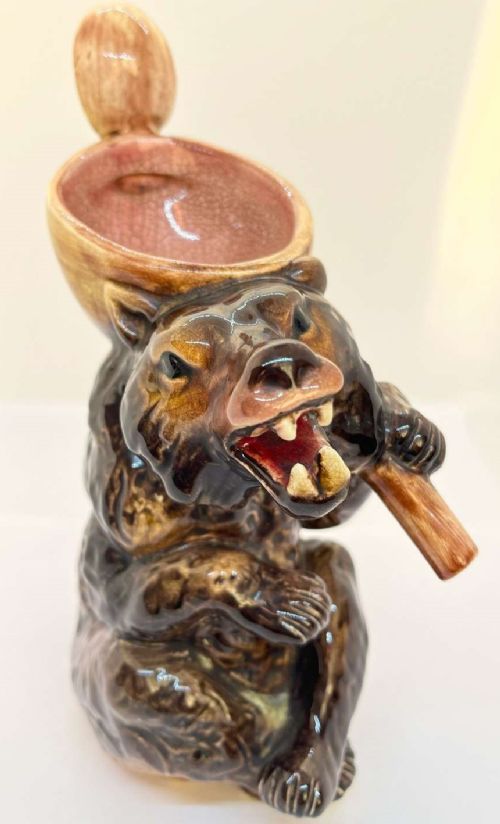
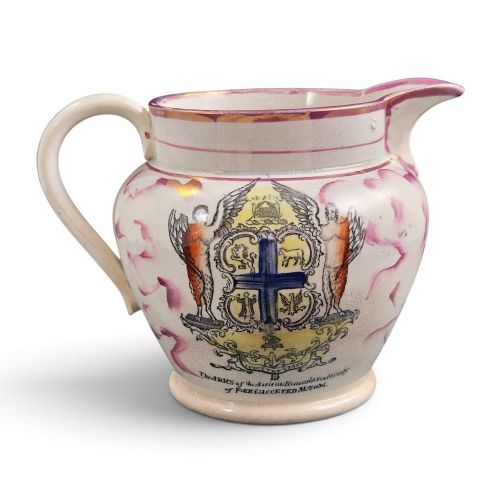
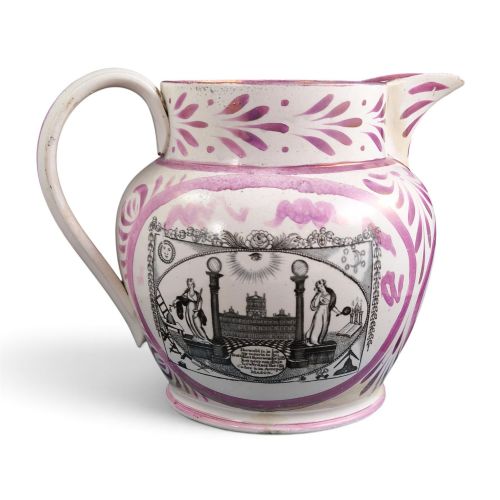
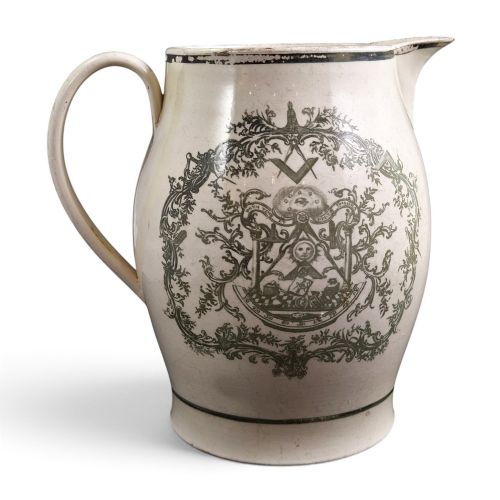
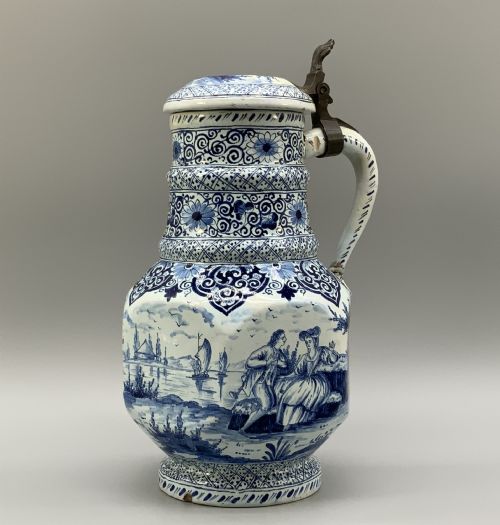
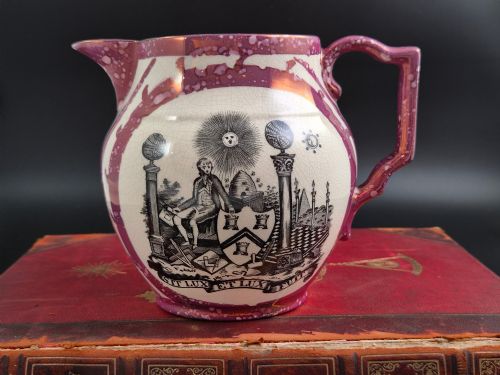
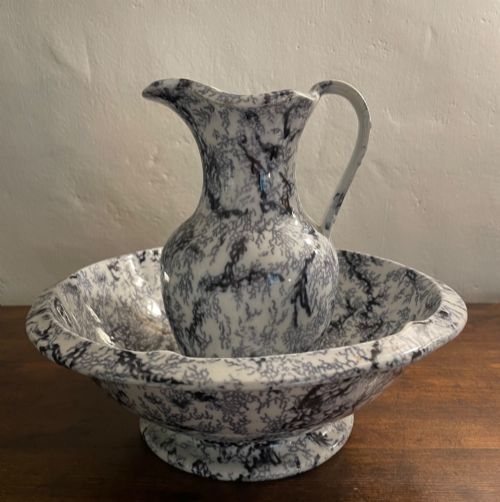
When you search for an earthenware pottery pitcher, you encounter a diverse selection of ceramic pouring vessels spanning the eighteenth, nineteenth and early twentieth centuries. These pieces encompass utilitarian kitchenware, decorative majolica, commemorative Sunderland lustre and antique Dutch Delftware.
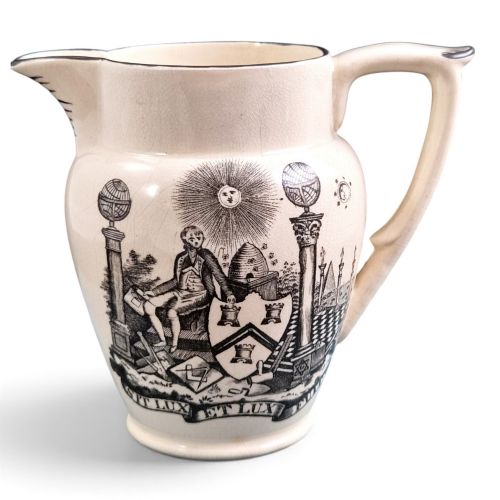
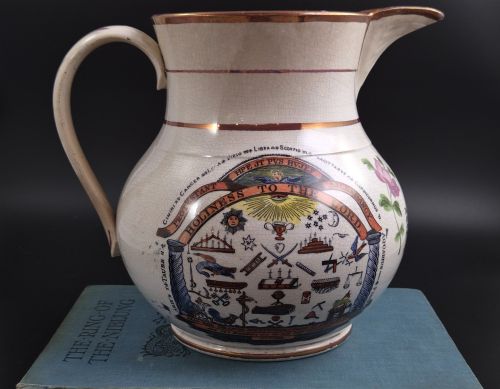
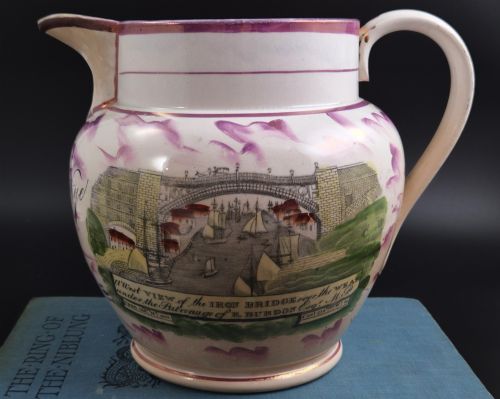
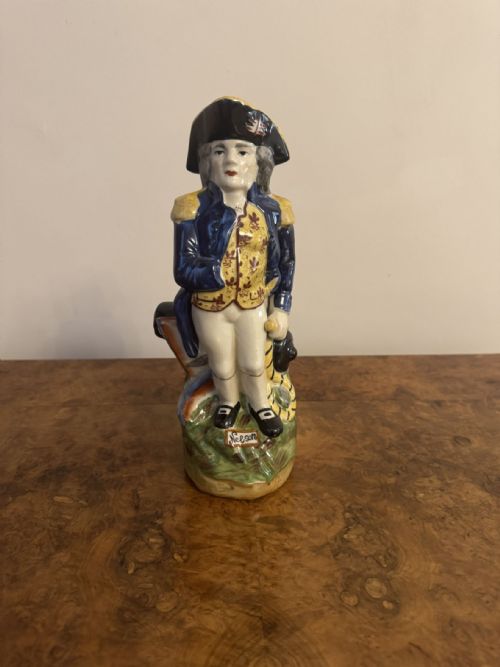
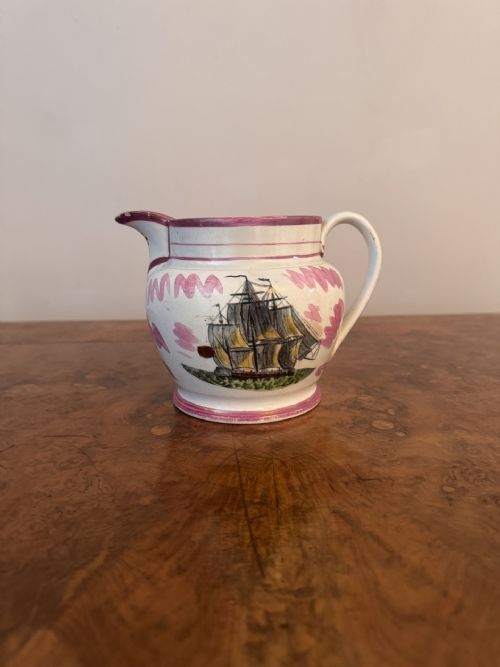
The examples most commonly met on this page originate from English potteries, particularly Staffordshire and Sunderland, alongside Welsh and continental workshops. They range from commemorative Masonic and maritime jugs to figural toby jugs and slipware vessels.
Forms vary from robust creamware pitchers to ornate Renaissance Revival ewers and specialised items like cow creamers or puzzle jugs. Each period brings distinct decorative techniques, from transfer printing to polychrome enamels.
Materials and technique
Potters shaped these vessels from local earthenware, terracotta and refined creamware before applying various ceramic glazes. Metallic lustres, tin glazes and colourful enamel paints added visual depth and surface protection.
Decoration relied heavily on black or polychrome transfer printing, hand-painting and slip trailing. Many pieces also utilised moulded details, pewter lids or applied ceramic figures to achieve their finished appearance.
Listings feature nineteenth-century Staffordshire creamware, Victorian lustre and eighteenth-century Dutch Delftware.
What varies in quality
Quality rests upon the crispness of the moulded details, the precision of the transfer print and the vibrancy of the hand-applied enamels. Finer vessels display careful control during firing, resulting in even glaze coverage and well-defined decorative motifs.
Holdcroft·Sunderland Garrison Pottery·Cantagalli Florence·Keeling And Co
The Earthenware Pottery Pitcher Glossary
- Creamware
- A fine-grained, cream-coloured earthenware developed in Staffordshire during the eighteenth century. It provided a smooth surface ideal for transfer printing and painted decoration.
- Lustreware
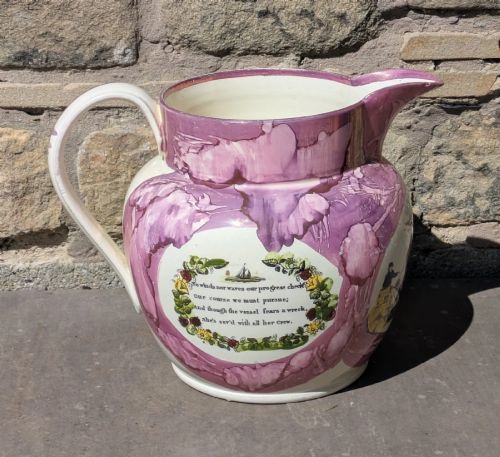
- Earthenware decorated with a metallic glaze that produces an iridescent or reflective sheen. Sunderland pink splash and copper lustre are typical variations found on nineteenth-century jugs.
- Transfer printing
- A method of applying detailed designs to ceramics by engraving a copper plate, pulling the image on tissue paper and transferring it to the biscuit or glazed surface.
- Majolica
- A type of earthenware coated with an opaque tin glaze and painted with brightly coloured metal oxide pigments. Victorian examples often featured naturalistic animal or plant motifs.
- Slipware
- Pottery decorated with slip, which is a liquid clay mixture applied to the body before firing for trailing or marbled patterns. It represents an older, traditional method of earthenware production.
Earthenware Pottery Pitcher: Frequently Asked Questions
What is an earthenware pottery pitcher?
An earthenware pottery pitcher is a porous or glazed clay vessel designed for holding liquids, water or milk. These antique examples often served commemorative, Masonic or domestic functions.
They reflect the prevalent ceramic manufacturing methods of the Georgian and Victorian eras, combining utilitarian function with decorative artistry.
How do I date a ceramic pitcher?
Dating relies on stylistic markers, materials such as creamware or pink lustre, and specific manufacturing techniques like transfer printing. Commemorative inscriptions and named historical events also provide reliable chronological anchors.
Changes in handle design, glaze composition and pottery marks help narrow down the period of production between the eighteenth and early twentieth centuries.
What is Sunderland lustre?
Sunderland lustre is a distinct type of English earthenware featuring a metallic glaze that creates a pink, purple or mottled splash effect. These jugs frequently incorporate transfer-printed maritime scenes, bridges or Masonic symbols.
Produced in the nineteenth century around the Sunderland region, they were often created as commemorative presentation pieces for sailors and societies.