
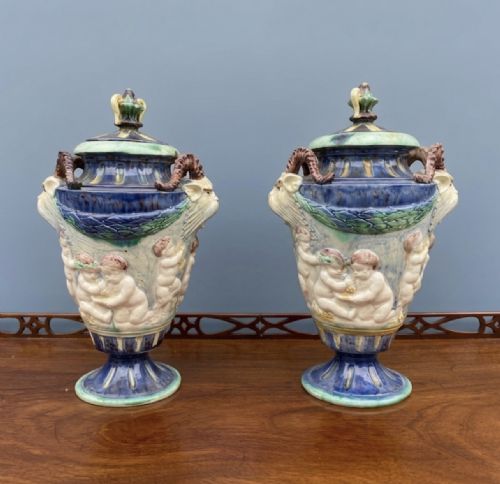
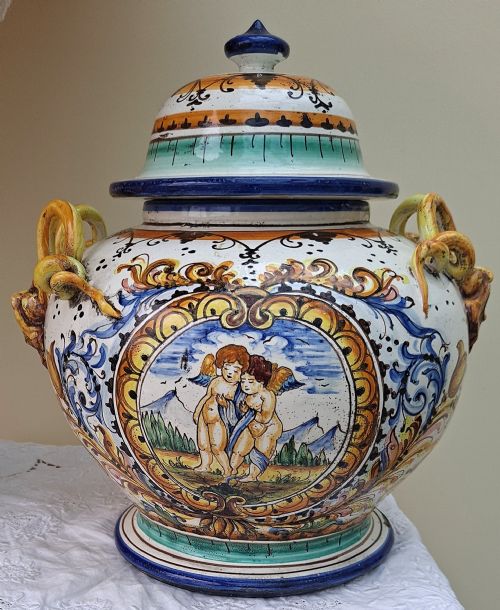
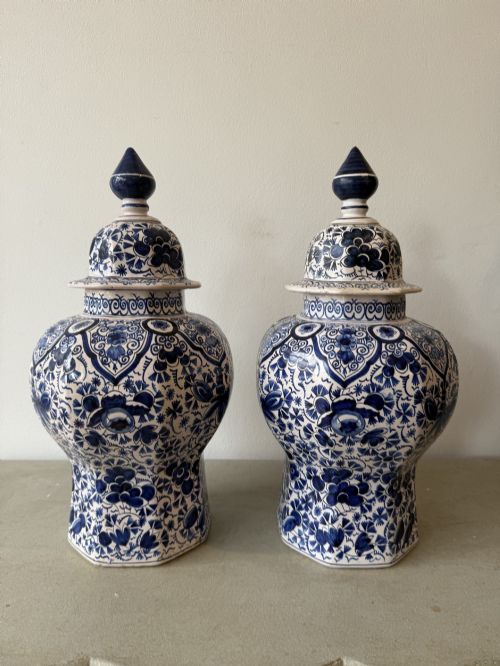


Earthenware Lidded Urn
An earthenware lidded urn brings substance and quiet historical weight to a room, holding centuries of ceramic craft in a single vessel.
Earthenware Lidded Urn
An earthenware lidded urn is a substantial ceramic vessel designed with a removable cover, serving historically for storage or decoration. When you search for this phrase, you find pieces ranging from grand eighteenth-century continental jars to nineteenth-century decorative urns. The selection on this page spans several distinct eras and stylistic traditions.
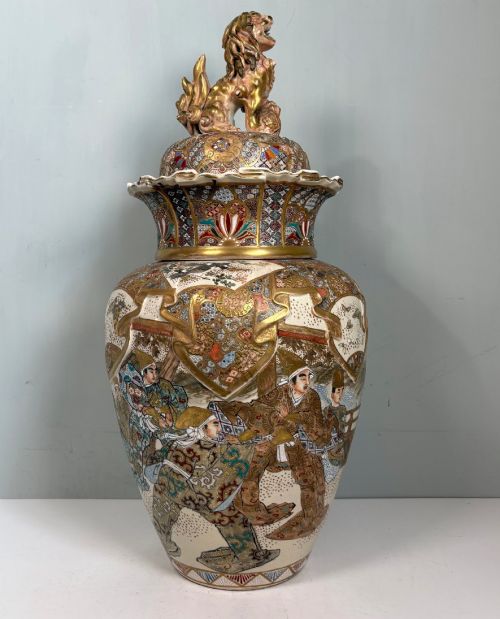
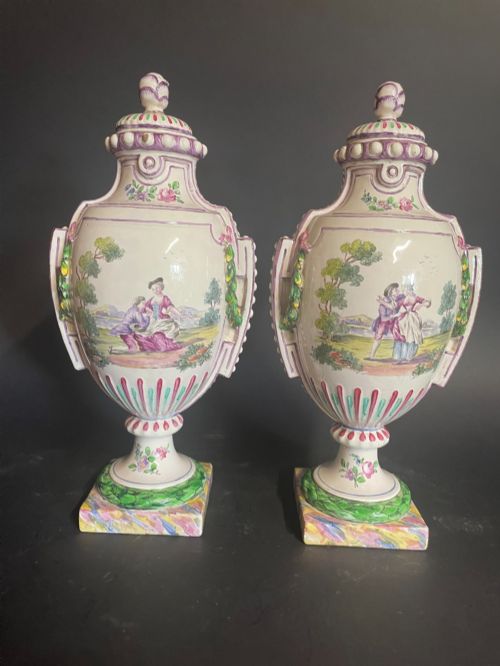
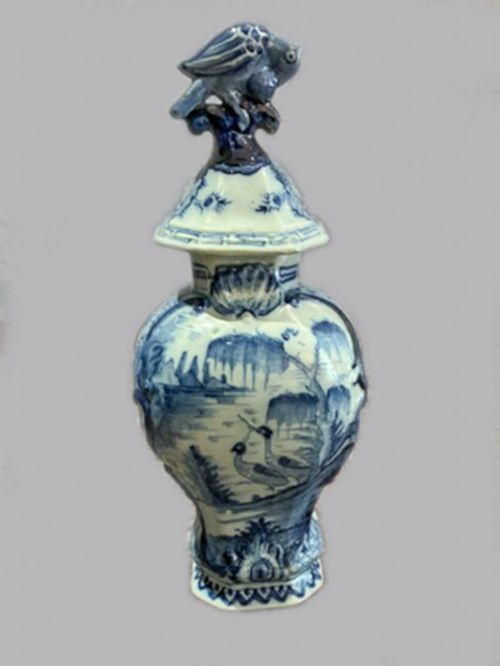
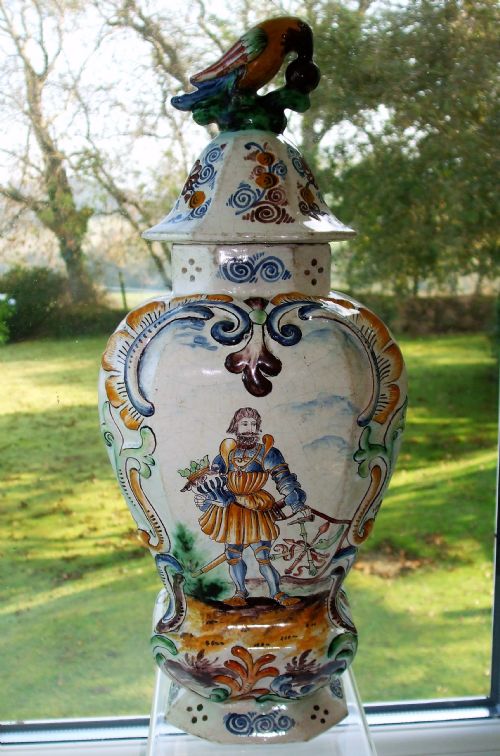
The pieces appearing most frequently here belong to the eighteenth and nineteenth centuries, featuring Dutch delftware, French and Italian faience, and Japanese Satsuma ware. Forms include traditional lidded vases, tobacco jars, and large handled urns. Each object demonstrates the practical and ornamental functions required by its original maker.
How these urns were made
Makers shaped these vessels from earthenware clay, applying tin-glaze, enamel, or traditional glaze to seal the porous body before firing. Many examples incorporate hand-painted decoration in blue and white or rich polychrome palettes. Gold leaf accents appear on specific decorative wares to highlight raised detailing.
Fittings such as brass details occasionally supplement the ceramic form, particularly on lidded jars and urns from the nineteenth century. The combination of thrown or moulded clay with specialised surface treatments created durable containers that doubled as fine art.
Materials documented across these entries span basic earthenware and tin-glaze through to brass fittings and applied gold leaf.
What separates the finest examples
Quality in an earthenware lidded urn rests upon the crispness of the modelled form and the precision of the hand-painted surface work. Finer pieces display balanced proportions between the vessel body and its matching cover, showing an artisan's steady hand in every brushstroke.
The complexity of the glaze chemistry and the retention of original pigment vibrancy also distinguish superior specimens from simpler utility pieces. Greater attention to detail during the initial firing and painting stages ensures the surviving object retains its visual impact.
Royal Winton·Sceaux Faience
The Earthenware Lidded Urn Glossary
- Earthenware
- Porous pottery fired at lower temperatures than stoneware or porcelain, requiring a glaze to hold liquids. It represents one of the oldest ceramic traditions.
- Faience
- Tin-glazed earthenware produced in France, Germany, and other parts of Europe, often brightly painted. The technique creates an opaque white surface suitable for detailed decoration.
- Maiolica
- Italian tin-glazed earthenware notable for its vibrant colours and narrative or decorative painting. Potters developed this style extensively during the Renaissance and later revival periods.
- Delftware
- Tin-glazed earthenware made in the Netherlands, famous for its blue and white designs influenced by imported Chinese porcelain. Dutch makers produced these jars and vases in large quantities for domestic and export markets.
- Satsuma ware
- Japanese earthenware featuring a crackle glaze and elaborate polychrome and gold leaf decoration. These decorative vessels gained immense popularity in the West during the late nineteenth century.
Earthenware Lidded Urn: Frequently Asked Questions
What were earthenware lidded urns used for?
These vessels served diverse roles ranging from dry goods storage, such as tobacco jars, to pure decorative display in grand interiors.
Over time, their primary function shifted toward ornamentation as households displayed large lidded vases on mantelpieces and pedestals.
How do I care for an antique earthenware urn?
Keep these ceramic pieces out of direct sunlight to protect painted enamel and gold leaf details from fading over the decades.
Dust them gently with a dry, soft cloth and avoid using water or cleaning agents on porous or crazed glaze surfaces.
How can I tell Dutch delft from Italian maiolica?
Dutch delft typically relies on a tin-glaze painted in cobalt blue, often mimicking Chinese export porcelain motifs from the seventeenth and eighteenth centuries.
Italian maiolica generally employs a broader polychrome palette with opaque glazes and distinct Renaissance revival or regional stylistic patterns.
Are the lids on these urns original?
Many surviving urns retain their matching original covers, which share identical glaze characteristics, wear patterns, and clay bodies with the base.
Examining the rim fit and decorative continuity helps confirm whether a lid has stayed with its vessel across the centuries.