


Earthenware Ceramic Dog Ornaments
These earthenware ceramic dog ornaments bring the character of nineteenth-century parlours directly into modern rooms.
Earthenware Ceramic Dog Ornaments
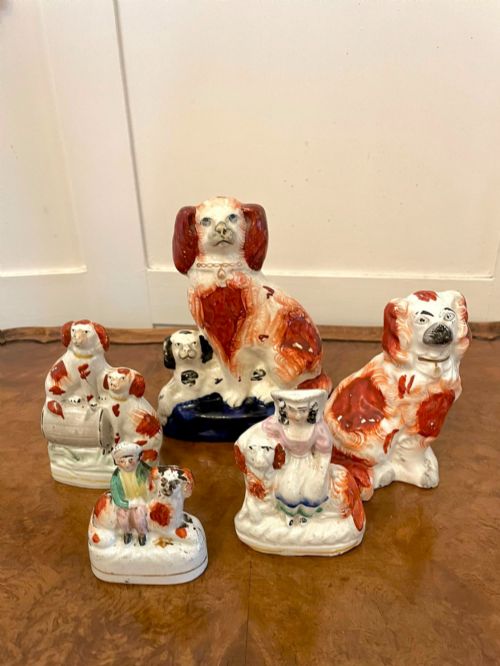
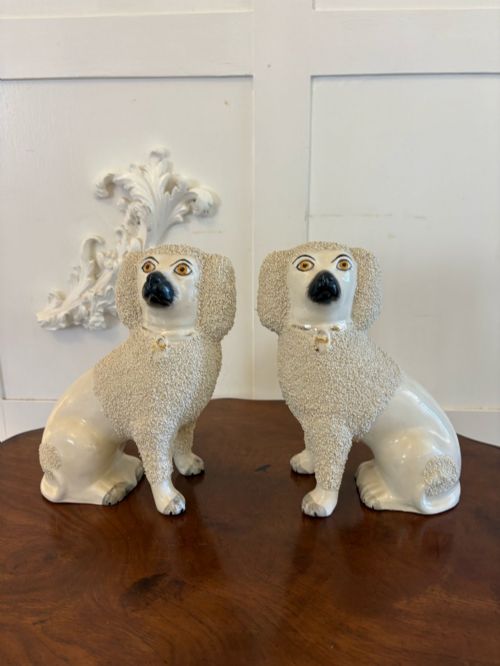
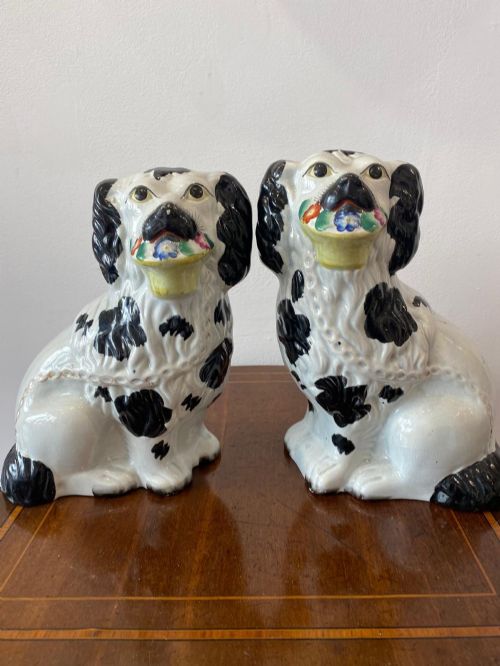
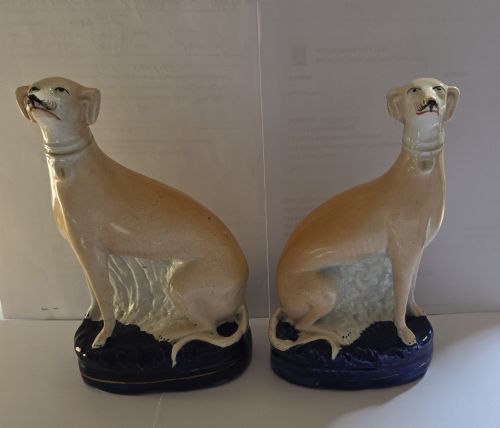
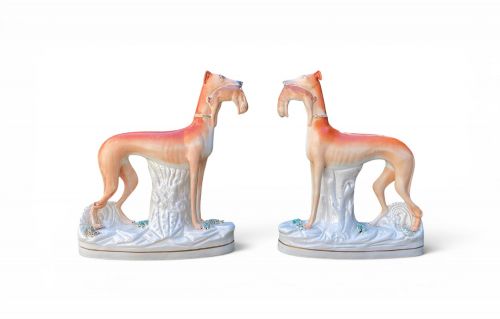
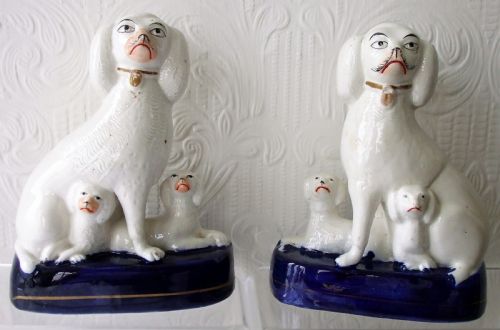
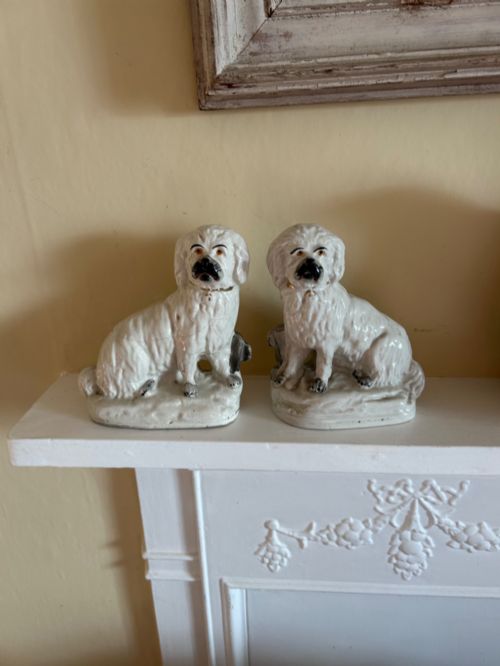
Earthenware ceramic dog ornaments most commonly appear as pairs of spaniels, poodles, greyhounds, and whippets modelled during the Victorian era. These decorative figures range from miniature poodles to unusually large hounds, often arranged to sit facing one another on mantelpieces.
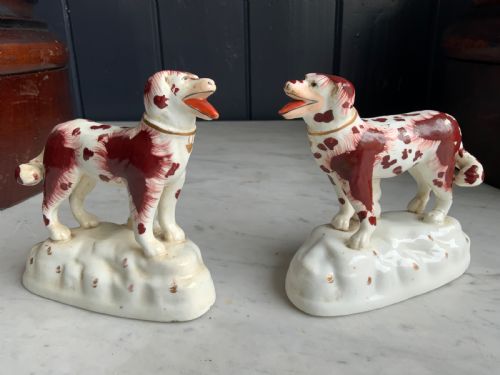
The selections span the nineteenth century, including Georgian and Regency precursors alongside Edwardian pieces. Makers produced various breeds, from comforter spaniels to hunting dogs with hares and Maltese terriers, reflecting domestic tastes of the period.
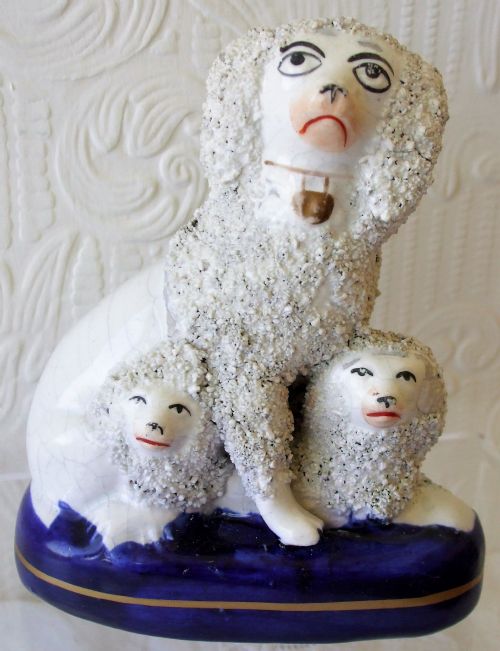
Forms include straightforward decorative figurines, figure groups with pups, and functional pieces like greyhound quill holders. Most examples hail from English traditional workshops and Staffordshire potteries.
How They Were Made
Listings feature earthenware bodies finished with lead glaze, enamel paint, and gold leaf highlights across Victorian and Edwardian periods.
What Varies in Quality
Matched pairs display consistent sizing, glaze depth, and symmetrical facial expressions that show the modeller took greater care during production. Single surviving figures rely entirely on the strength of their individual character and preservation of their original gilt highlights.
Thomas Parr·Wedgwood and Co Ltd
The Earthenware Ceramic Dog Ornaments Glossary
- Earthenware
- A porous pottery body fired at lower temperatures, requiring a glaze to achieve impermeability. It serves as the primary material for the majority of these nineteenth-century figures.
- Glaze
- A glassy coating fused to the ceramic body through kiln firing. Lead glaze provided the smooth, reflective finish seen on Victorian spaniels and poodles.
- Enamel
- Opaque pigmented glass fused onto the glazed surface during secondary firings. Enamel paint added black, red, and brown markings to the coats of the dogs.
- Comforter spaniels
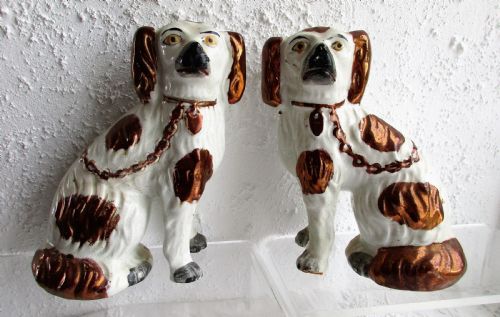
- Popular Victorian mantelpiece dogs modelled after the miniature spaniels kept as pets by royalty. These figures typically feature white coats with patches and gilt lock chains.
- Quill holder
- A desk accessory incorporating a modelled animal figure with a shaped base or back designed to hold writing feathers. Greyhound examples combine decorative appeal with practical desktop utility.
Earthenware Ceramic Dog Ornaments: Frequently Asked Questions
What are earthenware ceramic dog ornaments?
These pieces are nineteenth-century pottery figures modelled as popular canine breeds, designed primarily for display on domestic mantelpieces.
Potters created them in matched pairs or individual groups, capturing everything from spaniels and poodles to greyhounds and dalmatians.
How were these ceramic dogs used historically?
Victorian households placed them on mantelpieces, often with one dog facing left and the other facing right to frame a clock or mirror.
Certain specialist forms, such as greyhound quill holders, served a dual decorative and practical purpose on writing desks.
How do you date Victorian Staffordshire dogs?
Dating relies on stylistic clues, modelling conventions, and the character of the glaze and enamel paintwork.
Earlier Regency and Georgian examples tend toward different proportions, while high Victorian pieces from the mid-to-late nineteenth century display specific facial treatments and gold leaf highlights.
How do you care for antique ceramic figures?
Keep them away from direct sunlight to protect hand-painted enamel colours and gilt surfaces from fading over time.
Dust them gently with a soft, dry brush and avoid using water or cleaning solutions on the porous earthenware or painted details.