


White Glazed Dog Figurines
White glazed dog figurines are ceramic companions modelled after various breeds, offering enduring character to mantelpieces and side tables.
White Glazed Dog Figurines
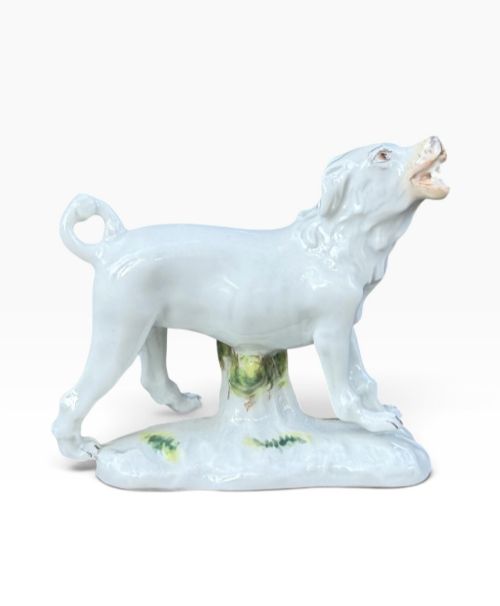
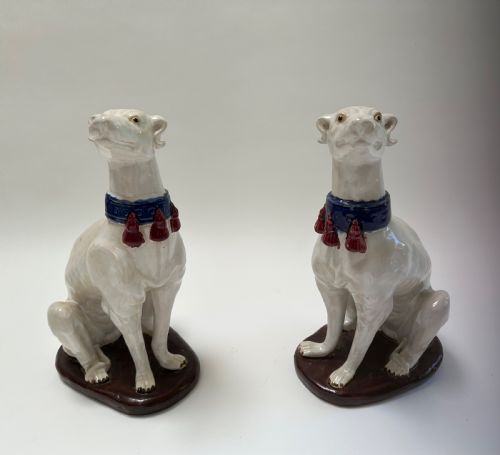
White glazed dog figurines encompass a variety of breeds and forms, including poodles, spaniels, greyhounds, pugs, and terriers. When searching for white glazed dog figurines, buyers frequently encounter Staffordshire pottery pairs, German porcelain models, and Japanese figures spanning the nineteenth century and the early twentieth century.
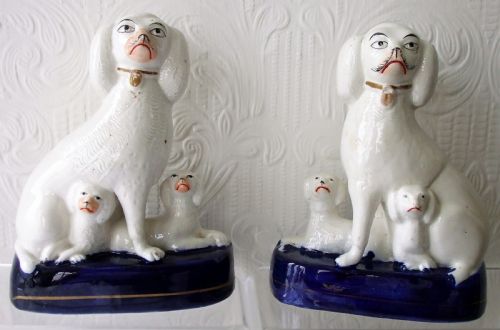
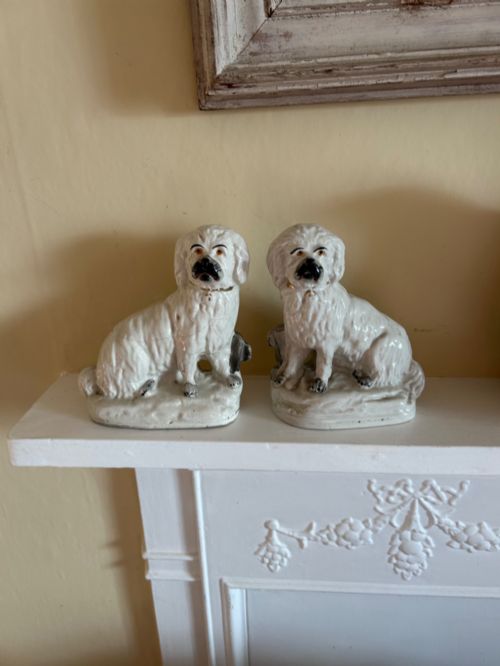
The assortment on this page includes decorative ornaments, table lamps, inkwells, and clock groups. Staffordshire spaniels and poodles dominate the selection, often modelled as seated pairs facing left and right to flank a fireplace or centrepiece.
Materials and manufacture
Potters and modellers shaped these pieces using earthenware, porcelain, and ceramic bodies. Artisans applied lead glaze, white glaze, and enamel to coat the clay, sometimes adding gold leaf highlights or copper lustre details.
Moulding and hand-painting defined the production process across English potteries, German porcelain factories, and Japanese kilns. Makers such as Thomas Parr and Beswick contributed to this tradition through specialised casting and glazing techniques.
Several poodles wear sculpted clay curls resembling tightly clipped fur, capturing Victorian grooming fashions in permanent ceramic glaze.
Assessing quality
Pairs show greater uniformity in size and posture when modelled by skilled hands. The sophistication of the enamel work and the presence of secondary details, such as baskets in mouths or accompanying pups, distinguish superior pieces.
Thomas Parr·Beswick
The White Glazed Dog Figurines Glossary
- Staffordshire figure
- A pottery ornament produced in the English county of Staffordshire, typically modelled as animals or people. These earthenware pieces were widely manufactured for middle-class domestic interiors during the Victorian era.
- Lead glaze
- A glossy coating containing lead oxide applied to ceramic bodies before firing. This technique creates a smooth, reflective surface that protects the underlying earthenware and enhances painted enamel colours.
- Majolica
- A type of earthenware coated with an opaque white tin glaze and painted with metallic oxide colours. Italian workshops produced distinctive versions featuring rich, vibrant tones.
- Inkwell
- A small desk accessory designed to hold liquid writing ink, sometimes incorporated into figural ceramic groups. These functional objects combine utility with decorative sculptural form.
White Glazed Dog Figurines: Frequently Asked Questions
What are Staffordshire dogs?
Staffordshire dogs are ceramic figures modelled primarily as spaniels, poodles, and greyhounds, produced by English potteries during the nineteenth century. Households traditionally placed these pairs on mantelpieces facing inward toward each other.
Potters typically manufactured them in pairs for domestic display. They served purely as decorative ornaments rather than functional items.
How do I date these figures?
Dating relies on stylistic clues, manufacturing methods, and material characteristics. Victorian pieces often utilise earthenware with painted enamel details and copper lustre accents.
Later pieces from the twentieth century show finer porcelain bodies or distinct art deco forms. Comparing base marks and glazing styles helps narrow down the production period.
Were these dogs meant for display?
These ceramic figures were designed specifically as decorative ornaments for the home. Victorian families arranged them on mantelpieces, sideboards, and windowsills.
Some specialised pieces incorporated functional elements like inkwells or clock surrounds, but most served solely to adorn domestic living spaces.
How do I care for antique ceramics?
Antique ceramics require gentle maintenance using a soft, dry cloth to remove dust. Avoid using abrasive cleaning agents or harsh chemicals that might damage the fragile enamel paints or glaze.
Keep figures away from direct sunlight and areas subject to sudden temperature shifts to protect the ceramic body and surface finish.