




Earthenware Animal Figurine
These earthenware animal figurine examples span nineteenth-century Staffordshire dogs to continental terracotta figures, offering domestic charm and sculptural character for the mantelpiece.
Earthenware Animal Figurine
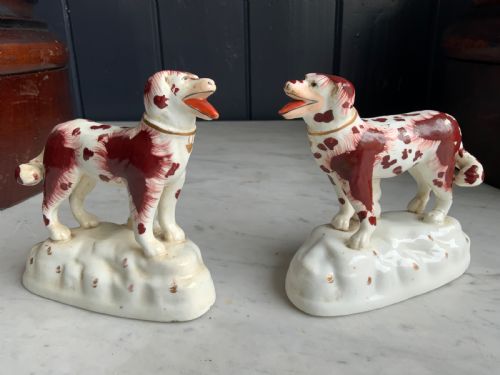
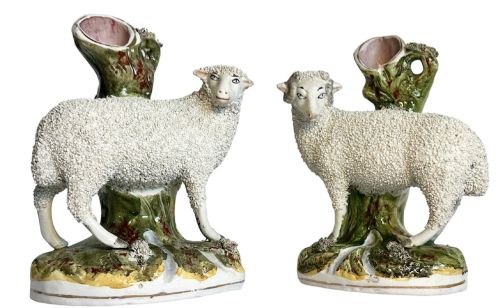
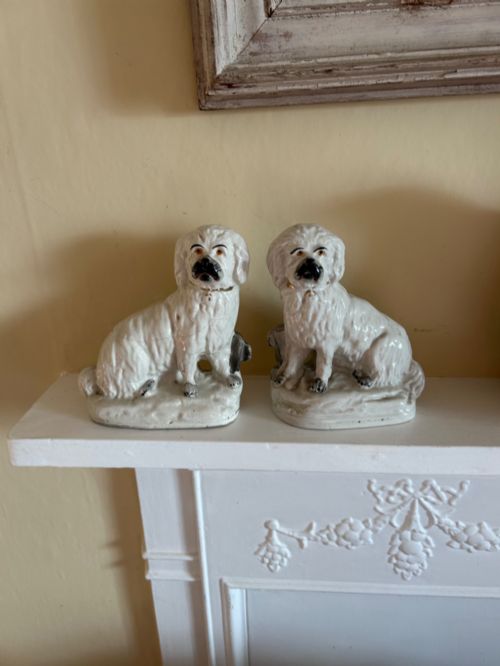
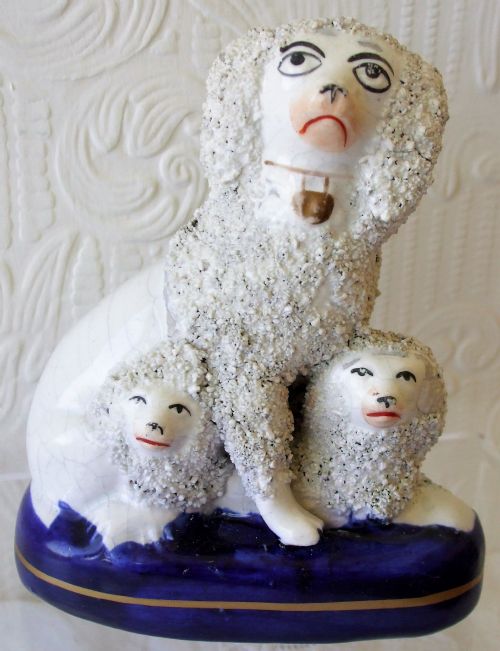
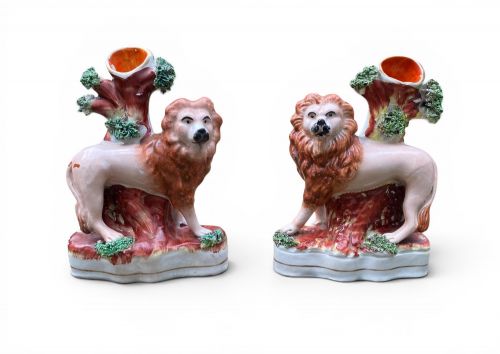
An earthenware animal figurine represents domestic pets, farm animals and exotic creatures modeled for display on shelves and mantelpieces. Buyers seeking this category most frequently encounter nineteenth-century Staffordshire pottery figures, including pairs of spaniels, pugs, lions and sheep.
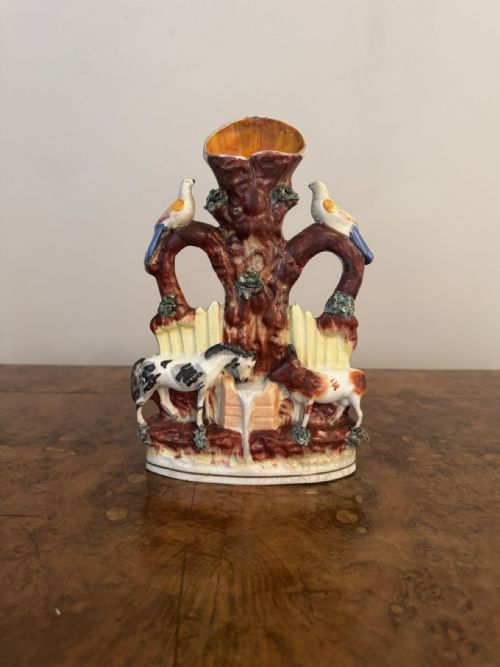
The selection extends from utilitarian Victorian country pottery to French and Italian terracotta sculptures, alongside Dutch Delftware cows and Chinese turquoise glazed apes. Makers ranged from local English potteries to continental ceramic workshops producing individual animal studies and spill vases.
Forms vary from simple seated poodles and pugs to elaborate figural groups involving hunting dogs with hare or cows with calves. Dating primarily from the Victorian era and the broader nineteenth century, these objects capture popular domestic taste across different regions.
How they were made
Potters shaped these earthenware animal figurine pieces using local clays, pearlware bodies, or terracotta, often forming them in moulds before finishing the details by hand. The raw or biscuit clay received surface decoration through painted enamel colours and modeled textures.
Glazing methods defined the final surface, utilising clear lead glaze, rich treacle glaze, or vibrant blue and white pigments under the glaze. Firing in kilns set the ceramic body and fixed the enamels, creating the characteristic glossy finish seen on nineteenth-century specimens.
Nineteenth-century ceramic pugs and poodles wear glazed expressions of profound philosophical doubt.
What varies in quality
The standard of modeling largely determines the success of an earthenware animal figurine, separating spirited, lifelike anatomy from stiff or generic execution. Crisp definition in moulded fur, facial expressions, and paws indicates greater care taken by the modeller in the workshop.
Surface painting and glaze application create further distinctions within the range. Delicately brushed enamel details and even, glossy lead or treacle glazes elevate a piece above standard mass-produced examples.
Rockingham Pottery·Le Manceau·Bernard Bloch Austria
The Earthenware Animal Figurine Glossary
- Earthenware
- Porous pottery fired at lower temperatures than stoneware or porcelain. It requires a glaze to become impermeable to liquids.
- Pearlware
- A refined type of earthenware developed in the late eighteenth century featuring a subtle bluish tint in the glaze. This tint masked the yellowish body of the clay to imitate Chinese porcelain.
- Spill vase
- A hollow ceramic figure incorporating a cylindrical holder designed to store wooden spills for lighting candles or fires. These vessels combined practical utility with domestic ornament.
- Treacle glaze
- A dark brown, translucent lead glaze that produced a lustrous, molasses-like surface on nineteenth-century pottery. It was widely used on lions and other sculptural figures.
- Dutch Delftware
- Tin-glazed earthenware produced in the Netherlands, traditionally decorated in blue and white pigments. It often imitated Chinese export porcelain forms.
Earthenware Animal Figurine: Frequently Asked Questions
What is an earthenware animal figurine?
An earthenware animal figurine is a moulded and glazed ceramic sculpture depicting domestic or exotic creatures. These pieces served primarily as decorative ornaments in nineteenth-century homes.
Common forms include pairs of dogs, lions, and sheep produced by Staffordshire potteries and continental workshops. They reflect popular Victorian tastes for animal subjects in domestic interiors.
How do I date a Staffordshire animal figure?
Dating relies on stylistic clues, glaze characteristics, and manufacturing techniques observable in the ceramic body. Pearlware bodies often point to earlier nineteenth-century production.
Victorian pieces frequently display rich enamel colours and glossy lead or treacle glazes. Comparing the modeling style to documented examples helps narrow down the decade of creation.
Were these figures made in pairs?
Many nineteenth-century animal figures were manufactured as symmetrical pairs to adorn mantlepieces and sideboard ends. Staffordshire pugs, spaniels, and lions commonly appear facing one another.
Single figures also occur, particularly with larger sculptures or specialised continental works. Pairs generally depict matching or mirrored animal subjects.
What are spill vases used for?
Spill vases combine a decorative figural sculpture with an integrated vertical cylinder. The hollow tube held wooden spill sticks used to transfer flames from a hearth to candles or pipes.
In these pieces, the animal subject stands beside or wraps around the vase opening. They bridged the gap between functional household items and mantelpiece ornaments.