



Black and White Pottery
Black and white pottery brings together earthenware figures, transfer-printed mugs with frogs inside, and tea sets from the eighteenth and nineteenth centuries.
Black and White Pottery
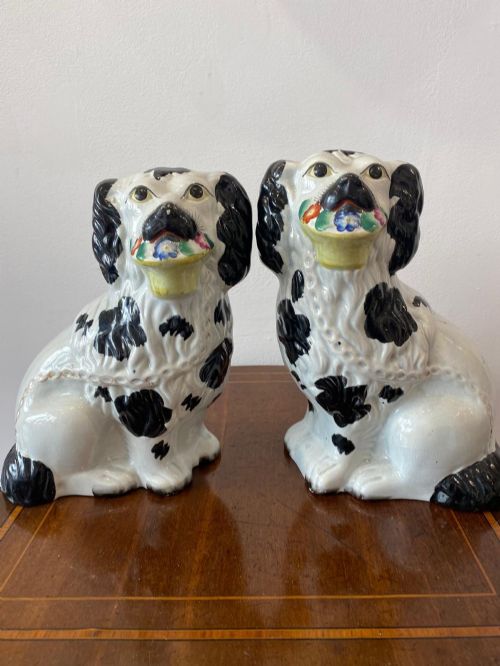
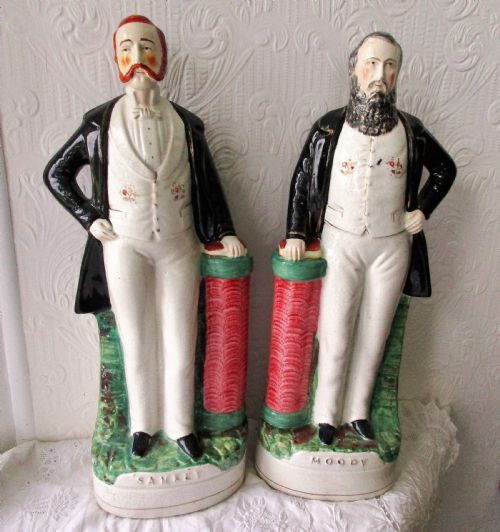
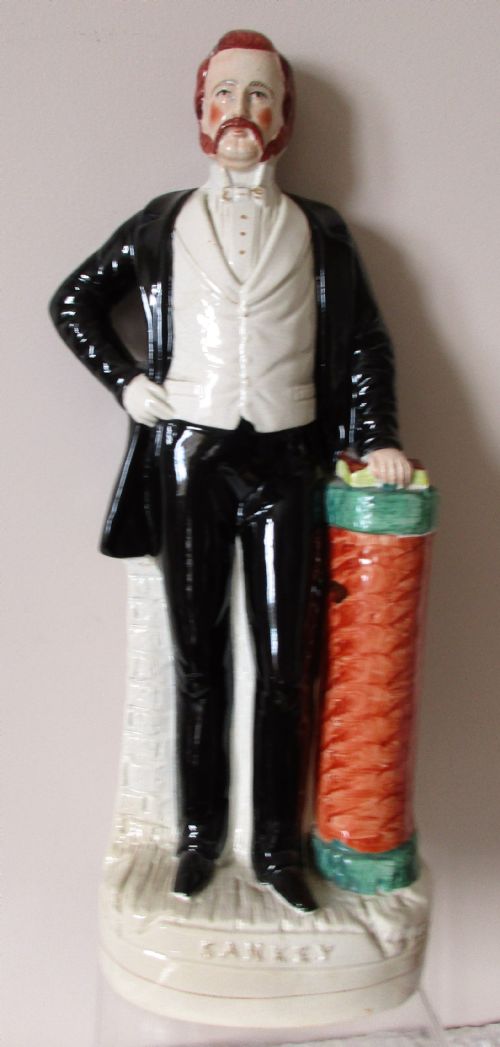
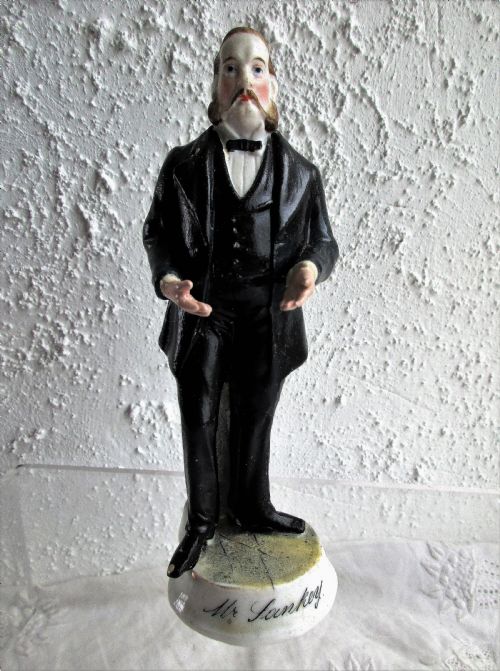
When you search for black and white pottery, you encounter Staffordshire dogs, portrait figures of Moody and Sankey, and transfer-printed loving mugs. The pieces range across the Georgian, Victorian, and Art Deco periods, encompassing both utilitarian drinkware and decorative ornaments.
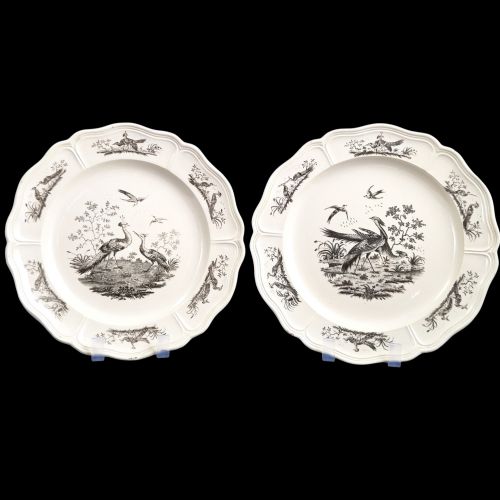
Staffordshire dogs and animal figures dominate the selections, alongside children's toy tea sets and Liverpool Herculaneum plates. These items serve as tangible records of nineteenth-century domestic life and popular culture.
Materials and construction
Potters relied on earthenware, porcelain, and pearlware, applying lead glaze to seal the ceramic body. Black transfer printing allowed workshops to repeat detailed hunting scenes and portraits across mugs and plates.
Enamel colours and gilt highlights were often added over the glaze to provide contrast on figures like zebras and portrait busts. Potters shaped these items by hand or in moulds before firing.
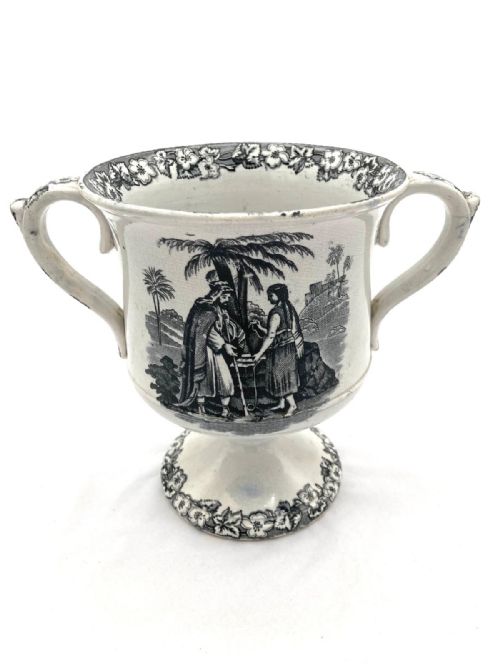
Drinking companions received a jolt when a ceramic frog emerged from the bottom of their black transfer-printed loving mug.
Judging the quality
The integrity of the glaze and the preservation of gilt highlights indicate how well a piece survived handling and use. Intact Staffordshire dog quill holders and well-preserved tea sets show careful preservation.
Herculaneum·Beswick·Gladstone Potteries
The Black and White Pottery Glossary
- Earthenware
- Porous pottery fired at lower temperatures, commonly used for nineteenth-century figures and mugs. It requires a glaze to become impermeable to liquids.
- Transfer printing
- A technique where an engraved copper plate transfers an inked design onto paper and then onto the ceramic surface. This method allowed for consistent patterns such as hunting scenes.
- Pearlware
- A refined earthenware developed in the late eighteenth century featuring a bluish glaze that pooled in recesses. It formed the base for child toy tea sets and tableware.
- Loving mug
- A large drinking vessel with two or three handles designed to be passed among companions. Many examples include interior ceramic frogs as a surprise for the drinker.
Black and White Pottery: Frequently Asked Questions
What are frog mugs?
Frog mugs are drinking vessels featuring a small ceramic frog modelled inside the base, designed to surprise the drinker as the liquid lowers.
Potters produced these in the nineteenth century, often decorated with black transfer prints depicting hunting scenes.
How do you date Staffordshire dogs?
Staffordshire dogs are dated by examining the modelling style, the weight of the earthenware body, and the characteristics of the glaze.
Nineteenth-century examples show variations in facial painting and collar details that help distinguish earlier pairs from later reproductions.
What is pearlware?
Pearlware is a type of refined earthenware developed to mimic Chinese porcelain by adding a small amount of cobalt to the lead glaze.
This glaze pools with a faint bluish tint in crevices, helping to identify Georgian pieces.
Where were Herculaneum plates made?
Herculaneum plates originated at the Liverpool pottery works during the late eighteenth and early nineteenth centuries.
These pieces often recorded maritime subjects such as sailing ships using transfer printing.