



Staffordshire Animal Ornament
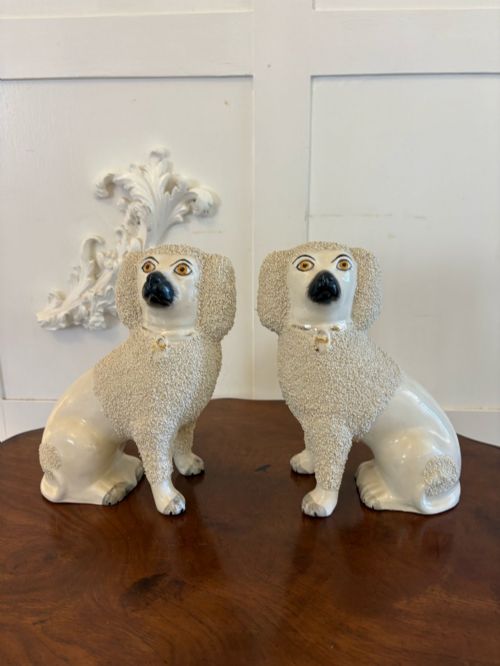
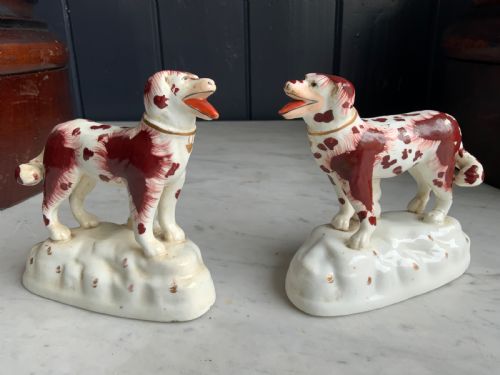
These staffordshire animal ornament pieces bring nineteenth-century domestic charm straight to the mantelpiece through characterful ceramic figures.
Staffordshire Animal Ornament
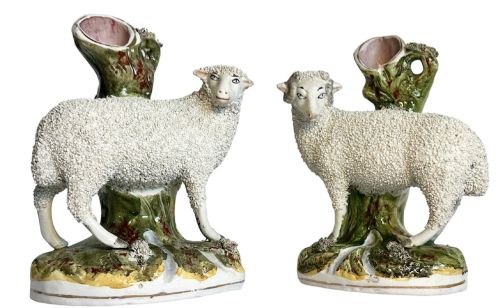
A staffordshire animal ornament represents the enduring Victorian taste for ceramic creatures, spanning dogs, lions, sheep, cats, and zebras. Most examples encountered here date from the nineteenth century, encompassing Victorian and Regency periods.
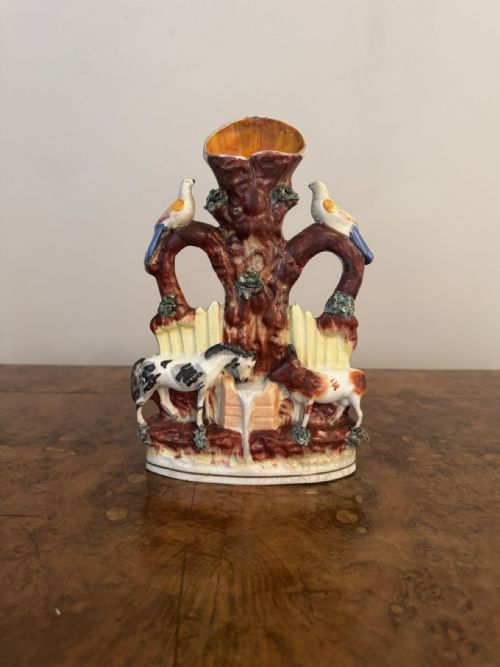
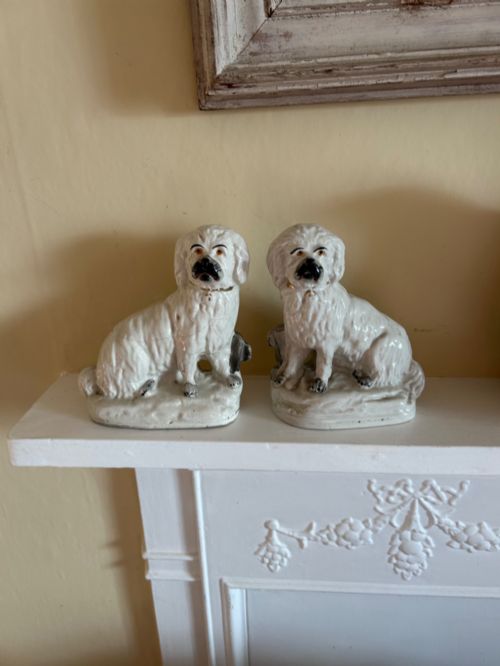
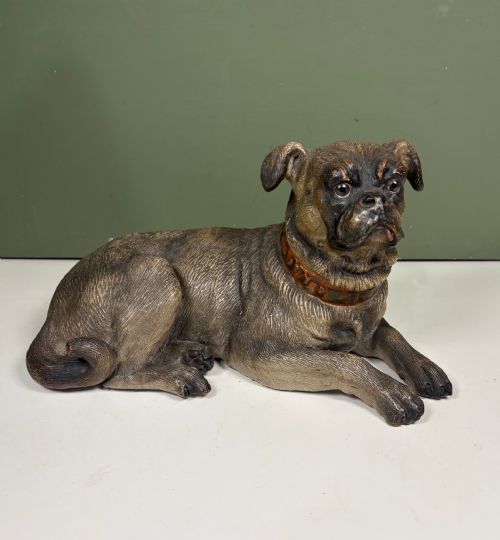
The selection includes decorative figurines, functional spill vases, inkwells, and bookends. Pairs of dogs and lions predominate, often modelled as seated or recumbent companions.
How they were made
Potters shaped these earthenware and porcelain bodies using traditional ceramic techniques before applying lead glazes and enamel colours. Many pieces display rich treacle glazes or delicate gilt highlights.
The listings feature earthenware and porcelain materials, spanning the Victorian and Regency periods through decorative figures and spill vases.
What varies in quality
The standard of modelling dictates much of the division between ordinary pottery and superior examples. Finer pieces display crisp facial expressions, careful anatomical detail, and well-applied enamels.
Scale and completeness also influence distinction, particularly when dealing with matched pairs or elaborate figure groups featuring multiple animals.
Rockingham Pottery·Walton·Wooley Staffordshire
The Staffordshire Animal Ornament Glossary
- Spill vase
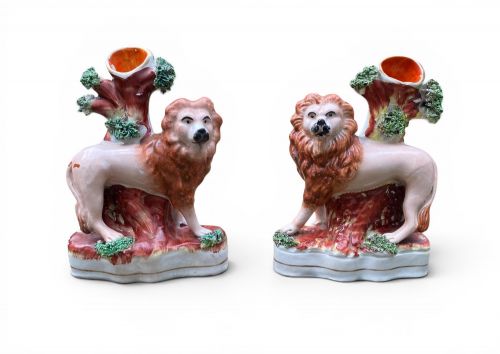
- A hollow ceramic vessel designed to hold taper spills for lighting fires or candles. They often feature an animal figure standing beside the holder.
- Treacle glaze
- A dark, translucent brown lead glaze that gives pottery a rich, glossy finish. It appears frequently on nineteenth-century lions and dogs.
- Pearlware
- A refined earthenware developed in the late eighteenth century with a bluish-white glaze. It provides a smooth surface for painted enamels.
- Earthenware
- A porous ceramic fired at lower temperatures than stoneware or porcelain. It serves as the primary body for most Staffordshire figures.
Staffordshire Animal Ornament: Frequently Asked Questions
How were staffordshire animal ornaments displayed?
These figures traditionally sat in matched pairs upon mantelpieces, sideboards, or chests of drawers within nineteenth-century parlours. Their symmetrical arrangement suited formal domestic interior layouts.
Today, they function well grouped on bookshelves or displayed singly as decorative accents in living spaces.
What animals appear most often?
Poodles, spaniels, and lions form the vast majority of surviving figures. Makers also modelled sheep, cats, zebras, and hunting dogs with hares.
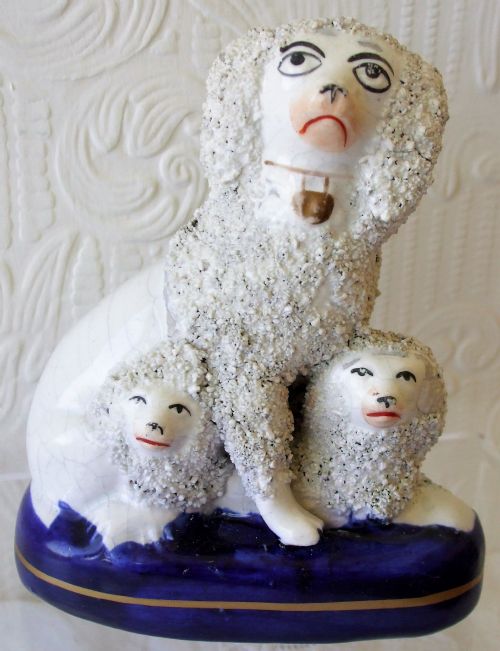
Lions frequently served as bookends or spill vases, while poodles often appeared in pairs accompanied by pups.
How do I date a ceramic figure?
Dating relies on examining the ceramic body, glaze characteristics, and painting style. Pearlware bodies and specific glaze tones often point towards earlier nineteenth-century production.
Victorian examples frequently utilise denser earthenware and bolder enamel colours applied by hand.
Are these figures functional?
While primarily decorative, certain pieces served practical purposes in the home. Spill vases held tapers for lighting pipes or candles, and inkwells accommodated writing desks.
Bookends also fulfilled a direct utility role while retaining sculptural charm.