





Early Oak Storage Trunk
An early oak storage trunk grounds a room with centuries of hard craftsmanship, offering deep utility and timeless timber character.
Early Oak Storage Trunk
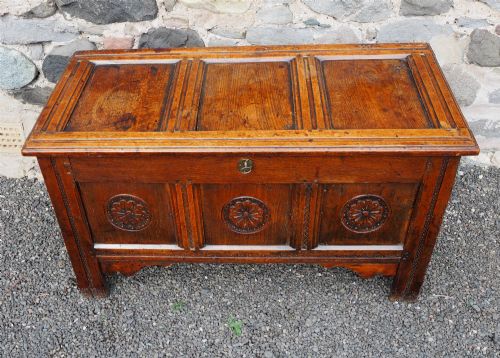
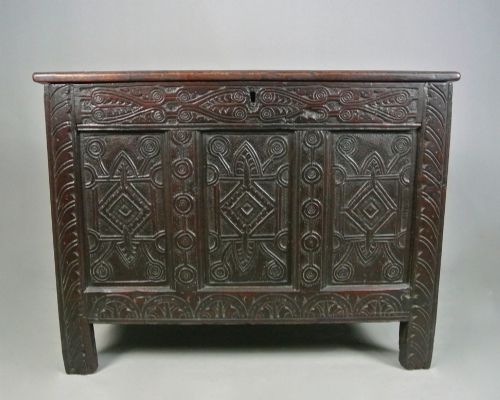
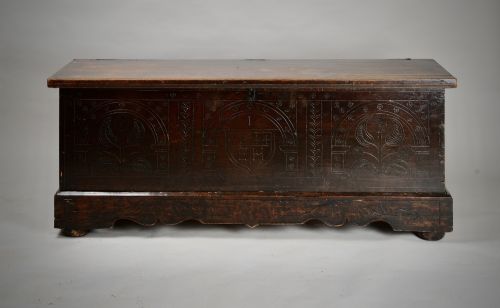
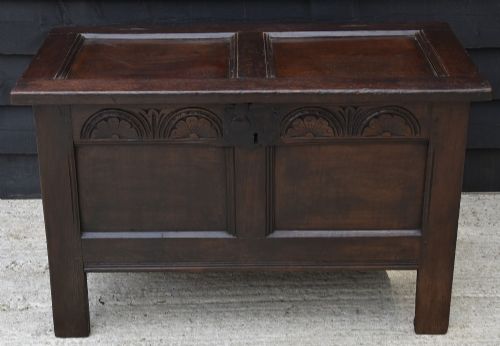
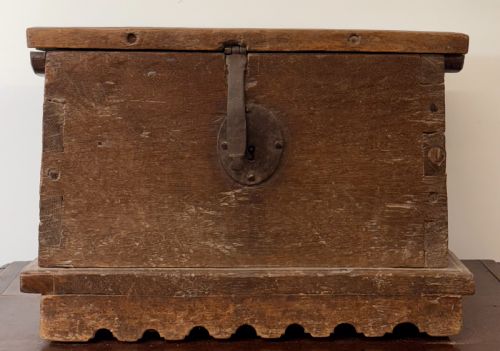
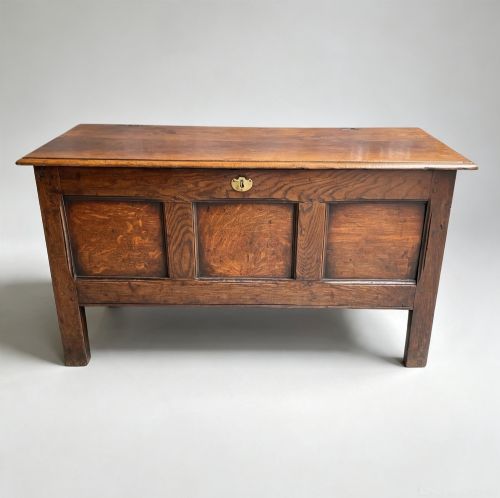
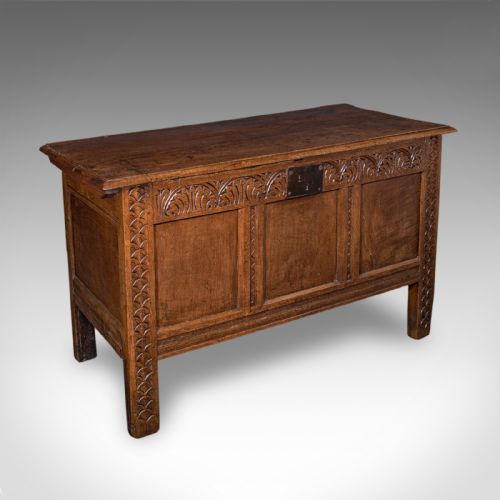
An early oak storage trunk principally appears as a coffer, blanket box, or mule chest originating from the sixteenth, seventeenth, and early eighteenth centuries. These robust pieces served essential domestic roles for holding textiles, valuables, and provisions in English, Welsh, and continental households.
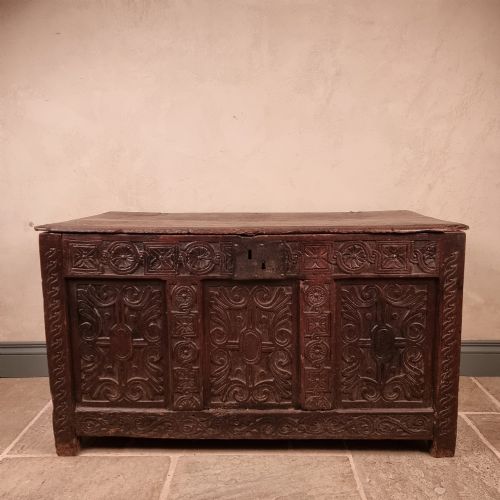
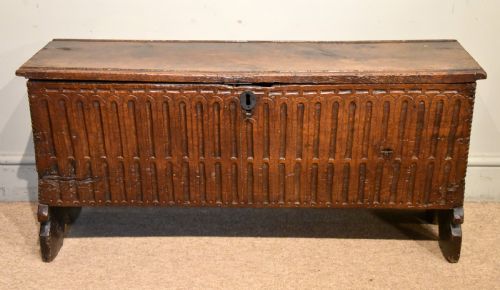
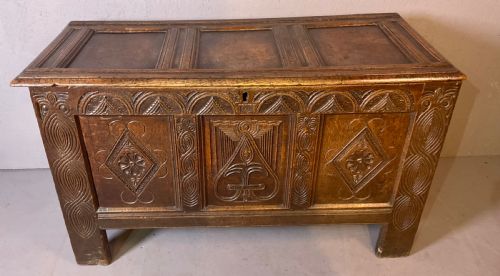
The versions met most frequently on this page span the Tudor, Elizabethan, Jacobean, and early Georgian eras, often constructed with panelled or six-plank timber techniques. Many examples display regional character, ranging from small proportions and miniature chest formats to substantial Welsh and West Country coffers.
What varies in quality
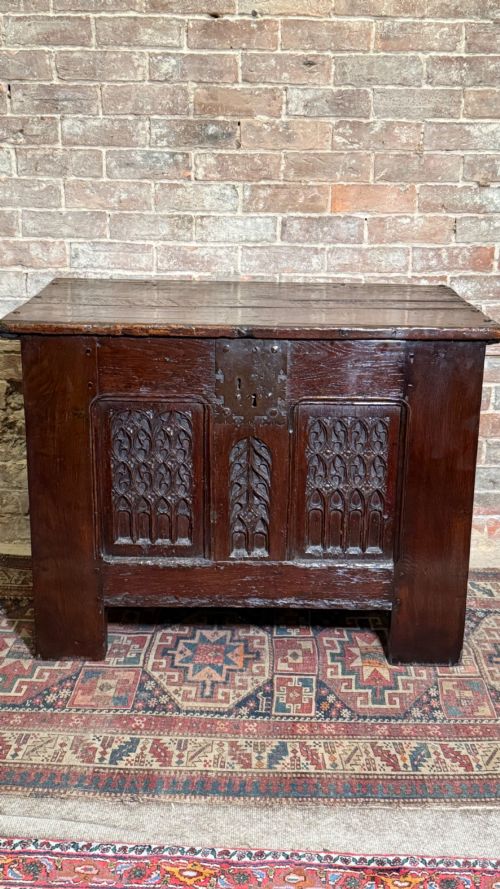
The standard of an early oak storage trunk rests upon the ambition of its construction and the crispness of its period carving. Pieces featuring sophisticated architectural panelling, linenfold detail, or deeply carved friezes stand apart from simpler boarded boxes.
Proportion and original timber integrity dictate desirability, with smaller proportions, miniature formats, and untouched early surfaces commanding greater appreciation. The survival of original ironwork and structural joints without extensive timber replacement marks the upper tier of surviving examples.
One remarkably travelled trunk arrived fitted for an early steamship voyage, proving that even heavy oak storage boxes occasionally caught the travel bug.
The Early Oak Storage Trunk Glossary
- Coffer
- A heavy wooden chest traditionally used for storing valuables, documents, or garments. These sturdy boxes often double as benches and form the backbone of early vernacular furniture.
- Mule chest
- A storage chest featuring one or more drawers built beneath the main compartment. This form bridges the evolution from the simple coffer to the modern chest of drawers.
- Linenfold
- A style of carved wooden panelling popular in the Tudor period that imitates folded fabric. It gives flat boards a textured, textile-like appearance.
- Six plank
- A primitive construction method utilising six plain boards joined at the edges to form a box. This technique represents an early and straightforward approach to trunk making.
- Arcading
- A decorative row of arches supported by piers or columns carved into woodwork. This classical motif frequently appears on seventeenth-century panels.
Early Oak Storage Trunk: Frequently Asked Questions
What is an early oak storage trunk used for?
These trunks originally served domestic households for storing heavy woolen blankets, household linens, valuable documents, and personal belongings. Their flat lids also allowed them to function as convenient benches, window seats, or tables within early domestic interiors.
Today, they fulfill much the same practical purpose in modern homes while anchoring a room with historic presence. They provide generous concealed storage for contemporary items like bedding or books at the foot of a bed or in a living space.
How do I date an early oak coffer?
Dating relies on observing construction methods, joinery types, and decorative carving styles specific to known eras. Six-plank construction and primitive pegged joints often point toward the sixteenth or early seventeenth century, while applied mouldings and arcaded panels align with the Jacobean period.
Later pieces from the early Georgian era incorporate drawer structures and softer architectural details. Comparing the hardware, such as wrought iron strap hinges, alongside the timber grain helps confirm the period of manufacture.
Are these trunks entirely made of oak?
While solid oak dominates the majority of surviving pieces, makers occasionally utilised secondary or alternative woods depending on regional availability and the period. Walnut, fruitwood, and general mixed hardwoods appear across specific continental and domestic examples listed in the inventory.
Iron and brass also feature prominently as functional components rather than primary structure. These metals appear on hinges, latches, and lock plates, which were essential for securing the heavy timber lids.
How do I care for an antique oak trunk?
Maintaining an early timber trunk requires stable environmental conditions away from direct heat sources and drastic humidity shifts. Sudden temperature changes cause the old oak boards to dry out, warp, or split along historical grain lines.
Occasional applications of traditional beeswax nourish the dry wood and preserve the historic surface sheen without sealing the pores. Avoid modern silicone polishes, which can permanently alter the natural patina developed over centuries.