

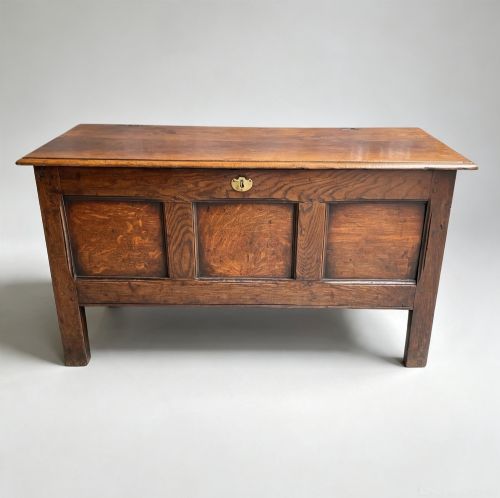
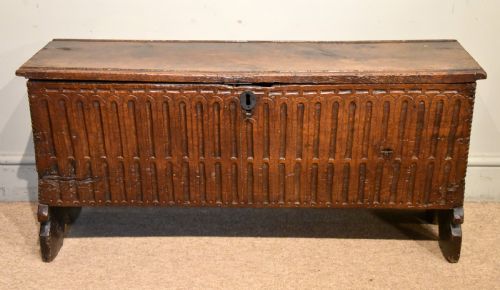


Early Oak Mule Chest
An early oak mule chest brings centuries of domestic storage history into a room through heavy timber construction and lower drawers.
Early Oak Mule Chest
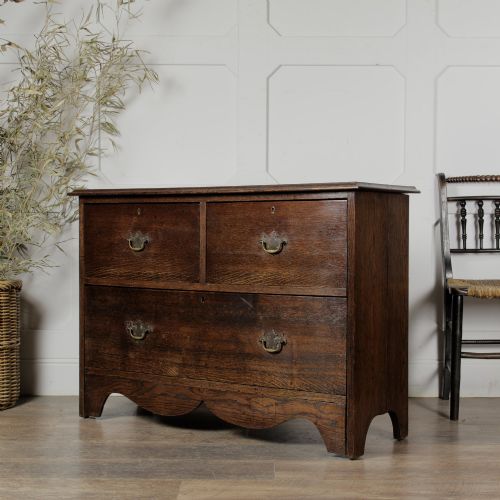
An early oak mule chest combines the deep lid access of a traditional coffer with one or more fitted drawers beneath the main storage compartment. Buyers searching for an early oak mule chest typically encounter heavy timber furniture originating from the seventeenth and eighteenth centuries, often associated with English and Welsh vernacular traditions.
The form developed as craftsmen added drawers to the base of standard storage chests to make garments and linens easier to reach without unstacking the entire contents. Pieces range from modest provincial examples to larger panelled forms bearing carved details and dates from the seventeen hundreds.
Materials and construction
Makers built these pieces primarily from solid oak, often complemented by secondary fruitwoods for internal framing or secondary elements. Iron hinges and brass escutcheons secure the heavy lids and working drawer locks.
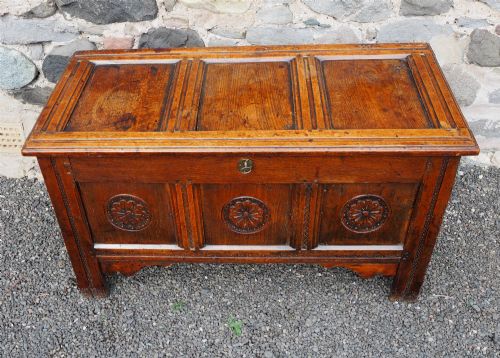
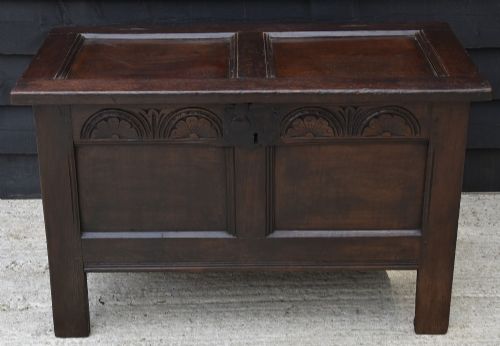
Joinery relied on traditional frame and panel construction to accommodate the natural expansion and contraction of timber over decades. Carved panels, fluted rails, and raised mouldings frequently adorn the front facades.
Listings feature solid oak, iron, brass, and fruitwood across pieces spanning the sixteenth century through the Georgian era.
What varies in quality
The integrity of the original timber frame and the retention of primary surfaces dictate the standing of individual examples. Pieces retaining their original base boards, brass fittings, and uncompromised drawer linings command greater attention from purists.
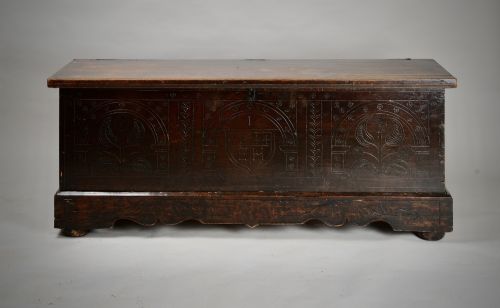
The depth and execution of period carving also separate standard utility chests from finer decorative works. Crisp hand-carved panels and balanced proportions reflect the skill of the original provincial joiner.
The Early Oak Mule Chest Glossary
- Mule chest
- A storage chest featuring one or more drawers built beneath the main hinged compartment. This form bridges the gap between the traditional coffer and the chest of drawers.
- Coffer
- A heavy wooden box with a hinged lid used for storing valuables, textiles, and household goods. Many early examples display hand-carved front panels and stile feet.
- Coffer bach
- A small Welsh chest, often produced in domestic workshops during the late seventeenth or early eighteenth centuries. These miniature pieces served specialised storage roles in modest households.
- Cassone
- A traditional European chest, occasionally used in period contexts to describe heavy panelled storage boxes. The term connects British vernacular forms to broader continental storage traditions.
- Raised panel
- A wooden panel with bevelled edges fitted into a grooved frame. This technique allowed timber to move with humidity changes without splitting the surrounding structure.
Early Oak Mule Chest: Frequently Asked Questions
How do I date an early oak mule chest?
Dating relies on examining construction methods, tool marks, hinges, and the style of any carved ornamentation. Joinery techniques shifted significantly from pegged mortise and tenon frames in sixteenth and seventeenth-century pieces towards more refined Georgian cabinetwork.
Secondary woods and hardware provide further clues, though alterations over centuries remain common in vernacular furniture.
What is the difference between a coffer and a mule chest?
A standard coffer opens only from the top lid and provides a single deep well for storage. A mule chest adds one or more drawers at the base beneath this compartment.
This functional evolution made frequently used items accessible without lifting the heavy lid and its contents.
Where were most early mule chests made?
Surviving examples originate primarily from regional English workshops and Welsh domestic joiners. Local timber availability meant oak dominated rural production across these areas.
Specific stylistic traits often point towards regional traditions in places like Lancashire or Welsh valleys.
How should I care for antique oak furniture?
Keep wooden pieces away from direct heat sources and sudden humidity fluctuations to prevent the oak from splitting. Maintaining a stable environment preserves the stability of historic panels and joints.
Apply traditional wax sparingly to nourish the surface without building up heavy chemical residues.