


Early Georgian Tallcase Clock
An early georgian tallcase clock commands a room with its stately timber case and precise mechanical heart.
Early Georgian Tallcase Clock
When you search for an early georgian tallcase clock, you encounter tall wooden timepieces spanning the eighteenth century and the early nineteenth century. These items appear under various names including longcase clocks and grandfather clocks, reflecting regional shifts in terminology.
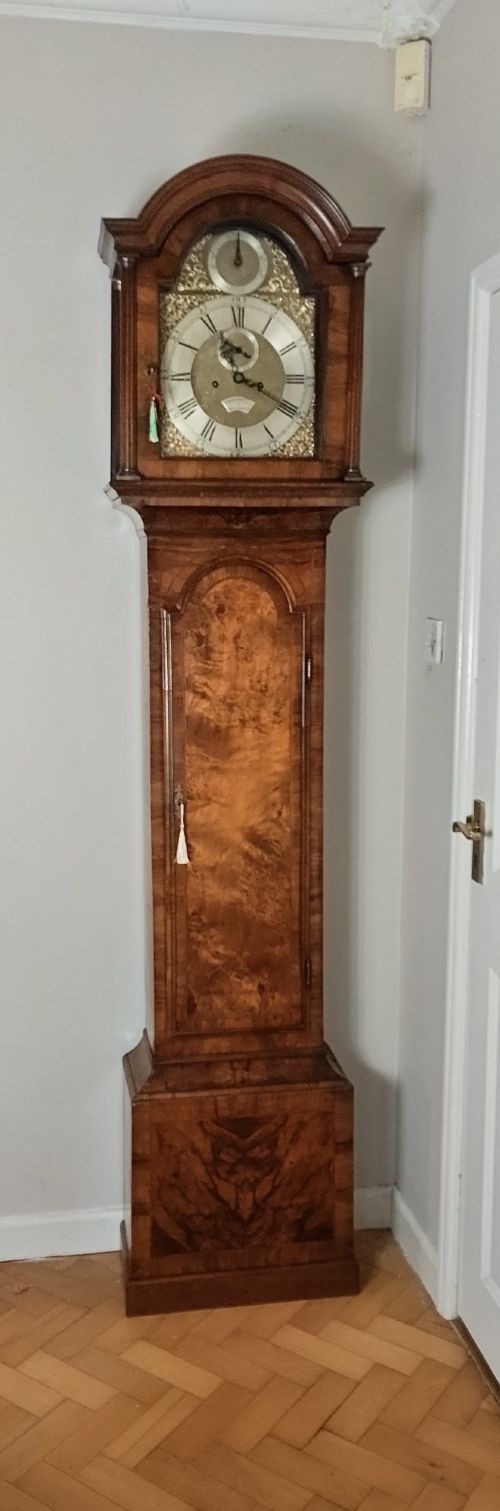
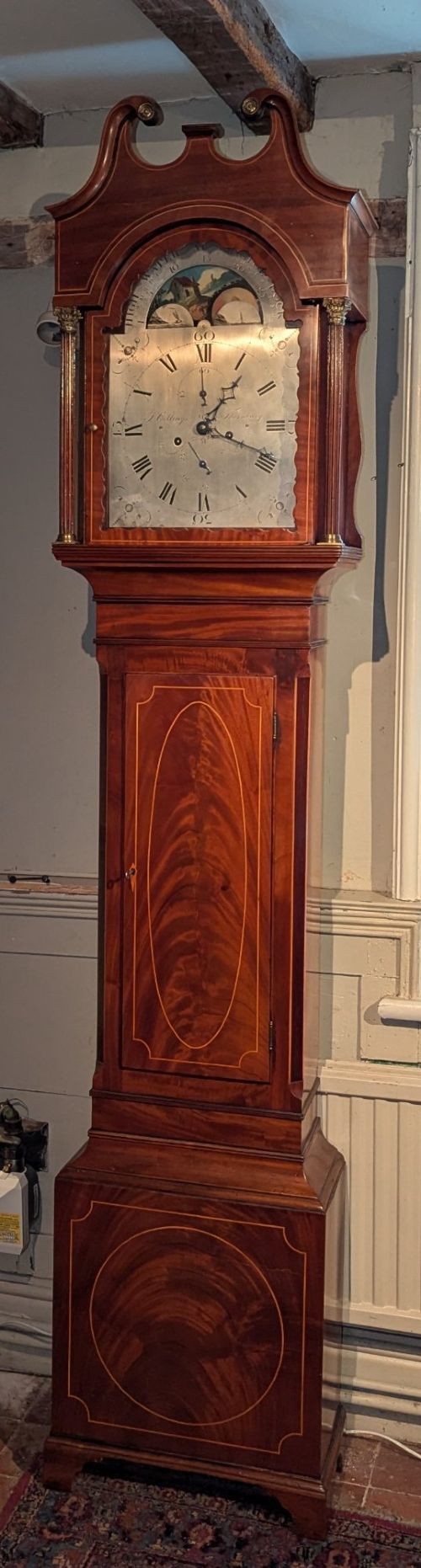
The pieces on this page emerge from Georgian, Queen Anne, and early nineteenth-century periods. Oak and mahogany dominate the timber choices, often accompanied by walnut, burr walnut, ebonised wood, and painted pine.
Makers from London, Wales, Scotland, and English counties such as Kent, Yorkshire, and Dorset signed these movements. Some examples feature specialised mechanisms like strike/silent functions, moon dials, or five-pillar 8-day movements.
Materials and construction
Cabinetmakers utilised sturdy hardwoods such as oak, mahogany, and walnut to build the towering protective cases. Burr walnut veneers and intricate inlay work added visual depth to the polished surfaces.
Clockmakers constructed the internal movements from brass and steel, incorporating delicate glass panels to shield the dials. Painted dials and brass chapter rings display the time, driven by weights suspended within the trunk.
Materials span native oak and mahogany alongside exotic walnut veneers, bright brass dials, and hand-painted pine surfaces.
Distinctions in execution
The refinement of the timber case sets apart the finer examples, particularly where figured burr walnut or flame mahogany veneers are applied with precision. Cabinetry joinery and the crispness of moulded details reveal the skill of the original maker.
Movement sophistication dictates value at the upper end, where 8-day durations, five-pillar constructions, strike/silent mechanisms, or moon phase dials indicate superior workshop standards.
Thomas Webbe of New Quay·David Morice of Auchtermuchty·William Smith of Keighley·John Harrington of London·John Welsh of Luton·Hampston Prince and Cattles of York·John Bishop of Sherborne Dorset·William Harley
The Early Georgian Tallcase Clock Glossary
- Longcase clock
- A tall pendulum clock enclosed in a wooden case that stands directly on the floor. This term is often interchanged with grandfather clock.
- Moon dial
- A specialised clock face mechanism that tracks the phases of the lunar cycle. Collectors prize these for their mechanical complexity and visual charm.
- Count wheel
- An external locking plate mechanism used in older clock movements to control the striking train. It governs the number of hours the bell sounds.
- Chinoiserie
- European decorative art imitating Chinese artistic styles, frequently applied as hand-painted lacquer on clock cases. This technique creates striking green or dark toned finishes.
- Regulator
- A high-precision clock designed to measure time with extreme accuracy. These often feature minimalist mahogany cases and specialised escapements.
Early Georgian Tallcase Clock: Frequently Asked Questions
How do I wind an old tallcase clock?
You use a small winding key inserted into holes on the dial face to slowly draw the internal weights back to the top. Care must be taken not to overwind the mechanism.
Most 8-day movements require weekly attention, while 30-hour versions need daily winding. Keeping a consistent schedule helps maintain proper timekeeping.
Where should I place a longcase clock?
Position the clock against an interior wall away from direct sunlight, central heating vents, and damp areas. Sudden temperature shifts can affect the wooden case and movement.
The floor must be entirely level to ensure the pendulum swings evenly and the clock keeps accurate time. Securing the tall case to the wall prevents accidental tipping.
What is the difference between oak and mahogany cases?
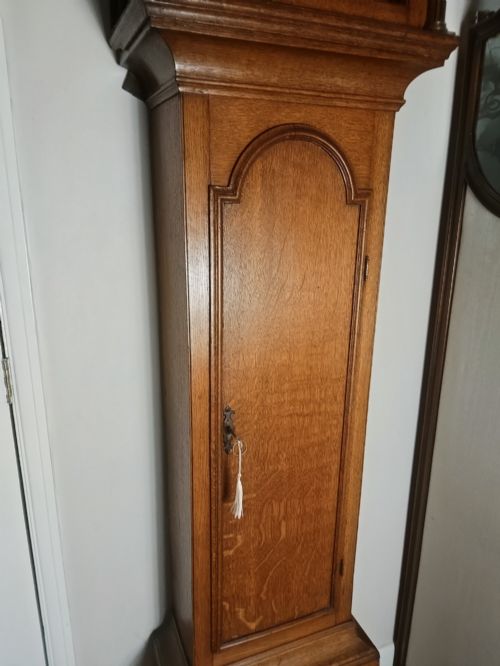
Oak cases typically belong to earlier or provincial pieces, displaying prominent grain patterns and a robust, rustic character. They suit country houses and traditional interiors.
Mahogany and walnut versions often reflect refined urban craftsmanship, featuring darker tones, smooth polished surfaces, and decorative veneers that caught the light in formal parlours.
How do I identify a painted dial?
Painted dials usually feature iron sheets coated with white paint and decorated with floral corners, Roman numerals, and the maker's signature. These became widespread around the late eighteenth and early nineteenth centuries.
Earlier dials were predominantly made of brass with silvered chapter rings. The presence of a painted face generally points toward a later period of manufacture.