


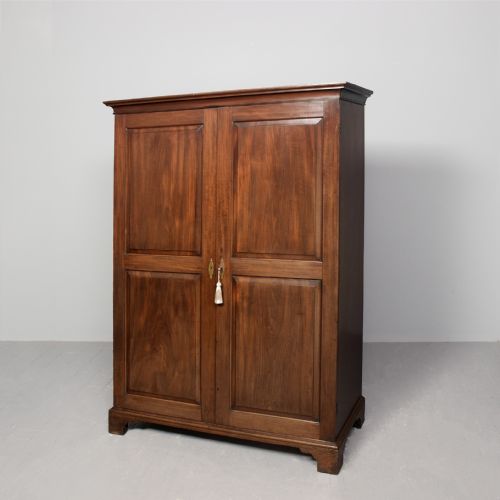
Early Georgian Cupboard
An early georgian cupboard brings architectural timber and deep domestic history directly into a room.
Early Georgian Cupboard
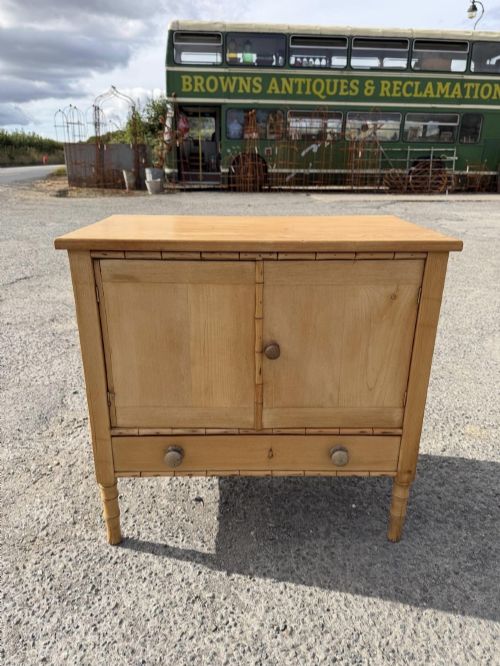
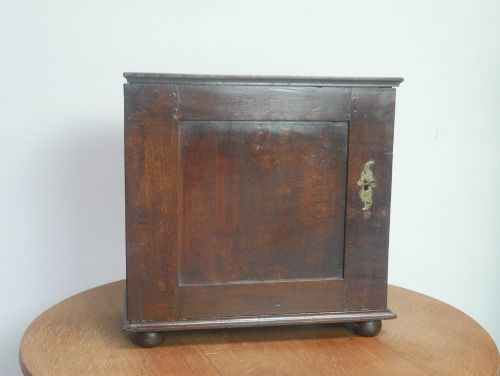
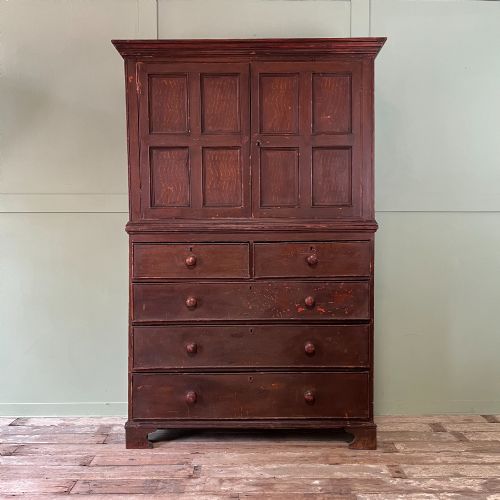
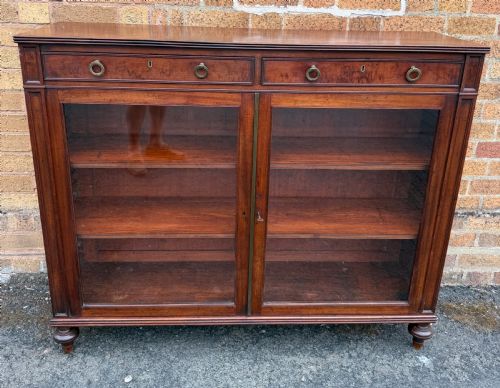
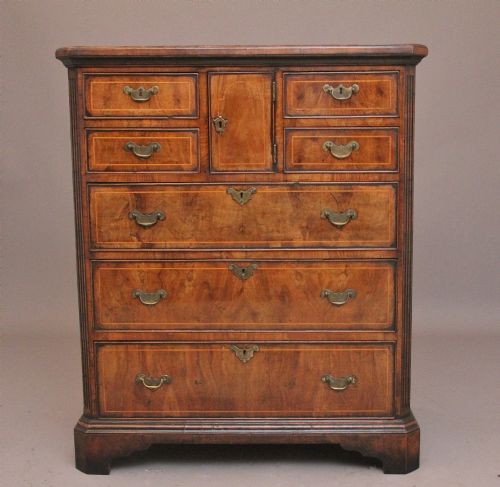
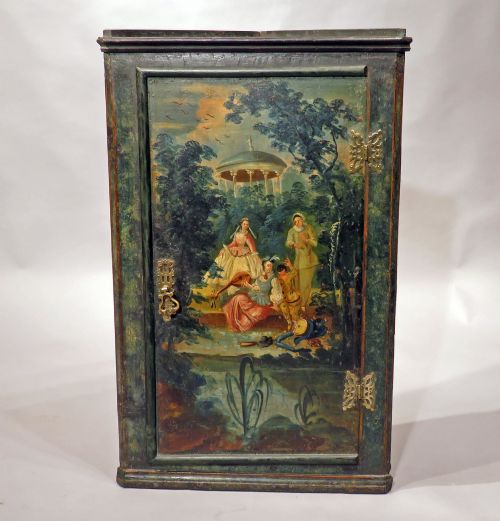
When you search for an early georgian cupboard, you encounter robust forms built to store food, textiles, and domestic valuables. These pieces appear primarily as wall-hanging or standing corner cupboards, spice cupboards, and press cupboards.
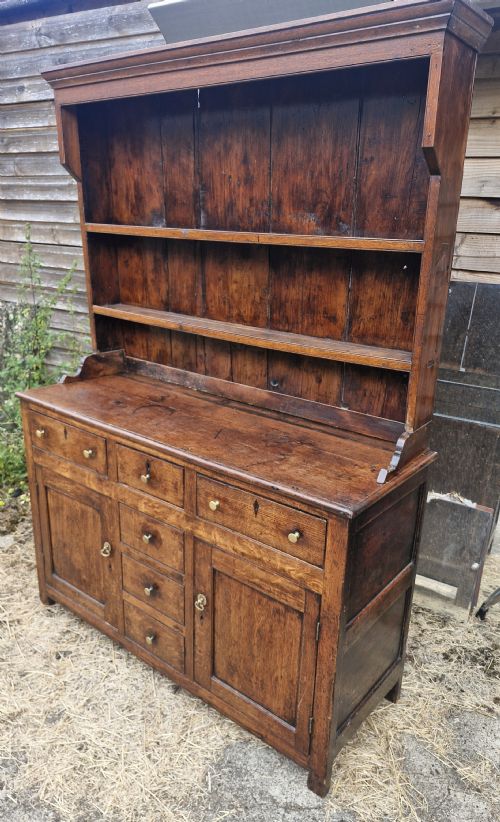
The domestic archive shows regional variations from Welsh and provincial workshops alongside finer urban pieces. Oak dominates the earliest examples, while walnut and mahogany emerge in formal spaces.
Materials and Technique
Cabinetmakers utilised solid oak, walnut, and mahogany, often pairing figured veneers with sturdy native timber carcasses. Panels were typically joined using traditional pegged mortise and tenon construction to allow for seasonal wood movement.
Surfaces received wax or oil finishes that highlighted the natural grain. Hardware consisted of brass H-hinges, escutcheons, and working locks fitted by hand.
Many surviving spice cupboards still retain tiny, stubborn ink stains inside their miniature drawers from long-forgotten household accounts.
Evaluating Execution
Quality rests upon the selection of timber and the restraint of the proportions. A superior piece displays carefully matched grain patterns, crisp carved details, and intact original structural timber without excessive replacement.
The interior layout and the retention of original brasswork and backboards separate standard utility pieces from higher-status examples made for wealthier households.
The Early Georgian Cupboard Glossary
- Press cupboard
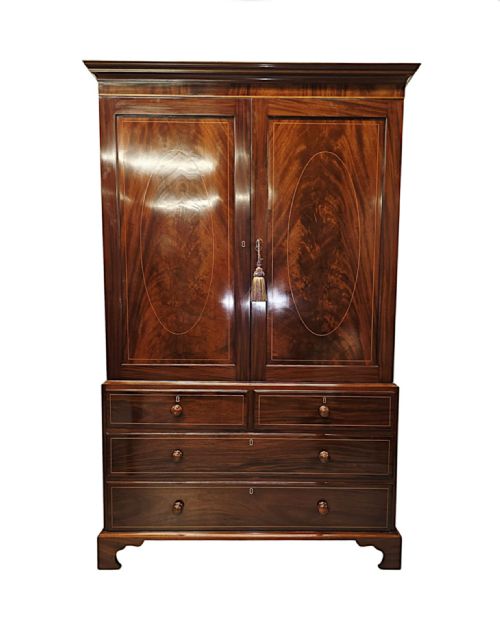
- A large storage furniture item featuring upper and lower compartments designed for hanging or folding garments. These pieces often incorporate deep drawers or a linen press section.
- Spice cupboard
- A small wall-mounted cabinet containing multiple internal drawers for storing valuable culinary spices and medicines. They frequently feature fielded panel doors and brass butterfly hinges.
- Tridarn
- A traditional Welsh three-tier piece of vernacular storage furniture combining cupboards and open display shelves. This form represents an evolution of the simpler court cupboard.
- Japanned
- A European decorative technique imitating East Asian lacquer work using layered resin varnishes and metallic dust. It appears on select high-fashion cabinets of the period.
Early Georgian Cupboard: Frequently Asked Questions
What rooms suit an early georgian cupboard?
These compact or standing cabinets fit easily into hallways, living rooms, and dining spaces where substantial yet practical storage is required. Corner variants utilise neglected angles efficiently.
Their rich timber tones complement both traditional interiors and modern minimalist settings as standalone anchor points.
How were these cupboards originally used?
Households utilised them to secure high-value provisions, household linens, spices, and clothing away from pests and damp conditions. Spice cabinets kept expensive imports locked safely.
Larger press and food cupboards served as the primary wardrobe and pantry infrastructure in domestic quarters before fitted joinery became common.
How do I care for the timber?
Maintain stable indoor humidity levels and keep wooden surfaces away from direct heat sources and strong sunlight to prevent splitting. Apply traditional beeswax periodically to nourish the grain.
Avoid modern silicon polishes that build up sticky residue and dull the natural patina developed over centuries of handling.
How can I tell the period?
Examine the construction methods, tool marks on hidden surfaces, and timber species characteristics. Pegged joints, hand-sawn boards, and primary use of local oak point towards earlier provincial production.
Later pieces incorporate imported mahogany, tighter machine tolerances, and different framing conventions typical of the nineteenth century.